By DAVID A. CHAUVIN //
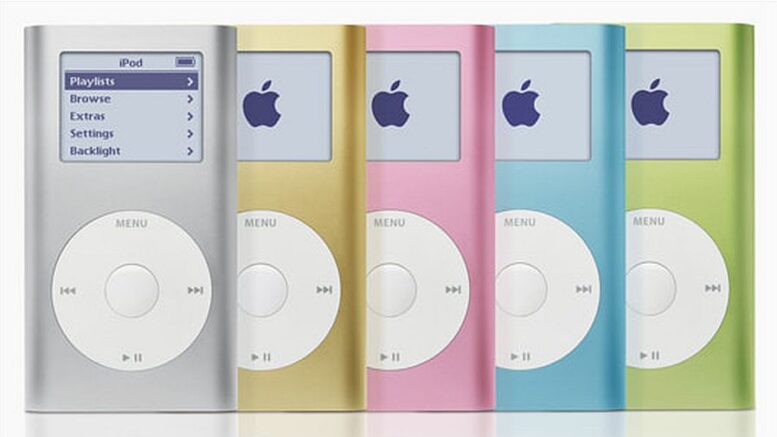
Last week, the iPod officially died. The last available iPod, the most recent iteration of the Touch, was discontinued by Apple, finally ending a music-listening revolution that started all the way back on Oct. 23, 2001, with the original iPod and its glorious spinning wheel.
 All things considered, 21 years is a pretty good run for a tech product in a world where your $1,200 cellphone is a creaking dinosaur 24 months after you buy it.
The iPod has long been a symbol of the transition between physical and digital media, and for good reason: Prior to the iPod, listening to a music collection on the go meant schlepping around CDs or cassettes, a handful of batteries and a cumbersome media player that would malfunction when exposed to mighty technological challenges like a hearty breeze.
Apple’s iPod rendered these decades-long practices laughably obsolete almost overnight. The iPod was the Rubicon – once we were seamlessly spinning through thousands of songs, we were never going back to a Discman.
When I look back, however, the iPod seems better considered as part of the older generation. That’s because Apple’s device wasn’t actually the line that separated physical from digital.

David Chauvin: Walking the Walkman.
Turns out, the iPod chiefly represents the last time we would own our art, instead of renting it.
Music journalist Rob Sheffield wrote in a recent issue of Rolling Stone magazine how people mistakenly reference the iPod as the start of the digital-music era, when, in retrospect, it’s actually “the last format designed for old-school pre-streaming trends, where music is something you ‘have,’ rather than something you lease.”
In 2001, it was funny to think of a digital file as something you owned, but in 2022 we are much more comfortable with that concept (perhaps even too comfortable, as the rise of NFTs demonstrates – a topic for a later, much more infuriating column).
Whether you purchase a hardcover book from your local bookstore or pay to download one on your Kindle, you own that book. But when you stream a song on Spotify, you don’t own the song – you’re paying a company for the right to listen to a song they own.
It seems a minor distinction, but it’s precisely why the death of the iPod feels so sad, even when the device that ably replaces it lives in my pocket at all times.
The beauty of on-the-go music players wasn’t just their portability; it was also their intimacy. Before personal music players became mainstream – i.e., before the Walkman, the true grandfather of the iPod – the only way to listen to music alone was to hole up in your living room. Going outside and walking around forced you to turn off the music and interact with people.
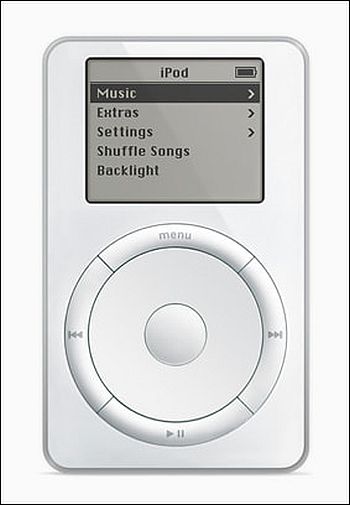
Started it all: The original iPod, released in October 2001.
Clearly, something needed to change. Walkmans, Discmans and their ilk were the solution, allowing millions to get lost in their favorite songs wherever they were. The iPod didn’t change that, it just perfected it – a terrific upgrade for something that had been done for years.
Streaming is different. Now it’s impossible to be truly alone. Nothing breaks up immersion in an album better than a poorly timed DraftKings ad. Even if you pay for a premium ad-free service, you still need to be connected to WiFi or use your data. You’re still a datapoint in an ever-growing, ever-encroaching algorithm.
Listening to music now forces you to engage with corporations whose business practices may not align with your beliefs. The intimacy that the Walkman created and the iPod perfected is irrevocably gone.
And that’s a bigger bummer than I had realized. I like streaming as much as the next person, and I’m not about to dust off my iPod Shuffle the next time I go for a jog. But I’ll hold pleasant nostalgia for the iPod age, the last time any of us could take our favorite artists with us and still be truly alone.
David A. Chauvin is executive vice president of ZE Creative Communications.