By FRANK PICCININNI //
Across Long Island, the front line of environmental restoration isn’t buried deep in the Pine Barrens or hidden behind agency fences. It’s in our yards, parks and vacant lots.
 The fight for our ecological future is happening in plain sight. Every curb strip choked by knotweed, every drainage ditch crowded with mugwort, every chemically burned lawn is a microcosm of a much larger problem: invasive species, degraded soils and water systems on the edge.
We’ve talked for decades about saving the environment. The time for talk is over. The ecological clock is ticking, and every season we delay makes the work more difficult and expensive.
Yes, there’s plenty of funding floating around – federal, state and local agencies are putting up millions for habitat restoration. New York State recently rolled out another $4 million in grants to battle invasive species and restore native landscapes. It’s a good start.
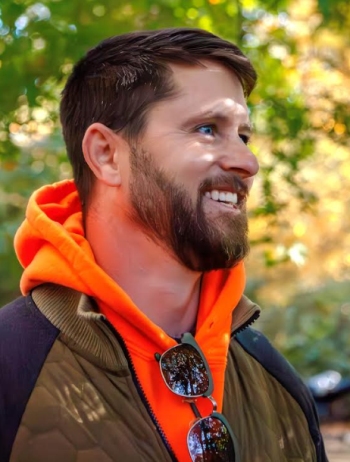
Frank Piccininni: Taking matters into his own hands.
But let’s be honest: The process is glacial. And invasives don’t wait. Japanese knotweed doesn’t pause for a permit. Porcelain berry doesn’t care about fiscal-year deadlines. Garlic mustard doesn’t need a feasibility study. While institutions plan, invasives move in – and by the time a grant cycles through its rounds of paperwork, consultants and committees, the site it was meant to save is closer to ecological collapse.
That’s why real change starts locally – right now, with us.
Community-led restoration has already proven its power across Long Island. When neighbors join forces to pull vines, seed native meadows or replant their front lawns, they’re not just “beautifying” their neighborhoods. They’re rebuilding ecological infrastructure. They’re capturing stormwater, restoring soil biology and giving native pollinators and birds the lifelines they’ve lost.
Every yard converted from sterile turf to living landscape is an act of resistance and regeneration. And the math speaks for itself: A typical 1,000-square-foot lawn gulps down about 10,000 gallons of water a year. Switch that same space to native vegetation and you save 10,000 gallons annually.
That’s not just conservation – it’s financial common sense. Scaled across Long Island’s sea of lawns, that shift could return millions of gallons to the regional aquifer and hundreds of thousands of dollars back to residents and municipalities.
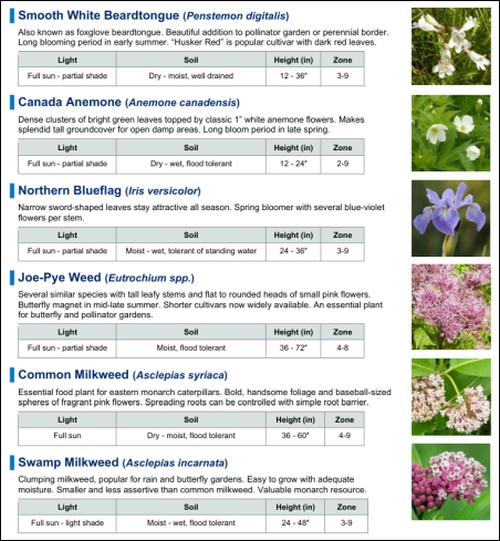
Going native: A few examples of flowering plants native to the regional ecosystem. (Source: New York State Department of Environmental Conservation)
At Spadefoot, we’ve helped restore roughly 150 acres of native habitat so far. Those acres alone are saving an estimated 26 million gallons of water every year and managing more than 27 million gallons of stormwater.
That’s more than $120,000 in avoided annual costs – and countless tons of soil stabilized, gallons of runoff filtered and acres of habitat restored. That’s resilience you can see, touch and measure.
But time is the most precious resource we have, and the most unforgiving. Every month that knotweed sits, it spreads. Every season we let bittersweet climb, it overwhelms and kills another oak. Delay is defeat.
Municipal projects can take years to move; local residents can move this weekend. A few neighbors with shovels and clippers can do what bureaucracy takes seasons to even schedule. That’s the power of community: speed, flexibility, heart.
And when that energy scales – when a block of restored yards links to a park, which connects to a preserve, which connects to a wetland – we create something bigger than any single site. We build corridors of life. Monarchs return. Songbirds nest again. Native plants reappear in places they haven’t been seen in decades.
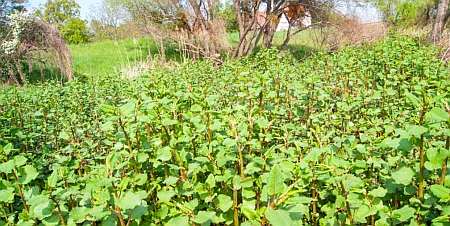
Knot on our watch: Japanese knotwood consumes another Long Island meadow.
And people start to care, because they can see and feel the change in their own neighborhoods.
This is what it means to build resilience from the ground up. Government programs matter, but they cannot and will not move fast enough to save what’s slipping away.
The solution lies in collective, decentralized action. It lies with residents, small businesses, civic groups – it lies with us, taking the reins of restoration one site, one weekend, one acre at a time.
We don’t need to wait for the tide to turn. It turns when we do. Each native seed sown is a promise kept to the island that raised us. Let the agencies draft plans … we’ll plant the future.
Environmental attorney Frank Piccininni is the co-founder and vice president of the Long Island Conservancy and the president & CEO of Spadefoot Design & Construction.