By MARK USTIN //
As policymakers in New York have responded to the COVID pandemic, they have implemented a variety of changes that create tremendous opportunities in the post-COVID world.
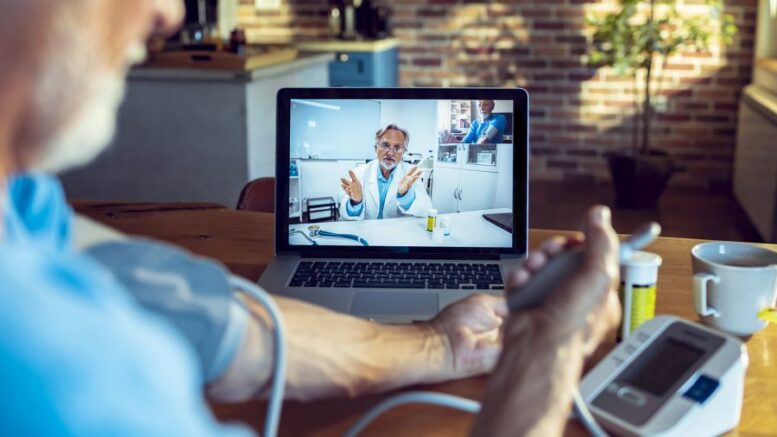
 Perhaps the most significant of these is in the area of telehealth. The remote delivery of healthcare and health-related services has tremendous implications for patient access to care and quality of outcomes, and stakeholders across the country are actively examining how best to leverage telehealth technology to achieve those goals.
Nowhere is this truer than in New York State. Before COVID, New York, like many states, strictly regulated what services could be delivered via telehealth, what providers and patients could utilize telehealth, and what telehealth modalities were permissible. While the laws governing telehealth were becoming gradually more permissive, progress was slow.
In contrast, one of the first executive orders issued by Gov. Andrew Cuomo in response to the pandemic waived key legislation “to the extent necessary to allow additional telehealth provider categories and modalities, to permit other types of practitioners to deliver services within their scope of practice, and to authorize the use of certain technologies for the delivery of healthcare services to established patients, pursuant to such limitations as the commissioner of [the relevant] agencies may determine appropriate.”
At the same time, the State Legislature passed and the governor signed legislation that expanded the list of professionals permitted to utilize telehealth and the list of permissible telehealth modalities, providing additional protections to patients receiving telehealth services.

Mark Ustin: Telehealth time, with regulatory revisions.
The general consensus (with some exceptions) seems to be that the expansion of telehealth services was generally effective. Patients were enabled to access vital services while minimizing risk of COVID exposure; some of the concerns about remote healthcare delivery (including diminished quality of care and increased opportunity to violate scope of practice or informed consent laws) seem not to have been a major concern.
Accordingly, state legislators recently further expanded the permissible uses of telehealth, removing telehealth-specific limitations on the originating and destination sites in telehealth delivery and further expanding the list of services that can be delivered via telehealth.
In short, New York policymakers have doubled down on the promise of telehealth.
This is consistent with the state’s larger plans in the digital space. In May 2020, Gov. Andrew Cuomo formed the Reimagine New York Commission, which is tasked with focusing on recommendations to increase opportunity by reducing the digital divide, improving access to healthcare and creating more and better employment “in an increasingly digital economy.”
The commission has made a series of recommendations to further codify and modernize telehealth in New York State. Based on these recommendations, Cuomo announced comprehensive telehealth reform policies, including plans to eliminate outdated regulatory prohibitions on telehealth delivery remove outdated location requirements, address technical unease among patients and providers through training programs, incentivize the innovative uses of telehealth and adjust reimbursement incentives to encourage telehealth.
Most of these have been accomplished. However, some barriers and concerns remain, particularly financial barriers.
Inherent here is the recognition that theoretical access to telehealth is meaningless if a patient or provider cannot afford the necessary technology. Similarly, telehealth will continue to be underused if it’s not reimbursed in a manner that makes its use attractive to providers in comparison to in-person interactions.

Changing the rules: These have been busy days in the New York State Capitol, regarding telehealth regulations.
To address the digital divide, in April 2021, Cuomo signed legislation to guarantee access to affordable Internet for low-income families, requiring Internet providers to offer $15-per-month high-speed Internet plans for low-income households. While it has been challenged in court by a variety of telecom trade associations, who argue that the legislation is preempted by federal law, it represents a concrete step toward making the Internet – and the telehealth solutions it provides – available to all.
Similarly, the State Legislature is advancing legislation that would require telehealth services to be reimbursed to the same extent as in-person services. This would remove a major disincentive for providers, who were happy to have access to telehealth services during the pandemic, when patients might otherwise forego health services altogether, but might be less inclined to offer a lower-reimbursed telehealth alternative when in-person services are available.
As more and more providers and entrepreneurs identify more opportunities for telehealth uses, we can anticipate additional legislative and regulatory measures to authorize and/or regulate those uses. The full impact of these changes is not yet known, but if the digital divide between rich and poor persists, it’s entirely conceivable that increasing use of telehealth will exacerbate existing disparities in access to care.
Similarly, the impact of the use of telehealth on professional malpractice and misconduct will need to be monitored on an ongoing basis. But the initial data and reports from those inside the healthcare industry are promising.
COVID has essentially forced policymakers to act on issues that had remained unaddressed for far too long, and New York – through necessity – has come a long way in a short time, helping the state’s regulatory regime catch up to existing technology in the telehealth space. By doing so, the state is tangibly impacting New Yorker’s access to care.
Mark Ustin works in the Regulatory and Government Relations Practice of Farrell Fritz, P.C., a full-service law firm based in Hauppauge. This article originally appeared in the firm’s New York Health Law blog; reprinted with permission.