By DAVID A. CHAUVIN //
The holidays are here again, and with them, thankfully, a partial-but-welcome return to something like pre-pandemic normalcy.
 The 2020 holidays featured Zoom Thanksgivings and virtual gift swaps. This year, the U.S. Centers for Disease Control and Prevention has relaxed its guidelines and greenlighted congregations of small groups of vaccinated people.
With this return to almost-normal comes a return of two other slightly less heartwarming seasonal staples: Long Island Expressway traffic jams and uncomfortable discussions about your family’s perspectives on national politics. ’Tis the season!
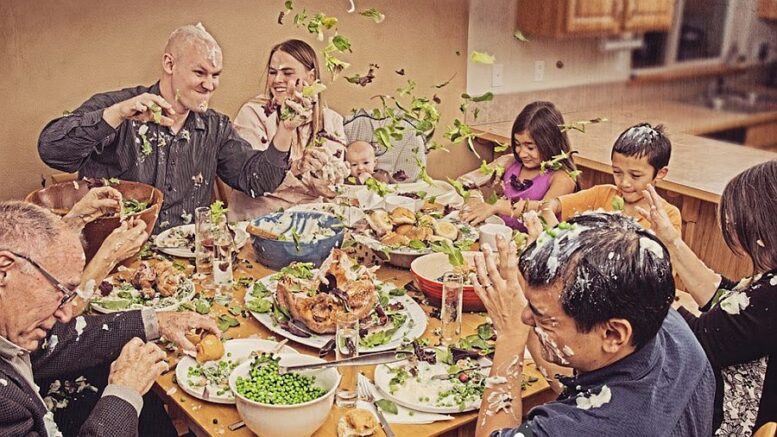
Last year, when the conversation became too personal or invoked words like “conspiracy theory,” we could go off-camera and vent. This year, we don’t have that luxury. I often help clients prepare for a difficult line of questioning from journalists; it’s also important for the discerning dinner guest to be ready and have a plan, especially when family can dig deeper than the hardest-hitting reporter.
Over the past few months, I’ve led a series of media-training workshops for C-suite executives and brand spokespersons from across Long Island. It occurs to me that some of the tips I share there might just save your Thanksgiving.
For instance, there’s the “inverted pyramid,” which encourages you to start your talking points with “why,” not “what.” It’s easier to reach agreements – even with ideological opposites – when the conversation is focused on the end goal.

David Chauvin: Answer man.
I consistently advise clients speaking with reporters to arrange their answers from the big idea to the small. People don’t buy what you do; they buy why you do it. So, when your intrusive cousin asks uncomfortable questions, respond with a mission statement and let it flow from there. At family dinners or at press conferences, it’s not your job to simply answer questions, but to convey your story – and control the conversation.
That means staying on message, and that requires mastery of “bridging” and “pivoting.” Staying on message is key when fielding difficult questions or participating in heated debates; bridging and pivoting refocuses the conversation back to your comfort zone.
Reporters often start interviews with a firm idea of how the story will take shape – just like Uncle Fred, when he asks about your thoughts on the legitimacy of the 2020 election. Rather than falling into the rabbit hole of answering questions on someone else’s terms, bring it where you want it.
Terms like, “Actually, there’s more to it…” or “The important thing to note is…” or, my favorite, “What matters most in this situation is…” create a buffer between the question and your response, and give you a platform to reestablish your talking points.
If that doesn’t work, a good distraction has always proven to be a powerful tool for breaking up an uncomfortable line of questioning. In the media world, we might advise a client to answer an unflattering question about disappointing Q4 earnings by focusing on new Q1 initiatives. Around the Thanksgiving table, maybe it’s mentioning a professional promotion or a new hobby – anything that diverts the momentum of a prying family member.
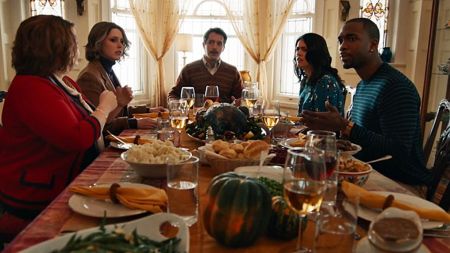
Pushing buttons: Watch that Aunt Susan. She’s sneaky.
You can also seek common ground. Regardless of how tense social discourse becomes, there are almost always commonalities that people can agree on, or at discuss in a way that lowers the temperature to a simmer.
In PR, we often prepare for the interview by taking inventory of the reporter’s biases, preexisting subject knowledge and previous coverage. Around the Thanksgiving table, identify both triggers and commonalities going in. (In my house, we’re diehard Mets fans, so, word to the wise – don’t mention Noah Syndergaard.)
There can be various interview/conversation techniques used against you; understanding them can help you game the system. For instance, reporters love the insert a “pregnant pause” in their questions – an uncomfortable, prolonged silence that will hopefully encourage the subject to fill the gaps.
It’s a great way to snag off-the-cuff, maybe controversial soundbites, the info subjects didn’t originally intend to divulge.
Don’t bite when Aunt Susan springs this trap. Bask in the silence. Grab a bite of sweet potatoes. The interview is your stage, not the reporter’s. Or Aunt Susan’s.
Congratulations! You are now fully prepared for a completely conflict-free family holiday. At least, you’re better prepared. Either way, have a happy and a healthy Thanksgiving, and keep it clean.
David A. Chauvin is executive vice president of ZE Creative Communications.