By TERRY LYNAM //
I’ve been trying to understand why, when and how the issue of diversity, equity and inclusion became such a political lightening rod.
 Perhaps I was naïve or out of touch. But not until the most recent presidential election and the second Trump administration did I realize there was such animosity to the idea of promoting the fair treatment and full participation of all people in the workforce.
I understand why Affirmative Action rubs some people the wrong way, especially as it relates to college admissions and hiring decisions where qualified applicants are passed over because of their race or gender. Few things irk MAGA supporters more than reverse discrimination.
But there are differences between Affirmative Action and DEI initiatives, which aim to create an environment where all individuals – regardless of their background – feel valued and respected and have equal access to opportunities. Affirmative Action focuses on remedying “historical injustices” through preferential treatment mandated by law.
Those are important distinctions.
In healthcare, DEI programs serve an important purpose, especially as it relates to recruitment and patient care.
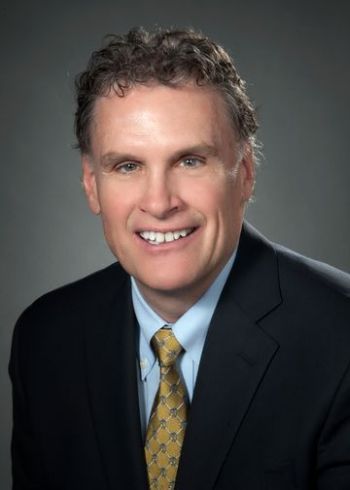
Terry Lynam: Mixing it up.
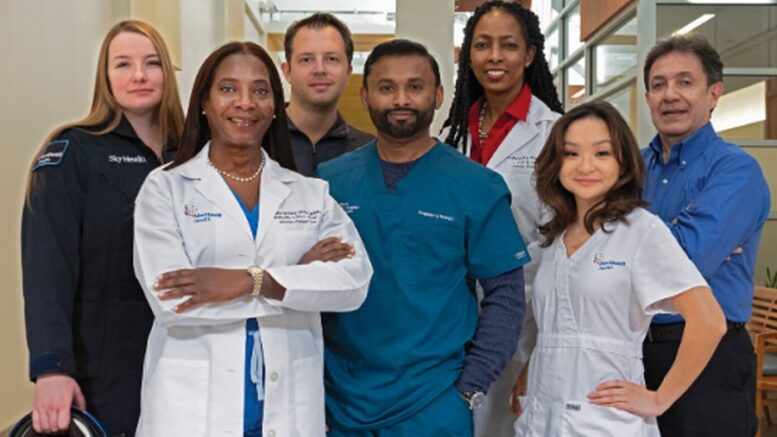
In a racially and ethnically diverse area like New York, health systems and hospitals want a workforce that reflects the patients and communities they serve, particularly as it pertains to doctors, nurses and other clinicians responsible for making medical decisions.
Despite concerted efforts over the past decade, Blacks, Hispanics and other minority groups remain disproportionately underrepresented in American medicine. According to the Association of American Medical Colleges, Blacks represented 5.2 percent of practicing U.S. physicians in 2023, even though U.S. Census data shows they account for about 14 percent of the nation’s population.
Similarly, 19.5 percent of the U.S. population is Hispanic, but Hispanics make up only 6.5 percent of the country’s physicians. About 1.3 percent of the nation’s population is Native American; about 0.3 percent of its physicians are Native American.
The vast majority of U.S. physicians are White (56.3 percent) and Asian (19.3 percent).
So why does having a more diverse clinical workforce, reflective of the people it cares for, even matter? Well, research shows having doctors and patients of the same race as the patient improves communication, trust and adherence to medical advice, resulting in better outcomes.
With the nation becoming ever more diverse, medical schools, health systems, hospitals and medical practice are striving for what they call “cultural competence,” defined as the ability to deliver healthcare that meets the social, cultural and linguistic needs of patients. They say doing that will help reduce or eliminate longstanding racial and ethnic health disparities that have led to a higher prevalence of chronic diseases and shorter lifespans for Blacks, Hispanics and other people of color.

Speaking the same language: Research shows that when providers and patients share cultural factors, health outcomes improve.
Recruiting more Black and Hispanic clinicians is seen as one obvious way of achieving that elusive goal. But a 2023 U.S. Supreme Court decision prohibiting the consideration of race in college admissions hasn’t helped – and the recent political backlash against DEI is prompting many major employers to abandon their diversity programs.
Despite the Supreme Court ruling, the AAMC reported Jan. 9 that 2024-25 medical school enrollment rose 2.8 percent among Blacks and 2.2 percent among Hispanics. The discouraging news, however, is that 11.6 percent of Black medical students and 10.8 percent of Hispanic students never make it to graduation, underscoring the obstacles of increasing physician diversity.
“In the wake of the 2023 U.S. Supreme Court decision on the consideration of race in admissions and state-level policies ending funding for diversity, equity and inclusion programs, medical schools are operating in a new environment,” says David Acosta, the AAMC’s chief diversity and inclusion officer. “In order to continue to recruit and matriculate strong classes, it is critical that schools support pathways programs and use effective, race-neutral admissions practices and tools, such as holistic review.
“The AAMC and our member medical schools remain committed to increasing the number of students from historically underrepresented groups.”
They may be lone voice in the wind in this politically volatile environment. More voices need to rise in defense of DEI programs, especially in healthcare.
Terry Lynam is a communications consultant and former senior vice president/chief public relations officer for Northwell Health.