
BY GREGORY ZELLER //
With New York State’s data-center moratorium on the books, Gov. Kathy Hochul visited Long Island to kick off a statewide victory lap – but not all Islanders are celebrating.
 A roundtable of state and local officeholders and regional business leaders joined the governor July 22 at Babylon Town Hall to cheer on the moratorium, which arrived via an executive order the governor signed July 14.
Data centers are large physical facilities that house the computer systems, servers and other hardware forming the critical backbone of Internet, cloud computing, mobile-app and artificial-intelligence networks. As user demand increases, the centers have become a vital component of the Digital Age.
They have also become a target of environmentalists and other activists. The centers require major-league environmental-control systems to keep their hardware cooled and functioning properly, and have raised ecological concerns over power- and water-consumption levels, persistent noise pollution and more.
Others lament the low job-creation impacts of data centers, which consume capital and space and resources but are sparsely staffed.
Hochul’s executive order, which blocks state environmental permits on data-center construction projects anywhere in New York for a full year, reflects a growing national movement pitting local communities against data-center developers.
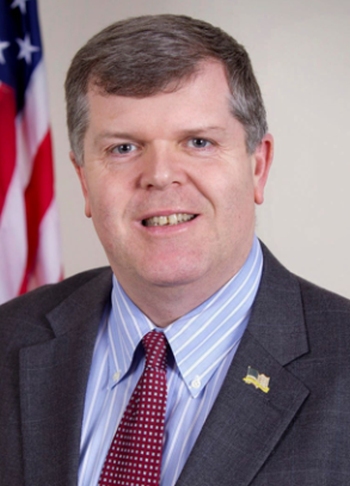
Rich Schaffer: Right approach.
In May, the Brookhaven Town Board unanimously approved a proposed 18-month moratorium on all data-center applications in the town. To date, lawmakers in 15 states have taken up similar legislation, with proposed measures failing in several states and languishing in others.
Only New York has taken the next step – a credit to Hochul’s “thoughtful, balanced approach to the future of large-scale data centers in New York,” according to Town of Babylon Supervisor Rich Schaffer, who joined the governor and other leaders at the July 22 press event.
“By pausing new projects while the state conducts a comprehensive review, the governor is ensuring that we get this right before decisions are made that could have lasting impacts on our communities, our electric grid and our environment,” Schaffer added. “This collaborative process will help develop a framework that supports economic opportunity while protecting our residents, natural resources and infrastructure for generations to come.”
But not every observer is as enamored with the governor’s leadership on this issue, or the 12-month statewide pause.
Some critics are calling out the governor for playing politics. They say Hochul, who is running for re-election in November and already this year has scaled back Albany’s ambitious greenhouse-gas reduction plan, is making an “affordability” play that benefits her and other Democrats locked in tight Congressional races – and a temporary one at that, with the moratorium conveniently set to expire after the 2026 election.
The order also draws a line in the sand between Hochul and her gubernatorial opponent, Nassau County Executive Bruce Blakeman, a vocal acolyte of President Donald Trump who has called the governor’s move “crazy” and vowed to scrap the moratorium if he wins in November. (The metaphor-mixing Trump has dubbed data centers “liquid gold.”)

Stacey Sikes: Wrong message.
One of Long Island’s busiest and most hands-on business-boosters has also taken a stand against Hochul’s decision. Long Island Association Acting President and CEO Stacey Sikes issued a statement earlier this month saying the moratorium “sends the wrong signal” and calling on Albany to “continue to lead in innovation, artificial intelligence and advanced infrastructure.”
“The Long Island Association believes New York can protect communities while competing for the industries that will drive our future economy,” Sikes said July 14. “Governor Hochul has made New York a national leader in artificial intelligence through initiatives like Empire AI – to fully realize that vision, New York must also support the infrastructure that enables it and create a pathway for responsible development.
“Rather than imposing a blanket statewide moratorium, New York should establish a balanced framework with clear standards to help guide communities that choose to pursue thoughtful data-center development and evaluate projects on their individual merits,” the acting CEO added, championing a measured approach that will help those communities “realize the jobs, tax revenue, private investment and long-term economic benefits these facilities can generate.”
A balanced framework is exactly what the governor is trying to accomplish with the one-year moratorium, according to Empire State Development Corp. President, CEO and Commissioner Hope Knight.
“Governor Hochul is ensuring that New York remains a leader in innovation while setting clear expectations for large-scale data-center projects,” Knight said in a statement. “Through the Community Investment Framework, ESD will help local leaders secure strong community benefits, protect taxpayers and advance investments in infrastructure, workforce development, childcare and other priorities that improve residents’ quality of life.”
The governor herself was quick to note that Albany has not permanently banned data-center construction, but is pausing to take a breath while the true benefits and environmental effects of such facilities become clear.
“The moratorium I signed is ensuring we develop a framework that meets the needs of New Yorkers,” Hochul said. “We are the first to enact this bold vision and we will be the first to get this right.”