
By DAVID A. CHAUVIN //
My first government job was as a Nassau County legislative aide in 2000. A few months in, I was at a community event when then-County Executive Tom Gulotta waved me over.
 What he shared sticks with me, 25 years later.
The executive didn’t offer a policy lesson or give a political pep talk. He taught a tutorial on how to set up a photo. He showed me where people should stand, how to frame the principals, how to capture the moment so the picture told the story all on its own. He stressed the importance of finding the right backdrop – avoid clutter – and keeping the focus on the people, not the props.
It was a quick conversation, but it felt like a masterclass. Gulotta understood something that many organizations still miss: The photo isn’t just part of the story. It is the story.
It’s no coincidence he became one of the most recognizable county executives in Nassau history. You couldn’t open a paper without seeing him – at diners, at ribbon cuttings, at community centers. His image was everywhere because his team treated every photo like a headline.
That lesson feels more relevant than ever. Today, with newsrooms shrinking and social media driving the conversation, your event photo often determines whether your story gets seen at all.
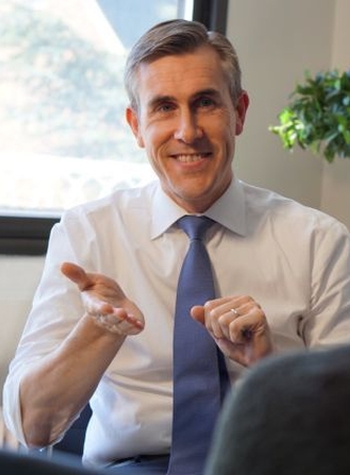
David Chauvin: Get the picture.
Despite having better technology than ever, however, we often take terrible pictures: flat, over-staged, filtered into oblivion.
Ironically, the next generation might be showing us the way back. A recent Wall Street Journal article spotlighted the surprising comeback of flip phones and early-2000s point-and-shoot cameras.
Both are popular among Gen Z teenagers, who are ditching their iPhones for simpler tools that force them to slow down and focus on framing, lighting and timing. No portrait mode. No endless retouching. No filters trying to make reality “pop.” Just a shot, taken deliberately.
The photos are grainier. Less polished. And often, more authentic.
That’s the part that matters. These kids aren’t just chasing retro cool – they’re rejecting the hyper-curated, algorithm-approved look that dominates our feeds. And in that rebellion is a lesson for anyone trying to communicate something real.
Modern tools make it easy to take technically good photos. But they also make it easy to take thoughtless ones. That’s why so many event pictures look exactly the same: a line of people clutching an oversized check, squinting into the sun, frozen in a pose you won’t remember in one minute. Someone throws a filter on it and calls it a day.
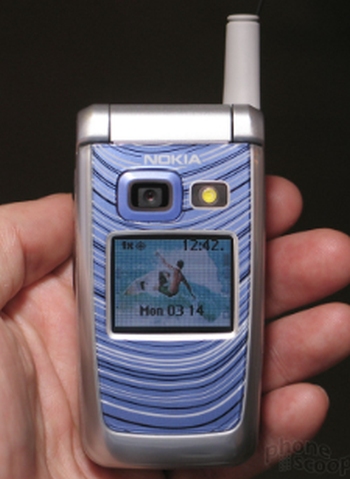
Flipping out: A 2005 Nokia is a hot commodity, once again.
But a great image – like the ones Gulotta mastered decades ago – doesn’t happen by accident. It takes intention. It’s about deciding what moment actually tells the story: the handshake, the laugh, the ribbon snip. It’s about clearing the background, finding the light, framing the shot so the message lives inside the image.
Pretend, for a moment, that you’re shooting with a flip phone and you only get one try. No retakes, no editing. What would you focus on? That’s the discipline that produces photos people feel, not just see.
There’s a reason Canon PowerShots are suddenly hot resale items. They’re simple, not effortless. They make you pay attention. And in paying attention, you usually get something real.
In PR, authenticity beats aesthetic perfection every time. A slightly off-center shot of a business owner mid-laugh will travel farther than a perfectly staged group lined against a wall. A candid ribbon-cutting moment says more than a dozen scissor people staring at the camera.
Tom Gulotta didn’t need fancy cameras to dominate the visual landscape. He had a sharp sense for what moments mattered – and a team that knew how to capture them.
We could use a little of that sensibility today. The photograph you release isn’t decoration. It’s the headline. And sometimes, to make it meaningful, it helps to think a little less like a content creator – and a little more like someone in 2005 with a flip phone, waiting for just the right moment.
David A. Chauvin is executive vice president of ZE Creative Communications.