By TERRY LYNAM //
When I was 20 years old, my girlfriend (now my wife) and I applied for and received food stamps for about a month.
 We’d just driven cross-country to Missoula, Mont., where I was starting my junior year of college. We’d made a down payment on an apartment and had less than $75 between us. Even in the late 1970s, that didn’t go far.
Within a couple weeks, we both got jobs and were able to fend for ourselves. But at the time, we were in a panic.
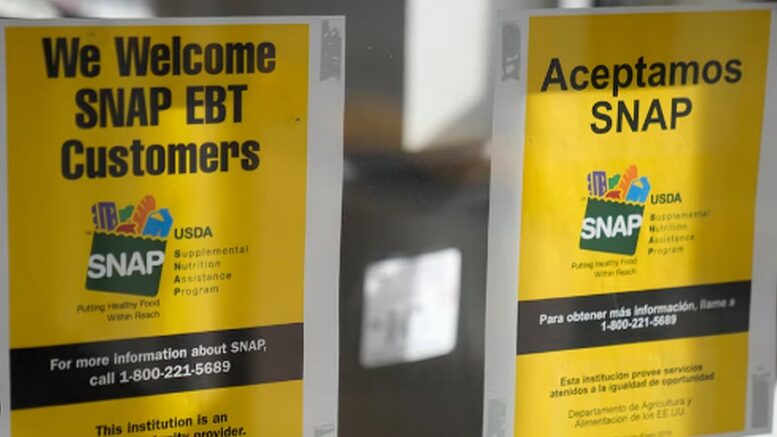
Nearly 42 million Americans who rely on the Supplemental Nutrition Assistance Program to put food on the table – including more than 2.9 million New Yorkers and about 184,000 Long Islanders – are feeling that same angst now.
About two-thirds of those receiving food aid are seniors ages 60 and older, people with disabilities and youngsters 18 and younger, with children accounting for 39 percent of all recipients. As a parent, I can’t imagine anything more unsettling than not being able to feed your kids.
Based on the latest developments, it looks like SNAP benefits – issued through an Electronic Benefits Transfer card – will continue to trickle out. But when recipients will get them, how much they’ll receive and for how long are unanswered questions as the record-long government shutdown drags on.

Terry Lynam: Deeply disturbing politics.
In the wake of two court rulings requiring the U.S. Department of Agriculture to tap into a $4.6 billion contingency fund to keep SNAP running, the Trump Administration agreed earlier this week to resume partial payments. But the administration opted against using other available funds to fully restore SNAP benefits, so there’s only enough money to distribute about half of the $187 monthly per-person average benefit.
State and local governments and regional food banks are trying to fill the gap, but it’s an uphill battle, according to Gregory May, director of government and community relations at Island Harvest, which supports 300 food pantries across Long Island and distributes food to the hungry directly from its Melville headquarters and Uniondale warehouse.
“For every one meal that a food bank like Island Harvest provides,” May says, “SNAP provides nine.”
“We can try to do our best to get more food out there,” adds Island Harvest Director of Development Amanda Chirco. “But we cannot make up that shortfall if the government shutdown continues.”
Long Island’s 184,000 SNAP recipients receive about $47 million per month in benefits, calculates May, meaning SNAP also has “a cascading effect on the local economy.”
“That’s $47 million a month being spent on Long Island at our grocery stores and supermarkets,” he notes.
Nationwide, about one out of every eight Americans rely on the SNAP program, which was established as the Food Stamp Program in 1939 as people continued to struggle through the Great Depression.
 Contrary to misconceptions of fraud and abuse, May says the vast majority of Long Island recipients turn to SNAP after a job loss or other financial emergency. They must meet stringent income-eligibility requirements – and their reliance on the program is only temporary, with an average of about 15 months.
May says it’s the SNAP recipients themselves who most often become victims of fraud, usually when scammers steal their benefits by skimming their EBT cards.
While the United States is considered the world’s richest country, hunger remains a pervasive national issue. On Long Island, there were 132,760 Suffolk County residents and 107,760 Nassau County residents living in food-insecure households in 2023, according to Feeding America, a nationwide network of food banks.
The USDA counted more than 47 million people nationwide – about 13 percent of the U.S. population – living in food-insecure households in 2023, including 841,000 children. Government data on how many Americans are going hungry is no longer available; the USDA announced in September that it would stop conducting its annual food insecurity survey, calling it “redundant, costly, politicized and extraneous.”
The USDA’s announcement came two months after President Donald Trump signed the One Big Beautiful Bill Act into law. The Congressional Budget Office estimated the law would cut SNAP funding by about 20 percent ($186 billion) through 2034 – the largest reduction in the program’s 86-year history.
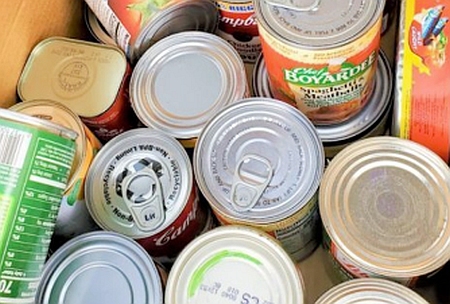
Canned good: Long Island donors and nonprofit programs are doubling up to fill SNAP gaps.
The law also imposes expanded work requirements for recipients, requires states to pick up some of the costs and puts 22.3 million Americans at risk of losing some or all of their benefits, according to the Urban Institute, which estimates that the average SNAP family will lose $146 a month.
It’s deeply disturbing that low-income Americans are being used as political pawns in this latest game of chicken between Congressional Republicans and Democrats. The only good news is that Long Islanders are stepping up to help.
“We’ve received an outpouring of support in terms of donations, people who want to volunteer, who want to do food drives, who want to do anything they can to support their neighbors,” Chirco notes.
Anyone interested in helping should reach out to Island Harvest or Long Island Cares: The Harry Chapin Regional Food Bank, or their local food pantries.
Terry Lynam is a communications consultant and former senior vice president/chief public relations officer for Northwell Health.