By TOM MARINER //
A combination of local passion and superb management is helping Nikola Tesla get his due recognition – and Long Island, too.
 Tesla, of course, is the Serbian American inventor who helped light up the 20th Century, though he rarely gets the credit he deserves. Sailing from Europe and straight into a rivalry with Thomas Edison, Tesla was the champion of alternating-current electricity – diametrically opposed to one-time employer/lifetime competitor Edison’s direct-current technology.
Although Edison wears the innovation crown, Tesla was a true “rock star” of his day. His alternating current now lights the world. His AC induction motor was a game-changer, and many of the 190-plus patents he secured alluded to some of today’s most important technologies, including wireless communications, fluorescent lighting and X-rays.
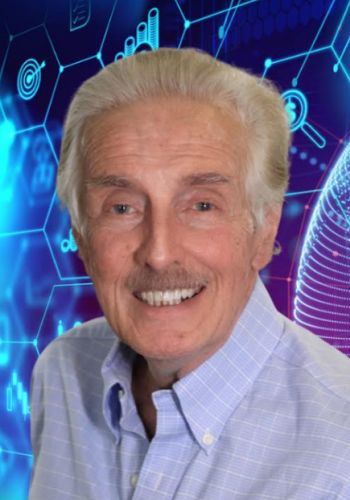
Tom Mariner: Driving Tesla home.
He hobnobbed with the elite, including bankers and venture capitalists who invested in large corporations, betting on innovators and their ideas. He got J.P. Morgan to invest $150,000 – almost $5 million in today’s money – in a 200-acre plot of land in Shoreham (renamed Wardenclyffe for developer James Warden) and the construction of a laboratory and tower to transmit both information and electrical power wirelessly.
Construction on the tower began in 1901. Unfortunately, Guglielmo Marconi – leveraging several Tesla patents – found success in Europe before Tesla’s tower was ready.
Tesla’s investors backed out and he lost everything. Eventually, the tower was torn down to pay his debts. The shrinking property – down to just 16 acres today – was occupied by a series of commercial tenants.
In 1987, the last of them, Agfa, put the Shoreham site up for sale, with the last remnants of Tesla’s laboratory likely to be leveled by a new developer. A grassroots group of educators and civic leaders led by Jane Alcorn raised attention and led what became a global fundraising effort, with 33,000 donors in 108 countries – including a $1 million donation from Tesla Inc. founder Elon Musk – saving the site.
The people who engineered the preservation of the lab understood the imperative of a motivated, talented leader to keep Wardenclyffe moving forward.
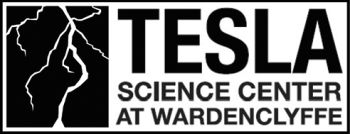 They already knew of Marc Alessi from his help during his three terms in the New York State Assembly – and as a neighbor of the Shoreham laboratory. His experience as an entrepreneur, coupled with his contacts for civic actions and fundraising, sealed the deal.
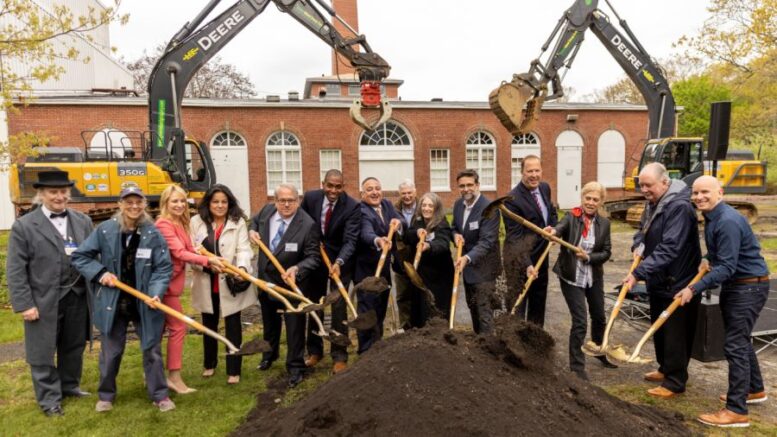
Alessi and the Tesla Science Center at Wardenclyffe team he’s hired have helped raise $12 million of a planned $20 million renovation campaign. This week, they kicked off their next construction phase, leveraging a $1.47 million grant from the New York Council of the Arts.
After five minutes with the executive director in his temporary Tesla Science Center office, you see that leadership is not just his job, it’s his calling. Alessi, his team and the center’s Board of Directors share the same passion for carrying on Tesla’s vision – not the technologies the scientist foresaw, but for a technological future, and the need to support those who will create it.
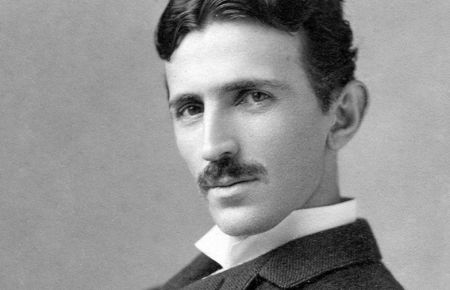
Do you know me: Sure you do … and soon, everyone will fully realize Tesla’s (and Long Island’s) energetic legacy.
Outside Alessi’s office, a large octagon of arranged stones outlines the base of the 187-foot tower that once loomed over Wardenclyffe. Referencing a rail line that once ran past the property (now a hiking trail), Alessi notes several derelict buildings waiting to be torn down and replaced with a proper museum, an accelerator for early-stage technological development and an educational center with a focus on STEAM activities.
In the middle of the site sits what’s left of Tesla’s one-time laboratory, about 8,800 square feet inside as tough brick shell. It shouts “Stanford White,” the premier architect of the time, with its careful curves and unique window arrangements.
The building’s chimney and wellhead were restored in 2020, but there’s plenty more work to be done. The goal, Alessi says, is to restore the building so that you can “feel Tesla’s presence.”
And of course, along the way, to energize Tesla’s goal of enabling future technologists.
Tom Mariner is the executive director of Bayport-based Long Island Bio.