By GREGORY ZELLER //
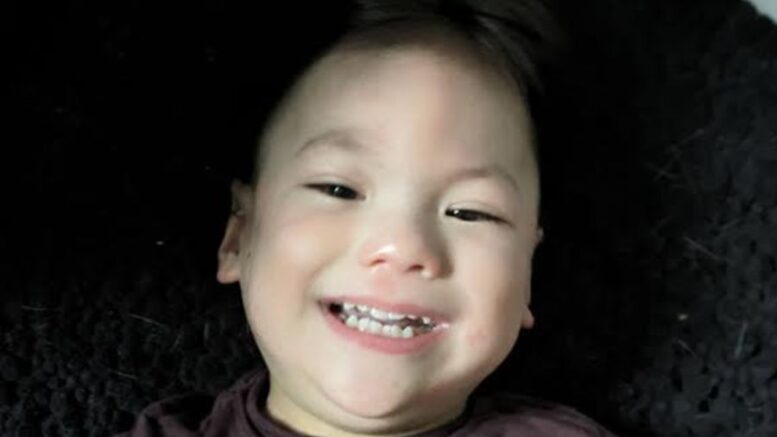
A California biotech has leveraged artificial intelligence and other cutting-edge tools in a perilous rescue mission focused on a 2-year-old Setauket boy born with an unusual genetic disease.
 At just 4 months old, Leo Wei Church was diagnosed with an ultra-rare and severe neurodevelopmental disease involving a mutation in his Transportin-2 gene, which is critical to protein coding. The mutation caused significant developmental delays and frequent seizures that interfered with young Leo’s breathing.
With little medical precedence – and virtually no answers – related to their baby’s condition, Leo’s family launched the TNPO2 Foundation, with the larger mission of focusing modern science and technologies on rare diseases affecting children, and the more immediate task of sparking research and developing treatments to battle Leo’s unique condition.
Enter Creyon Bio, a Carlsbad-based, cutting-edge drug-development company dedicated to formulating individualized medicines for rare-disease patients. Armed with proprietary tools including AI platforms and customized datasets, Creyon Bio set out to create an antisense oligonucleotide therapy – a synthetic, gene-centric medicine that can alter RNA to reduce, restore or modify faulty protein expressions – specifically for Leo.
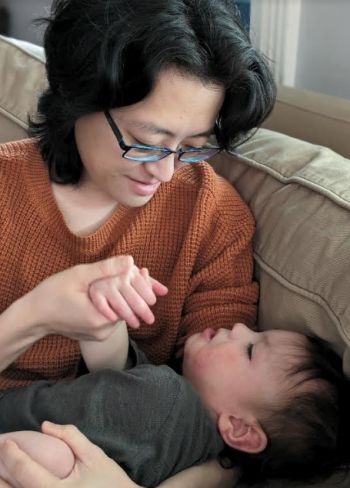
Won’t take “no answers” for an answer: Yiwei She wouldn’t take baby Leo’s diagnosis lying down — and believes similar action can help other babies with rare diseases.
Roughly nine months ago, just one year after Creyon Bio partnered with the TNPO2 Foundation, the first dose of “Leosen” was administered to the Setauket boy.
The next-generation treatment has been “well-tolerated” by the young patient, according to the foundation, and “the measurable improvements in his behavior, health and developmental progress are encouraging.”
Creyon Bio’s intervention in Leo’s distinctive case was highlighted in an oral presentation made last week in Baltimore, during the American Society of Gene & Cell Therapy’s annual meeting. While the boy’s long-term prognosis remains uncertain, his progress is promising – and stands as a testament to the potential of rapid-development personalized therapeutics, according to foundation founder Yiwei She, Leo’s mom.
“Leo had access to a treatment sooner than most other children who are afflicted with such a rare genetic disorder,” She said.
Similar individualized treatments are at the heart of Project Baby Lion Pilot, a sponsored clinical-research study underway at Stony Brook Children’s Hospital. The pilot will use a state-of-the-art genetic sequencing tool developed at San Diego’s Rady Children’s Institute for Genomic Medicine to select critically ill neonatal intensive-care unit babies suffering from rare genetic abnormalities, with hopes of developing individualized treatments relatively quickly.
 That’s the TNPO2 Foundation’s primary goal, according to She, a mathematician and machine-learning engineer who described the reality of receiving an ultra-rare diagnosis for your child, with no known treatment options, as “devastating.”
“That [Leo] was given a chance with a personalized medicine is almost a miracle by itself,” She noted. “Only a handful of such projects reach this stage.”
With the TNPO2 Foundation leading the way, that will hopefully change, the grateful mother added.
“The mission of the TNPO2 Foundation is to repeat what we did for Leo for children and families in dire need with no other options,” She said. “So many children are lost in the ‘diagnostic odyssey,’ and we feel strongly that they can be rescued through urgency and purposeful action.”