


By DEBORAH MAYO //
In September, researchers at Northwell Health’s Feinstein Institutes for Medical Research in Manhasset took a crucial step toward understanding the schizophrenia spectrum – a range of serious mental health conditions affecting thousands across New York State.
 Their research identified previously unknown disruptions involving “jumping genes” in the blood gene-expression networks of people living with the condition. The findings could eventually open new paths for understanding, diagnosing and treating schizophrenia spectrum disorders.
For patients struggling with difficult-to-manage mental-health conditions, innovation like this offers hope. New discoveries create opportunities for patients to heal, regain their independence and reconnect with loved ones.
As someone who works to promote mental health and wellness on Long Island, I know how much that hope matters. New York policymakers must protect the healthcare ecosystem that makes it possible.
Progress doesn’t happen by accident. Innovation depends on a carefully coordinated chain of discovery, investment, research, development, testing and review. Protecting that system is essential to providing patients with the best possible care, because innovation creates options and options give patients a better chance of finding what works for them.
That’s especially important to recognize this October, which is National Intellectual Property Month. Patents and other intellectual property protections provide a limited period of certainty that allows researchers and life-sciences companies to pursue promising ideas, including those that may take years of additional study before becoming treatments.

Deborah Mayo: IP protections equal better healthcare outcomes.
Only about 12 percent of medicines entering clinical trials receive FDA approval – the rest don’t make the cut. Combine that with the fact that new treatments commonly take a decade or longer to develop, and the cost of innovation begins to add up.
Every successful medicine must overcome some pretty significant odds to reach patients. Intellectual property protections enable researchers and companies to take on those risks and continue searching for the new advancements patients are counting on.
New York shows what can happen when that innovation ecosystem thrives. Just last year, researchers on Long Island received millions of dollars in research funding from the National Institutes of Health. Our region also supports more life-sciences jobs than any other part of the state, with researchers, manufacturers and healthcare professionals all working to develop the next major healthcare innovation.
Our medication-development pipeline ranks third in the entire nation. That matters because a robust pipeline means more potential treatments being studied, more scientific questions being pursued and, ultimately, more chances to address patients’ unmet needs.
The same innovation ecosystem that delivers medical breakthroughs also supports thousands of jobs, strengthens local economies and reinforces New York’s position as a national leader in life sciences.
When it comes to mental health, no single treatment works for everyone. A medicine that improves one person’s life may be less effective for another. There is also a dire need for new therapies that address both “positive” symptoms (like hallucinations and delusions) and “negative” symptoms (like emotions, social cues and motivation).
Recent advances highlight why this matters. In 2024, the approval of a new medication introduced a new approach for adults on the schizophrenia spectrum. Cobenfy was the first approved treatment to target a different system in the brain, making it different from traditional antipsychotics.
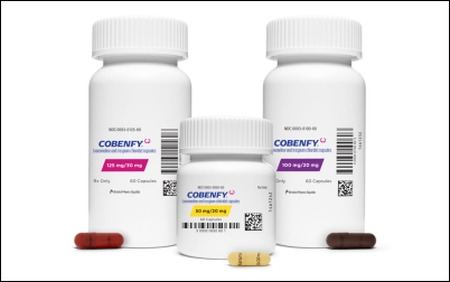
New … and improved?: Federal approvals for Cobenfy ushered in an all-new treatment approach for adults with schizophrenia.
Innovation gives patients and providers more options to find an approach that fits an individual’s specific needs. When an initial treatment falls short, the availability of other options can make an enormous difference.
A strong IP system also encourages researchers to continue studying approved medicines, including whether they can help different patient populations, address additional conditions or be delivered in ways that better support patients. When appropriate protections expire, the same framework supports competition from lower-cost generic and biosimilar medicines.
Access to care is crucial to patient outcomes, and so is the innovation that drives it. That’s why we must be wary of any policies or regulations that make it harder to fund promising research, conduct clinical trials or develop new treatments. When public policy undermines the conditions that enable medical progress, patients ultimately pay the price.
For mental-health patients, innovation can mean earlier diagnoses, treatments with fewer or more manageable side effects and a higher quality of life.
New York’s elected officials have an opportunity to lead on this issue. Senators Chuck Schumer and Kirsten Gillibrand (both D-NY), along with U.S. Representatives Nick LaLota (R-1st Dist.), Andrew Garbarino (R-2nd Dist.), Tom Suozzi (D-3rd Dist.) and Laura Gillen (D-4th Dist.), should carefully evaluate proposals that could weaken reliable IP protections, discourage research investment or make it harder to pursue the next generation of treatments. Patients should be at the center of those decisions.
Intellectual Property Month is an opportunity to remember that the policies governing research and innovation are ultimately about people. Protecting healthcare innovation means safeguarding a patient’s health, their next treatment option and, potentially, their chance at a healthier future.
Deborah Mayo is the president of Port Jefferson-based Living Hope for Mental Health and a former member of the New York State Behavioral Health Services Advisory Council.





Be the first to comment on "IP protections are critical to advancing healthcare"