

By JEFFREY L. REYNOLDS //
Ahead of its monster IPO set to launch next month, Anthropic – the California-based artificial intelligence company behind Claude AI – got generous.
 Anthropic announced plans to commit 5 percent of its shares to a new Anthropic Public Benefit Fund, subject to stockholder approval. The philanthropic fund would support nonprofit organizations or provide direct financial assistance to certain populations, including workers affected by AI-driven economic changes.
Not everyone thinks nonprofits and targeted aid are the best route. Elon Musk, the world’s richest man, has other ideas.
“I recommend giving the shares directly to the public,” he wrote on X, replying to Anthropic’s announcement.
The next day, Musk went further, promising to give one share of SpaceX, the rocket maker that now competes with Anthropic in AI, to “every kid in America” in 2027.
The White House quickly accepted the offer, and President Donald Trump thanked Musk for agreeing to distribute the stock through Trump Accounts, the new government-run savings program for American children born between 2025 and 2028.
Jeffrey Reynolds: Can’t buy love.
Trump Accounts are designed to give each eligible child with a valid Social Security number a one-time $1,000 federal deposit. Families can contribute up to $5,000 per year; employers (up to $2,500 annually) and approved philanthropists can add to the accounts as well.
Among those philanthropists are Michael and Susan Dell, who last year announced that they would deposit $250 in individual investment accounts for 25 million children – a gift totaling $6.25 billion.
That’s good news. But if the world’s billionaires start handing money directly to disadvantaged kids and displaced workers, what does that mean for traditional philanthropy – and America’s 1.9 million nonprofits, which historically bridge donors and the people they want to help?
Nonprofit organizations have argued for decades that they add value and amplify donated dollars. They offer judgment (about who needs help), trust (essential to reach people who often avoid institutions), the capacity to mobilize community volunteers and scale assistance, and accountability.
Now they must compete with free money distributed widely and without strings, and also without support.
A stock share can’t sit with a teenager whose father just lost his job or teach a kid from a failing high school how to write a compelling college-admissions essay. A direct deposit doesn’t notice that a laid-off warehouse worker has stopped answering the phone and may be contemplating suicide.
Nonprofits need to tell those stories better and back them up with numbers. Otherwise, donors will conclude, fairly, that nonprofits are middlemen they no longer need.
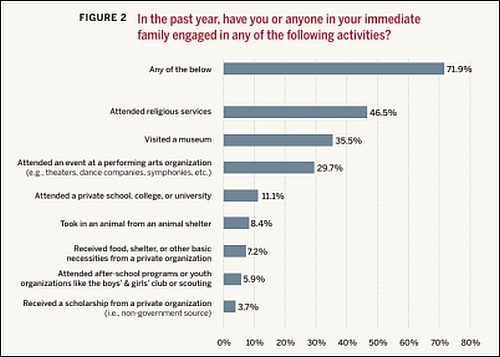
Non-sequitur: Most people think they don’t use nonprofit services — until they realize they do. (Source: Indiana University Lily Family School of Philanthropy)
Part of the problem is that most Americans don’t recognize a nonprofit even when they’re using one.
Asked by researchers at the Indiana University Lilly Family School of Philanthropy whether they or someone in their immediate family had received services from a charity or nonprofit in the past year, just 7.4 percent of those surveyed said yes. But reported nonprofit engagement was much higher (71.9 percent) when respondents were asked if they had visited a museum, participated in religious services, attended an event at a performing-arts organization, rescued a pet from a shelter, received a scholarship or attended a private school, college or university.
It’s difficult to trust something you don’t know you’ve used. That’s probably why the same survey found that only 23.3 percent of respondents expressed high confidence in nonprofits’ ability to solve societal or global problems.
“Nonprofits don’t need a huge budget to stand out,” says PR pro Jody Fisher, who works with several local nonprofits. “But they do need to relentlessly tell their story.
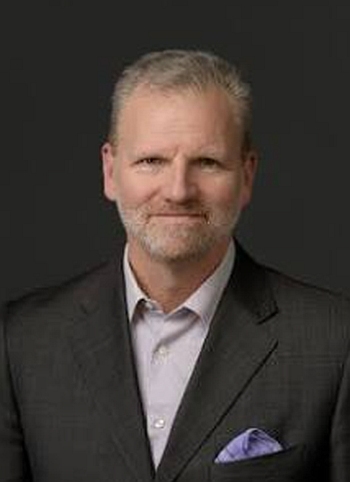
Jody Fisher: Explain yourself.
“Share a real person’s experience,” Fisher adds. “Back it up with a meaningful result and explain why it matters.”
Paule Pachter, the former longtime CEO of Long Island Cares-The Harry Chapin Regional Food Bank who now consults with local nonprofits, agrees.
“Nonprofit organizations sometimes don’t see the larger picture when it comes to marketing the good work they do to a broader audience,” Pachter notes. “This is often compounded by their reluctance to invest in advertising and marketing because they believe that their funding needs to support their stated mission of serving people in need.
“But if the community doesn’t know that your organization exists, you’re at a disadvantage.”
Jeffrey L. Reynolds is the president and CEO of the Garden City-based Family and Children’s Association.





Be the first to comment on "Cash is a good start, but true philanthropy runs deeper"