By DAVID A. CHAUVIN //
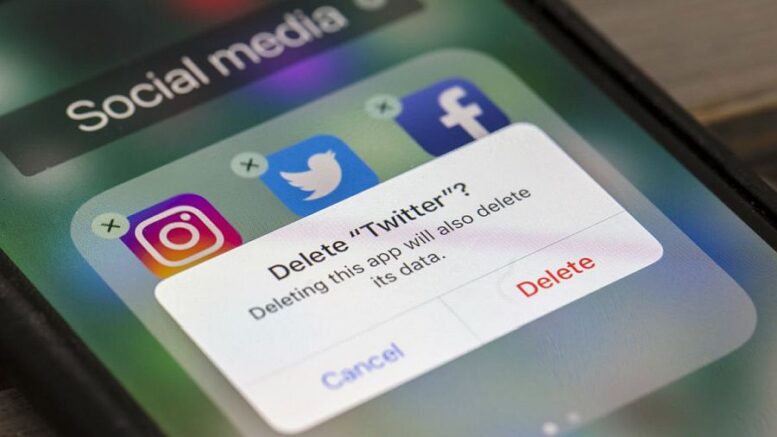
X, nee Twitter, is finished.
 Maybe not MySpace finished, but the once-giant social networking platform’s days of being one of the most important players in the media landscape may be over. Elon Musk’s cartographically misguided – yet sadly unsurprising – proposal to charge users for X access could be the beginning of the end for the site once (and better) known as Twitter.
X’s power (it’s difficult not to call it “Twitter” … I just want to call it Twitter so badly) and its value have always been directly linked to its universal access. It was free. It was accessible. It was easy to use. It was everywhere.
Musk’s proposal could change all that.
When he announced the idea in a live interview with Israeli Prime Minister Benjamin Netanyahu, Musk suggested that charging a monthly user fee could be the best way to rid X of bots that manipulate discourse. As expected, users oppose the plan.
That’s not surprising. Even X Premium (formerly Twitter Blue), an $8-per-month subscription program that “verifies” accounts and helps creators monetize content, has struggled to take off. But here it is, the next frontier, a paywall between the public and X content.
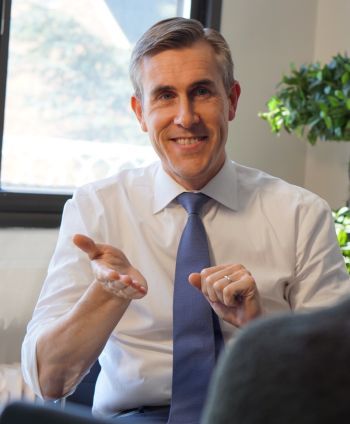
David Chauvin: Difficult breakup with X.
This is especially interesting considering that, according to X itself, around 20 percent of the platform’s users make up 100 percent of the content – meaning four out of five users are read-only. In other words, a vast majority of X users never actually post anything.
So, do lurkers love lurking so much they’re willing to pay for it? Doubtful. I mean, Musk knows Reddit is still free, right?
Even before this announcement – and, in fairness, before Musk bought and rebranded Twitter – the site’s cultural cache was waning. A policy change that ultimately blocks out the vast majority of its userbase could be X’s death knell.
The question then becomes, what happens to our media landscape if X is no more?
X’s impact on politics, its shameless spreading of misinformation and the creation of information echo-chambers have all been widely covered since the 2016 Presidential election. However – aside from the almost performative backlash when Musk took over the platform in April 2022 – its ubiquitousness and importance have not changed much.
Many will see the dissolvement of the “Twitterverse” as a cleansing of a damaged society, but it would also create a massive void between the public and public voices.
ZE Creative Communications Vice President Jake Mendlinger constantly reminds me of a 2010 Slate article about a reporter’s “weekend with Kanye West,” which relied solely on West’s social media posts and included zero direct interviews with the celebrity. The idea was to explore how social media offers “direct access” to those once living behind the curtain.
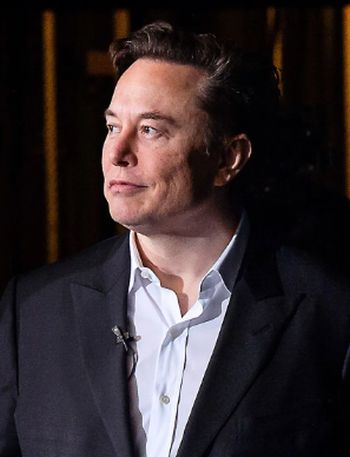
Elon Musk: Phone charger.
Speaking of Kanye West, the paywall would also eliminate public accountability for what users post, since it would no longer be posted in a public domain but on a paid-access platform. What’s more, if the number of people posting to Twitter decreases, the power of those who still do will increase exponentially.
This holds even more significance when we think about the 2024 Presidential election. After all, every great political campaign is also a case study for adopting new media channels and platforms.
In 1952, President Eisenhower ran the first televised campaign ad, “Eisenhower Answers America,” solidifying him as the Living Room President. In the 1960s, when the television was in 90 percent of American homes, the charismatic John F. Kennedy offered a stark (and more electable) contradiction to the less-camera-friendly Richard Nixon. The rise of cable television in the 1980s and 1990s led to more demographically selective programming – advantageous for Bill Clinton, who famously appeared on an MTV Town Hall.
And so on, until we found ourselves linked inexorably to Donald Trump’s Twitter account.
Presidential history is basically an allegory for the evolution of media technology and consumption. In politics, at least, the media of the moment is Twitter, and it has been since about 2012.
What fills its void if Elon Musk kills it?
David A. Chauvin is executive vice president of ZE Creative Communications.