
By JEFFREY L. REYNOLDS //
Everyone is talking about affordability.
 Newly inaugurated New York City Mayor Zohran Mamdani, Gov. Kathy Hochul – even President Donald Trump, who recently launched his own “affordability push,” after previously calling the affordability crisis “a hoax.”
Suffolk County Executive Ed Romaine and Nassau County Executive Bruce Blakeman both bemoaned the lack of affordable housing and affordable childcare options at the Long Island Association’s Jan. 9 State of the Region Breakfast. That’s not surprising, since Long Island has been known for its high cost of living.
But recent national discussions about affordability – the cost of housing, healthcare, childcare, car insurance, groceries, utilities and, ultimately, the American dream – have shifted.
There’s more urgency and less judgment these days, probably because more people are having trouble making ends meet. Costs have gone up and wages have remained flat and affordability has stopped being someone else’s problem.
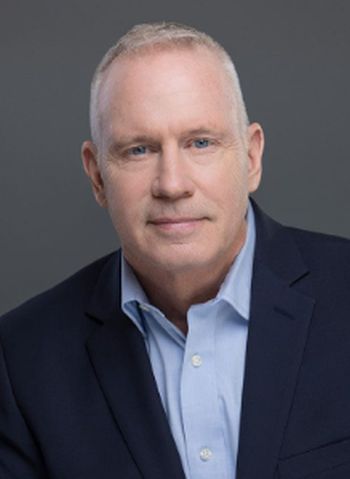
Jeffrey Reynolds: Can’t afford not to listen.
“Affordable” has been a dirty word in real estate for decades – code for tanking property values and undesirable neighbors. The mere mention of “affordable housing” still triggers NIMBYs who show up en masse to oppose projects that would shelter the teachers, nurses and service workers their communities desperately need.
Pundits and politicians used to talk about the “economy” as this abstract, complex and mostly self-correcting system that, with some occasional interest rate tweaks, works just fine. Those who stumbled on their mortgage payments or turned to a food pantry for a box of pasta at the end of the week probably made lousy choices along the way.
That myth has vanished. And nowhere is it more obvious than at food pantries, housing programs, childcare centers – the organizations helping those who fall through cracks, which have been working on affordability issues for decades, long before it was cool.
We see it every day. Heads of families working 16-hour shifts and still choosing between food and rent. Kids left home alone after school because their parents earn too little to afford daycare but too much to qualify for assistance. Seniors skipping medication as they struggle to remain in homes they bought 30 years ago.
Affordability isn’t in our wheelhouse. It is our wheelhouse.
Nonprofit organizations are essential to solving the local and national affordability crises but are frequently left out of the policy conversations. They are chronically underfunded and have been thrown into “survival mode” by soaring demand for services, rising costs, flat revenues (at best) and federal funding cuts that have accelerated the nonprofit starvation cycle – and pushed even more families to the brink.
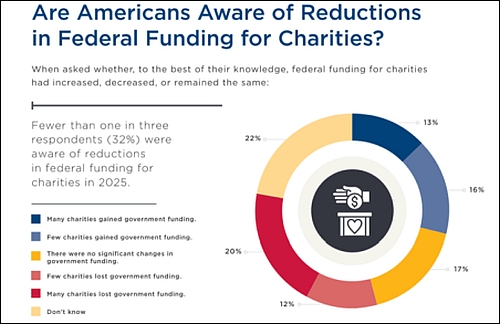
Quiet cuts: Most Americans are unaware of drastic reductions the Trump Administration has made in federal nonprofit funding. (Source: The NonProfit Times)
Part of the problem for nonprofits might be the way we talk about our work. We want to sound credible, legitimate and helpful, so many organizations wrap their services in layers of professional-sounding language that obscures what we actually do.
We don’t house people; we operate “housing insecurity prevention assistance programs.” We don’t feed families; we crib the USDA’s language and “combat food insecurity.” We don’t provide mental-health counseling; we deliver “trauma-informed, evidence-based psychosocial services.” We don’t help kids with homework; we facilitate “community-based supplemental educational enrichment opportunities.”
Even helping people get the right healthcare, according to one organization, requires a “unique interactive health literacy and self-advocacy program, bridging the healthcare gap.”
Why don’t we just say what we mean? We help people find, keep and afford safe homes. We make sure families can eat. We provide counseling when life gets hard. We help kids with their homework. We help people get to doctors’ appointments, buy health insurance or obtain government healthcare benefits.
The work is complex, but the language doesn’t need to be. When we use pretentious buzzwords and pedantic jargon in our brochures, mission statements and websites, we don’t sound smarter – we confuse everyone, including government officials seeking community partners, donors seeking impact and people seeking our help.
Affordability is finally getting the attention it deserves, and nonprofits should be leading this conversation. Politicians are looking for solutions. We have them. Donors are looking for impact. We deliver it. Families are looking for help. We provide it.
Perhaps we just need to say so in a way that everyone understands.
Jeffrey L. Reynolds is the president and CEO of the Garden City-based Family and Children’s Association.