

By DAVID A. CHAUVIN //
On the afternoon of March 12, 2020, ZE Creative Communications sent everyone in our Great Neck office home early. I haven’t seen many of my colleagues in person since.
 At the time, the world-altering consequences of the COVID-19 pandemic were only beginning to become evident. Once it became clear that our staff would be safer sheltering in place, we shut down the office and switched fully to remote work.
During a company-wide Zoom call the following week – perhaps our first ever, come to think of it – someone said something to the effect of, “Maybe this will blow over and we’ll be back next week.” Oh, to know then what we know now.
In September, our office finally opens back up. With precautions in place, we’re confident we’ll be able to provide a safe and healthy work environment for our staff. But while the office is open once again, things won’t be quite the same as they were before that fateful day last March.
Chiefly, we’ll be adopting a hybrid model for our staff that combines both in-office and remote work. We’re doing this to ensure safety for all our employees, but also because in 2021, the hybrid model is truly what’s best for business.
The pandemic changed so many things, to varying degrees. For many of us in the business world, perhaps the biggest change is that the pandemic has rendered the traditional in-office, 9-5 job all but obsolete. Such setups may soon be as common in the modern workplace as the rolodex or the telex machine.

David Chauvin: Split personality.
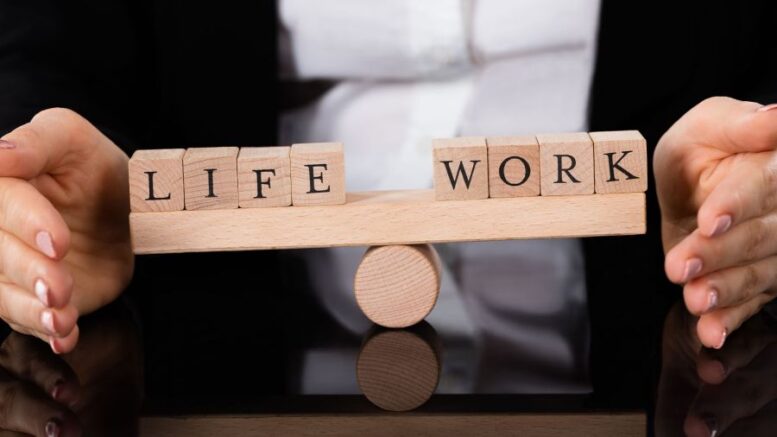
The pandemic irreparably broke down the wall between work life and personal life. There are many things, both good and bad, associated with this – but of course, a hybrid model allows organizations to accentuate the positives and mitigate the negatives.
The preceding 18 months have made it crystal clear that a company prospers when its leaders are flexible and nimble. Many forward-thinking organizations learned to lean into the benefits of remote work by embracing it and allowing their employees to feel more productive while also finding more time for family and friends.
Now that offices are reopening – perhaps at a slower pace than expected, due to the Delta variant – it would be a mistake to neglect the benefits of remote work in order to force a return to traditional, full-time, in-office settings.
The simple fact of the matter is that if business owners and managers do not at least consider a hybrid model, they’re going to have trouble retaining talent. And they’re going to have enormous trouble attracting new talent, particularly young people. Multiple studies show that millennials and other young professionals value work-life balance, perhaps more than preceding generations.
Hybrid models allow for this with no loss of productivity. To wit: Many young professionals have no problem answering work e-mails over coffee at 7 a.m., if that means they can sneak out for a quick jog in the park at 1 p.m.
The hybrid model also addresses and alleviates the negatives of remote work. While I personally have relished the increased productivity that a no-commute lifestyle has afforded me, I dearly miss my coworkers and the spontaneous bursts of creativity and insight that often result from an in-person pow-wow or office lunch. A hybrid model allows the best of both worlds.
It’s true that for many industries, the hybrid model is simply not possible; no one should ever argue that remote online instruction for schools is superior to the traditional classroom setting. But it is equally true that for many other fields, full-time, in-office attendance is not required.
If you count yourself among the latter group, think long and hard about the hybrid model. It may just be the best thing for your company’s future.
David A. Chauvin is executive vice president of ZE Creative Communications.





Insightful column, David. And spot on as usual. Online video communication is here to stay, and for many purposes, it’s superior to face-to-face communication.