

By GREGORY ZELLER //
Greater power-grid resilience and efficiency – and the lab work and experimentation that will create them – are coming to Stony Brook University.
 The State University of New York flagship institution is developing a new research hub designed specifically to create more durable, super-efficient power grids – an essential resource as electric vehicles, connected technologies and cutting-edge renewable-energy systems spread across the countryside.
Behold, the Digital Twin Studio, a new home base for researchers focused on modern power issues boasting the brainpower (and computer power) scientists will need to anticipate power-supply and power-distribution problems – and to create and test state-of-the-art solutions before real-world failures hamper homes, damage businesses and cripple critical infrastructure.
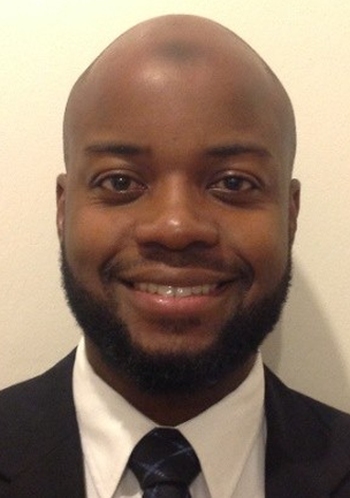
Abdelrahim Brown: All together now.
Part thinktank, part laboratory, part testing ground, the Digital Twin Studio – spearheaded by SBU’s Center for Grid Innovation Development and Deployment and Advanced Energy Research and Technology Center – will allow researchers, students, utilities and public agencies to accurately model electrical-distribution systems of different sizes and shapes and examine how a grid may respond to extreme weather, cyberattacks, equipment failures and changing energy demands.
With $550,000 already in hand – combining university-based funding and external project support from Denmark-based offshore-wind developer Ørsted A/S – SBU plans to flip the switch on an “initial minimum viable platform” by this December.
And that’s merely a “first operational milestone,” the university said in a statement, with $300,000 in funding already earmarked for the next stage and additional equipment, datasets and partnerships on the near horizon.
New student-centric laboratories and learning modules – including the Energy CyberLearn interdisciplinary workforce-development program, slated to be ready for the Spring 2027 semester – are also in the works.
As it comes up to speed, the Digital Twin Studio “will bring research, workforce development and industry engagement together in one place,” according to GrIDD and AERTC Director Abdelrahim Brown.
“We are building something that students can learn from, researchers can use and partners can help shape as the platform grows,” Brown added.
 Among the next-generation attributes will be high-fidelity virtual representations of power-distribution networks, created through unique combinations of operational and environmental data.
Physics-based simulations, artificial intelligence support and loads of third-party data gathered by geographic information systems, weather monitors, advanced energy-flow meters and other distributed-energy accounting systems will also be in play – everything scientists need to recreate realistic grid conditions, refine theories and test potential solutions before making actual changes to real-world physical infrastructure.
Combining drone-based photography, multispectral analyses and remote-sensing Light Detection and Ranging technologies, the first phase will focus specifically on vegetation-risk analytics, asset-health monitoring and outage/contingency forecasting. The idea is to prioritize “vegetation maintenance” – classifying trees growing around power lines, for instance – which can be critical for storm-preparedness and wildfire mitigation.
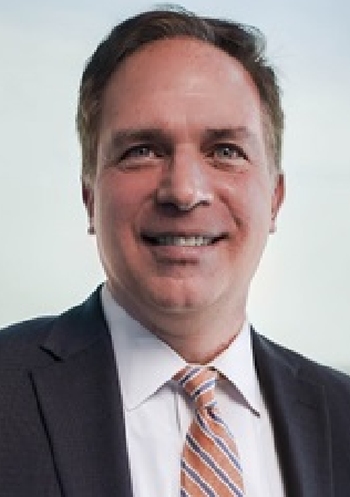
Terrence Defranco: Living proof.
As the Digital Twin Studio evolves, researchers will also develop and validate algorithms for load forecasting, distributed-energy coordination, voltage optimization and network reconfiguration – and even simulate cyberattacks and control-system vulnerabilities, allowing researchers to refine responses without threatening actual operational infrastructure.
These advances will call in techniques and technologies provided by North Carolina-based IotaComm, a wireless communications/Internet of Things specialist that’s already collaborating with SBU’s Center of Excellence in Wireless and Information Technology on the development of smart-building and new sensing technologies.
“IotaComm is proud to support Stony Brook University’s Digital Twin Studio by helping connect real-world sensing data … and operational intelligence with advanced simulation, analytics and research capabilities,” IotaComm Chairman and CEO Terrence DeFranco said in a statement. “This collaboration helps create a living-lab environment where smart building systems, energy research, environmental sensing, asset-health monitoring and device-level modeling can come together.”



Be the first to comment on "Grid resiliency gets tough, so the Digital Twin gets going"