


See? Saw: Welcome to Wednesday, dear readers, as we tip into the second half of a seasonable September – at least, here on Long Island – and the back end of a busy week for the innovation economy.
The Federal Reserve’s big interest-rate decision, New York State energy rebates, insensible trade wars, the triumphant (?) return of Mitch McConnell … there’s lots going down. But the sheer weight of these momentous events can also lift you up, if you’re socioeconomically smart enough (and play well with others). Hence, this midweek innovation-intelligence briefing – forever teeter-tottering on the precipice of greatness!

Makes scents: The creative results are very visual … but you can smell it right now, can’t you?
Shaping up nicely: Today is Sept. 16 and before we get to all that critical intel, we can’t wait to get out hands on National Play-Doh Day, honoring the colorful modeling clay that’s known best as an all-time-classic plaything – but actually boasts an industrial origin story. (A cleaning product, you say?!?)
You get what you pay for (at least, the fossil fuel industry does): Advocating for “global action for a cooler planet,” today is also the UN’s International Day for the Preservation of the Ozone Layer – barely on the radar at the U.S. Environmental Protection Agency, where bought-and-sold “leaders” this week eliminated rules limiting power plant greenhouse-gas emissions, but a big deal among science-comprehending, pollution-fighting public servants around the globe.
If the dismantling of U.S. environmental safeguards makes you sick to your stomach, well, we’re sorry to report that National Choose Your Chocolate Day – when dark, milk, white, bittersweet and all other forms of cacao derivatives are in play – is also unwrapped on Sept. 16.
Inside man: Also choosing something special was ambitious carriage-maker William Durant, who was no fan of automobiles – too noisy, too smelly, too dangerous – and sought to improve the industry from the inside when he founded General Motors on this date in 1908.
Legions of fans: The U.S. Congress was also looking to improve the quality of life – for armed forces veterans specifically – when it chartered the American Legion on Sept. 16, 1919.
“Antiques Roadshow” came later: But it was this date in 1962 when WNDT Channel 13 – soon to become WNET, the flagship television station of the Public Broadcasting Service – first hit the Greater New York airwaves (with the great Edward R. Murrow welcoming viewers to a new era of educational television).

In the “Zone”: The “Twilight Zone” rival debuted four years after its template.
We are controlling transmission: Over on New York’s Channel 7, “The Outer Limits” – the “Twilight Zone”-ish science-fiction anthology series – debuted on the ABC Television Network 63 years ago tonight.
Patent bending: And it was Sept. 16, 2011, when President Barack Obama signed the Leahy-Smith America Invents Act into law.
With all of its tenets taking full effect by March 2013, the first major reform of the U.S. patent system in six decades leaned into a “first inventor to file” doctrine (as opposed to the old “first to invent” approach), while lowering patent-application fees and creating a Patent Trial and Appeal Board for faster patent reviews.
Do I make you Horney, baby? German American psychoanalyst Karen Horney (1885-1952) – who developed her own unique views on sexuality, sparred often with Sigmund Freud and essentially founded feminist psychology – would be 141 years old today.
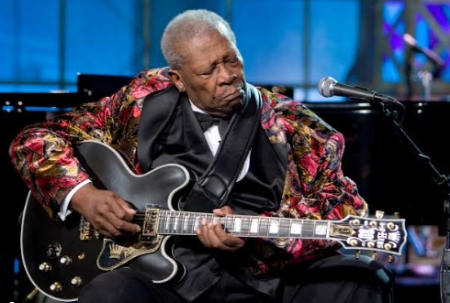
Royalty: Nobody did it like King (and Lucille).
Also born on Sept. 16 were American civil engineer, inventor and theoretician Squire Whipple (1804-1888), who crafted the first scientific rules for bridge construction; American businessman and entrepreneur James Cash Penney (1875-1971), founder of the JCPenney retail empire; American military officer, inventor and entrepreneur Jacob Schick (1877-1937), who patented an early electric razor and lots more; American tinkerer Marvin Middlemark (1919-1989), a favorite son of Rego Park who invented the rabbit-ear television antenna; and American guitarist, singer, songwriter and record producer B.B. King (born Riley King, 1925-2015), a 15-time Grammy Award-winner hailed as the “King of the Blues.”
That’s a neat trick: And take a bow, David Copperfield! The American illusionist (born David Kotkin) – still history’s only billionaire magician – turns 70 today.
Send birthday wishes for the titanic trickster to editor@innovateli.com, where we don’t pull rabbits out of a hat, but we do love to find your news tips and calendar events in there.
 About our sponsor: Accelerate Long Island is celebrating 15 years of advancing entrepreneurship and strengthening the region’s innovation economy. As manager of the Long Island Innovation Hot Spot, ALI connects startups, research institutions and investors to drive economic growth across the region. Learn more here.
BUT FIRST, THIS
Construction calculations: Good news for statewide construction workers – not only do you earn more than most construction workers across the nation, you earn more than most New Yorkers.
So say our friends at industry analyst Construction Coverage, which has issued a new report showing the average annual salary of New York State-based construction workers is $65,242. Including state-specific cost-of-living adjustments, that’s good for 15th among U.S. states (Illinois rules with an $80,604 average, Maryland is dead last at $57,051) and also edges out the median annual wage for all NYS-based workers ($59,670).
New York construction workers actually earn an annual median income of $70,410, but the Empire State’s relatively high COL index (7.9 percent higher than the national average, according to Construction Coverage) drags down the average salary by more than $5,000. For the record, builders in the New York City/Newark/Jersey City corridor (considered one metroplex by Construction Coverage) bring home slightly more than their Long Island counterparts ($67,562, good for 13th among major U.S. cities), even after factoring in NYC’s astronomical cost of living, which is 12.6 percent higher than the national average – trailing only San Francisco/Oakland (15.6 percent higher than average), Miami/Fort Lauderdale (14.2 percent) and Los Angeles (13.6 percent).
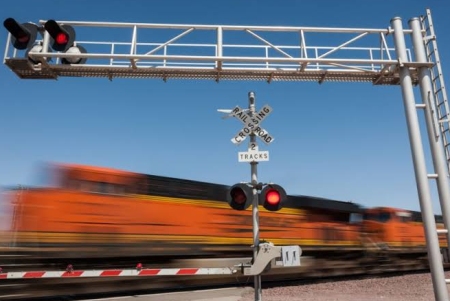
Things happen fast: So New York & Atlantic Railway wants you to be extra careful around railroad crossings.
It tracks: One of Long Island’s most ambitious retro-innovators is on board with a critical rail-safety awareness program.
Glendale-based New York & Atlantic Railway, a short-line hauler that moves tons of freight (building materials, food and more) along tracks owned by the Long Island Rail Road, is once again participating in Operation Lifesaver’s See Tracks? Think Train Week. Running Sept. 21 to 27, the event is designed to promote rail-safety awareness across the nation – no small thing, with more than 2,000 incidents (and 200-plus fatalities) estimated to occur annually at U.S. railroad crossings.
The awareness campaign is the yearly tentpole for Operation Lifesaver – which dedicates itself to preventing train-track tragedies – and a no-brainer for Long Island’s busiest, most environmentally focused freight hauler, according to New York & Atlantic Railway President Marlon Taylor. “Safety around the tracks is not only our company’s top priority, but should be everyone’s responsibility,” Taylor noted. “Operation Lifesaver’s See Tracks? Think Train Week helps raise awareness about the simple steps everyone can take to prevent accidents and help save lives.”
TOP OF THE SITE
Grid and bear it: With its ambitious Digital Twin Studio, Stony Brook University surges to the front in the race to improve power-grid resiliency and efficiency.
Beat reporter: Never miss a beat (or a networker, or a business-development workshop, or an awards ceremony or anything else) with Innovate Long Island’s Monday Calendar Newsletters. They’re subscriber-only … but fortunately, our subscriptions are always easy, always free.
VOICES
It’s time for the main event, according to Voices Healthcare Anchor and former Northwell Health Senior Vice President Terry Lynam, who sees healthcare costs as the pound-for-pound biggest issue in the upcoming midterm elections – with Republican and Democratic contenders taking very different approaches to the big fight. Let’s get ready to rumble!
STUFF WE’RE READING
Didn’t think of that: Is AI shutting down the human thought processes necessary for discovery and innovation? Psychology Today digs deep.
Less is more: Texas Instruments’ new $160 calculator is a textbook lesson in the importance – and promise – of constrained innovation. Inc. digs down.
Oreo-ver the top: From Chicken & Waffles to “Korean street food” flavors, this 114-year-old cookie brand stays relevant through constant reinvention. Food Dive digs in.
RECENT FUNDINGS
 + Aron, a California-based AI “chief of staff” for procurement teams, raised $8 million in combined Pre-Seed and Seed funding led by Storm Ventures and Menlo Ventures.
+ Shennon Biotechnologies, a California-based biotech developing precision cancer immunotherapies, raised $12 million in funding led by Future Ventures, NextGen Venture Partners, Samos Investments, Atypical Ventures, Saras Capital, DCVC, Foundation Capital and AV8 Ventures.
+ Nara Health, an Illinois-based, AI-native, Third-Party Administration employer-focused health insurance platform, raised $14 million in combined Pre-Seed and Seed funding led by Khosla Ventures, with participation from Long Journey Ventures and Superior Studios.
+ Flam, a California-based, AI-powered interactive-content platform, raised $40 million in Series B funding led by QED Investors, with participation from Claypond Capital, Martin Chavez, Olivier Pomel, Venky Harinarayan, Shahrukh Khan, RTP Global and Dovetail.
+ Cornelis Networks, a Pennsylvania-based provider of networking solutions for AI and high-performance computing workloads, raised $205 million in funding led by IAG Capital Partners.
+ Temporal, a Washington State-based open-source durable execution platform, raised $550 million in Series E funding led by Lightspeed, Wellington Management, Growth Equity at Goldman Sachs Alternatives and Tiger Global, with participation from T. Rowe Price, SV Angel, a16z, Sequoia, Index, GIC, Sapphire Ventures and Amplify.
Like this newsletter? Innovate Long Island newsletter, website and podcast sponsorships are a prime opportunity to reach the inventors, investors, entrepreneurs and executives you need to know – on Long Island, and soon, across New York State (just ask Accelerate Long Island). Gregory Zeller can tell you more.
BELOW THE FOLD (Centenarian Edition)

Age limit: One out of every 1,140 Japanese people is now a centenarian.
Aging well: The U.S. population is three times larger than Japan’s – but Japan now has nearly as many centenarians.
Age discrimination: Why most centenarians are women (and why it’s not even close).
Rapid aging: Within 75 years, there will be 1 million U.S. centenarians.
Golden age: Please continue supporting the outstanding organizations that support Innovate Long Island, including Accelerate Long Island, which is determined to lead Long Island to its most prosperous socioeconomic era. Check them out.





Be the first to comment on "No. 1087: On power grids, paychecks and Play-Doh, with chocolate (and better railroad safety) for all"