

By JEFFREY L. REYNOLDS //
After Dolly Parton died last month, most of the news coverage focused on her music – not surprising, given more than 100 million albums sold, two dozen No. 1 hits, 11 Grammy Awards and a fanbase spanning country, pop and everything in between.
 Then there’s Dollywood, the Tennessee theme park Parton created in 1986 that draws more than 4 million visitors every year, generates an estimated $1.8 billion in annual economic impact and remains Sevier County’s largest employer.
But beyond the platinum records, shiny sequins and bedazzled cowboy boots, it’s Parton’s philanthropy that will be working well past 5 p.m. and long after the crowds go home.
She routinely made $1 million gifts to organizations like the Boys & Girls Club of the Smoky Mountains and Vanderbilt University Medical Center – though her most consequential philanthropic endeavor was the Imagination Library she started near her East Tennessee home in 1995.
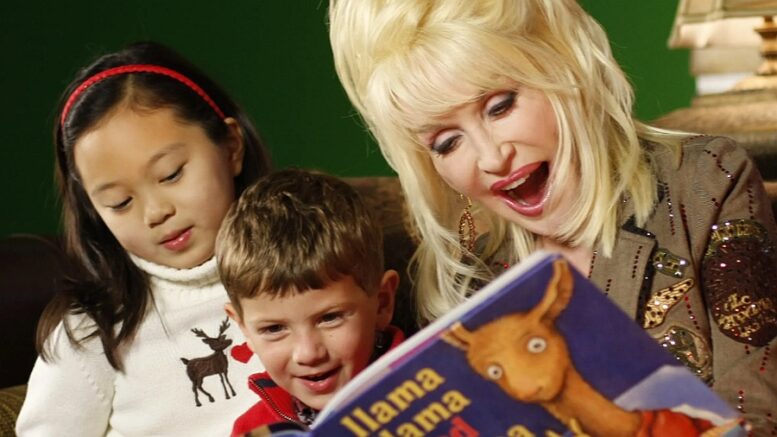
Inspired by her father, who couldn’t read or write, the premise was simple: Children enrolled in the program would receive a free, high-quality, age-appropriate book in the mail every month, from birth until kindergarten.

Jeffrey Reynolds: Reading all about it.
That’s huge, because roughly two-thirds of adults across Appalachian counties read at or below an eighth-grade level – a literacy gap that compounds poverty, limits educational attainment and is linked to poor health outcomes.
Parton clearly understood that putting books into children’s hands wasn’t simply about entertaining them. It was an investment in the rest of their lives.
The scale of that investment is staggering. Since the program’s founding, Parton’s charity has sent more than 332 million books to children across the United States, Canada, the United Kingdom, Australia and Ireland. What started as a pilot program for kids in one small, struggling Tennessee county now serves roughly 3 million registered children around the world every month – a reach beyond that of most national literacy initiatives.
Imagination Library asks almost nothing of the families it serves, other than an address and the child’s name for the mailing label. The program, along with a network of local partners, takes care of the rest, shipping books like clockwork until each enrolled child turns 5.
Most literacy programs demand what stretched-thin parents don’t have or can’t give – a detailed application, proof of eligibility, trips to a program site on someone else’s schedule. The families who need help most are often the ones least able to clear these hurdles.
What changes for children who get those books? A 2025 international survey of 86,206 caregivers across five countries revealed that after reading just 10 books, children in Imagination Library’s book-gifting program were four times more likely to show stronger emerging literacy skills. They were nine times more likely to be read to four or more days a week, and 15 times more likely to join in during shared reading.
 “Books open doors,” says Eileen Minogue, executive director of the Hicksville-based nonprofit Book Fairies. “They help children learn, build confidence, develop their imagination and see possibilities beyond their own circumstances.”
Since 2012, Minogue’s organization has collected and distributed more than 6.2 million new and gently used books to under-resourced communities around Long Island, New York City and the world, with an eye toward improving literacy rates. Book Fairies serves children of all ages, distributing books through schools, nonprofits, community organizations and healthcare providers, and directly to registered homes.
The organization also has an adult book-distribution program that brings books to homeless shelters, soup kitchens, community centers and correctional facilities.
Meanwhile, school districts in New York are struggling to revamp reading instruction after Gov. Kathy Hochul unveiled a $10 million “Back to Basics” reading proficiency plan in her 2024 State of the State Address.
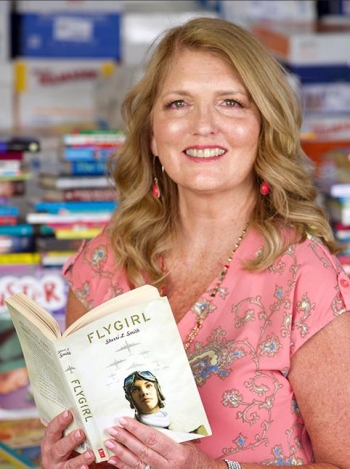
Eileen Minogue: Between the lines.
Despite that plan, reading test scores seem to be headed in the wrong direction. The New York State Department of Education recently released preliminary data from the 2025-2026 English Language Arts assessments showing that reading proficiency among third graders dropped to 43 percent, down from 57 percent in 2023-2024. Among all kids in grades three through eight, less than half (48 percent) demonstrated grade-appropriate reading proficiency in the most recent school year, down from a mediocre 53 percent the year before.
While education experts say testing changes may have contributed to New York’s lousy report card, state officials will conduct a “detailed analysis to better understand where students are experiencing challenges, which student groups and communities have been most affected and where additional support and resources are needed,” according to a statement from state Education Department spokesman JP O’Hare.
Could it be that if we want children to get better at reading, giving them books is important? Minogue thinks so.
“There is something powerful about a child choosing a book, holding it, taking it home and knowing that it belongs to them,” she says. “A physical book doesn’t require WiFi, a charged battery or access to technology.
“It is always there.”
Jeffrey L. Reynolds is the president and CEO of the Garden City-based Family and Children’s Association.





Be the first to comment on "Dolly’s ‘Imagination’ continues its fundamental mission"