By GREGORY ZELLER //
A waste-not biotech with a true sense of sustainability has become the second company to graduate from the Clean Energy Business Incubator Program, despite logistical challenges exacerbated by the dreaded scourge of COVID-19.
 Just weeks after saluting 2012 startup ThermoLift as its first-ever graduate, CEBIP – Stony Brook University’s unique business-formation gauntlet, designed to push clean-energy innovators from concept to commercialization – is now tossing mortarboards for Re-Nuble, a 2015 startup with deep Long Island roots and a base technology that involves anaerobic digesters biologically breaking down biodegradable materials.
After several twists and turns – including slowdowns related directly to the pandemic – the New York City-based “virtual tenant” of the CEBIP program is releasing its first commercial products, marking the end of its run as an incubation-program client.
The debut is all about “harvestable energy,” founder and CEO Tinia Pina’s term for a residual goop that results from the anaerobic digestion process, which itself reduces the amount of food waste clogging up convention waste streams.

Tinia Pina: Going with the flow.
The goop makes a fantastic fertilizer, but its practical application in traditional farming and hydroponic operations has proven tricky.
Re-Nuble’s first product (the anaerobic digestor in liquid form) worked well, but tended to be cost-prohibitive for typical farm operations – transporting thousands of gallons of liquids, Pina notes, ain’t cheap. That forced Re-Nuble into undesirable price ranges and made conventional treatments like mineral salts, while less ecologically effective, more palatable to farmers.
Re-Nuble “revisited the whiteboard,” Pina noted, experimenting primarily at a Rochester production facility but also making copious use of the scientific and strategic tools afforded by CEBIP.
The startup was able to recreate its product in pellet form through connections made at CEBIP – changing its entire cost structure, according to Pina, who referenced “food waste essentially concentrated into pelletized form, with a nutrient-delivery system that turns that them into a liquid-nutrient concentrate at the farm.”
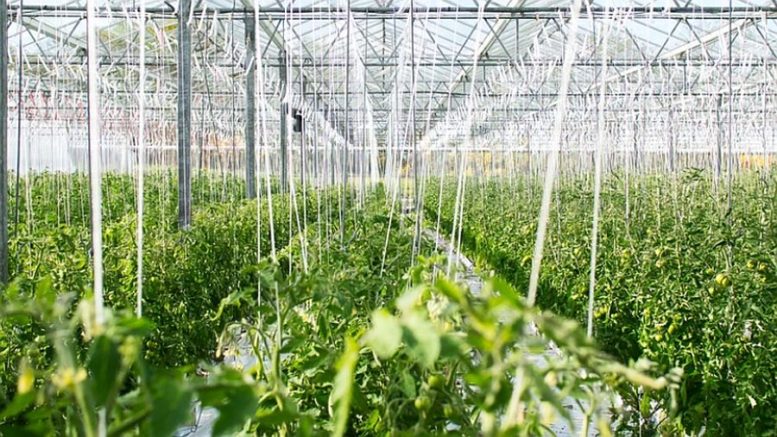
A 250-gallon reservoir (typical for a 3,000-square-foot greenhouse) works just fine for the water-soluble pellets, and the resulting nutrient concentrate is easily delivered by existing hydration systems.
 With CEBIP’s assistance, Re-Nuble was at last ready for virtual shelves. And then came COVID, which created unavoidable production glitches that, at least temporarily, derailed the pellet plan.
Once again, Pina and her CEBIP collaborators had to think fast. The new-new plan became a temporary pivot back to the concentrated liquid form, giving Re-Nuble’s technology some high-profile exposure while the fledgling firm waits out the pandemic and focuses on getting those pellets into production.
“We’ll be going to market with [the concentrated liquid] for the next 16 to 18 months,” Pina told Innovate LI. “The intention is still to introduce our pellet-and-nutrient-delivery system, but this gives farmers flexibility if they still want to use the liquid product, while they’ll still have the option later of the pellet product.”
Re-Nuble plans to begin shipping concentrated liquids to select clients soon, and despite the pellet-plan hiccup anticipates a busy year ahead. Among other things, Pina expects to release multiple case studies from satisfied customers, who will confirm that the economic and environmental costs of mineral salts – including the energy it takes to mine and transport them – are simply unfeasible.
“Our focus will start with micro-farms and mid-tier farms, but we anticipate seamless usage and adoption rates for larger operations as well,” Pina noted. “This is our chance to prove that this technology is feasible.
“And we are ready.”