By GREGORY ZELLER //
A new multi-college agreement will see New York Institute of Technology and Stony Brook University engineering students attending classes at top Northeast schools including Princeton, Columbia and New York University.
 Behold, the Inter-University Engineering Doctoral Consortium, a nine-school alliance led by NYU’s Tanden School of Engineering designed to encourage PhD students to complement their primary programming with specialty instruction and other courses of interest not necessarily offered by their indigenous institutions.
The consortium mirrors a similar doctoral alliance established earlier this year by NYU and eight regional schools (including SBU, Fordham University and others), encompassing a wider range of PhD disciplines.
 This time around, the focus is on engineering, as NYU, Princeton, Columbia, New York Tech and SBU join forces with Cornell University, Rutgers University, the Stevens Institute of Technology and the City College of New York.
Through the consortium, students attending each of the member universities’ engineering schools can attend engineering classes across all nine campuses without paying additional tuition, beginning with the Fall 2024 semester. (Lab fees still apply.)

Jelena Kovačević: Changing the world.
There is no application process, per se, though participating students must have completed at least one year at their primary institution, must be in good academic standing and must get written approval from both the home and host institutions.
Noting the importance of collaboration across professional engineering disciplines, NYU Tandon Dean Jelena Kovačević said the consortium was formed to “most effectively address the challenges facing our world” by creating a new generation of highly trained, well-rounded engineers.
“This consortium signals the collective dedication of the institutions to remove barriers to advanced learning and rigorous scholarship, helping unleash the full potential of all our students … in their post-graduate pursuits,” Kovačević added.
Andrew Singer, dean of SBU’s College of Engineering and Applied Sciences, applauded “a wonderful opportunity for the students across our universities to leverage the best curricula and programs for their unique educational journey.”
“This collaboration will undoubtedly bring about a positive impact on not only the educational paths of our own students but will also enrich the talented pool of students on each of our campuses,” Singer said in a statement. “We are proud to offer such an exceptional experience to our students and to partner with strong programs across the region.”
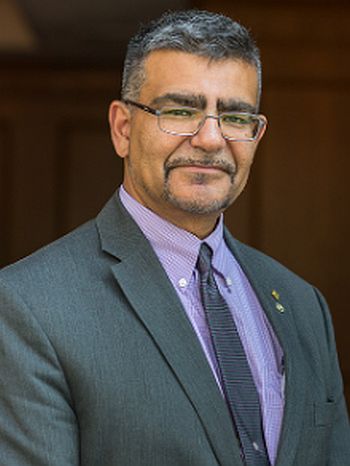
Babak Beheshti: A win for students and faculty alike.
To best open new academic doors, the consortium spreads around its unprecedented opportunities geographically: CUNY’s Grove School of Engineering, Columbia Engineering and Cornell Tech are all located within New York City limits, while Princeton’s School of Engineering and Applied Science, the Rutgers School of Engineering and the Stevens Institutes’ Charles V. Schaefer Jr. School of Engineering and Science are all in New Jersey.
Stony Brook’s CEAS and New York Tech’s College of Engineering and Computing Sciences, of course, are both on Long Island (with New York Tech’s secondary campus in Manhattan). Offering Island students such high-caliber off-Island learning opportunities is a stroke of brilliance, according to Babak Beheshti, dean of the New York Tech engineering school.
“This consortium provides a unique opportunity for graduate engineering students to have access to a broad set of courses offered through the major universities in the New York Metropolitan area and the surrounding region,” Beheshti said. “IUEDC delivers an extensive platform for collaboration and scholarly exchange among its faculty and students.”