By GREGORY ZELLER //
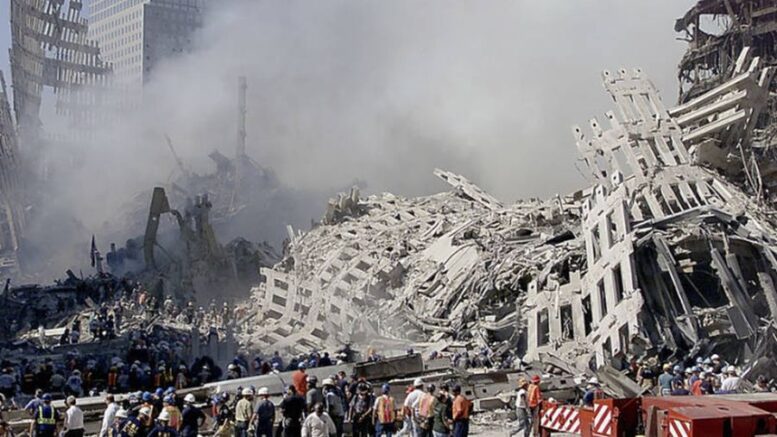
A new Stony Brook University study of responders to the Sept. 11, 2001, terrorist attacks adds to mounting evidence of the harmful long-term effects of Ground Zero toxic exposure.
 Published this month in JAMA Network Open – the American Medical Association’s open-access, peer-reviewed scientific journal – the study of 5,000-plus World Trade Center responders indicates that those with more significant toxic exposers during the rescue and cleanup operations have developed dementia at a higher rate than 9/11 responders with fewer toxic exposures.
The eight-year study – which ran from November 2014 to January 2023 – evaluated patients through the Stony Brook World Trade Center Health and Wellness Program for signs of dementia. The average age of the participants at the start of the study was 53 years old, according to SBU.
Lead author Sean Clouston, an epidemiologist and professor in the Renaissance School of Medicine’s Program in Public Health, said the investigation was designed to assess associations between WTC disaster-site “occupational exposures” and incidents of dementia before 65 years of age.

Sean Clouston: Toxic environment.
The research team – 11 Stony Brook investigators in all, including eight Stony Brook PhDs and Benjamin Luft, an MD and director of the Stony Brook WTC Health and Wellness Program – determined toxic-exposure severity through a detailed questionnaire covering specific duties, time on site and exposure to “potentially neurotoxic debris,” including fine particulate dust.
Team members spoke with responders who worked at the downtown disaster site and at cleanup sites in Manhattan and Staten Island, and categorized exposure levels in five categories ranging from “low” to “severe.”
Ultimately, they found that 228 responders – 4.6 percent of total study participants – who were without dementia and were under 60 years of age at the start of the study developed dementia over the next five years. That easily eclipses the 0.5 percent incidence of dementia development over five years among the general population of people under 60.
As troubling as that is, the dementia-development numbers among responders who did not use protective equipment during Ground Zero operations are much worse.
According to Clouston, responders who reported no dust exposures or those who wore personalized protective equipment – including masks and hazmat suits – developed dementia at a rate of approximately 6 out of 1,000 per year. However, responders who did not use PPEs and/or reported dangerous occupational activities (such as digging through debris) developed dementia at an accelerated clip of 42.36 per 1,000 people per year.
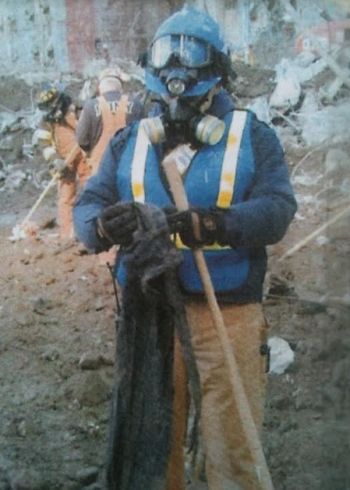
Cover story: Masks and other protective gear shielded 9/11 responders from even worse toxic exposure.
“This rate of dementia in those reporting many exposures and limited protection is not only statistically significant, it is alarming for a patient cohort that clearly shows a strong association between exposure and the incidence of dementia under the age of 65,” the lead author noted. “Also, the rates remained statistically significant over the less-exposed group even after adjusting for social, medical and demographic factors.”
Paper co-lead author Luft, who has been monitoring 9/11 responder health rates for two decades, said the study – supported by funding from the Centers for Disease Control and Prevention and the National Institutes of Health’s National Institute on Aging – is a vital clue about the lingering health effects of the despicable terrorist attacks.
A clue, Luft added, but not the end of the investigation.
“These findings are a major step forward in establishing that the dust and toxins which were released as a result of the calamitous terrorist attacks … continue to have devastating consequences on the responders,” the MD noted. “The full extent of neurodegenerative disease still needs to be determined.”