By MICHAEL H. SAHN //
July 2023 was the hottest month ever recorded.
 That includes the three hottest days ever, averaging global temperatures. In South America, where it’s winter right now, large areas are experiencing record heat waves. According to United Nations Secretary General António Guterres, the era of global warming has ended, and the new era of global boiling has arrived.
There have been plenty of reports documenting climate change’s rapid pace and the irreversible consequences of not addressing it, so this is nothing new. The only difference: Unprecedented extremes and climate anomalies are not only happening in remote corners of the world. They’re everywhere.
That includes the Long Island region, where higher temperatures and dryer conditions are already taking hold – and contaminants from western U.S. and Canadian wildfires regularly blow through.

Michael Sahn: Agent of change.
Extended heat waves will affect the Northeast, just like they already do in the Southwest. As the ground beneath us warms, sinkholes will follow. North Atlantic water temperatures are already surging, mirroring what’s happened this summer off Florida’s coasts, so expect a loss of marine life and rising seas along Long Island’s coastlines.
Our buildings, transportation and energy-generation functions are the primary culprits producing carbon emissions. Long Island, one of the first sprawling suburban areas, was not planned for climate change – and while we can’t be alarmist, we need a collective spirit (and a broad-based plan) to address climate-change fundamentals while protecting our Long Island lifestyles.
New York has adopted legislation mandating climate action and resilience, but these laws are not enough. We need new climate-restoration laws and public policies – measures big and small – that prevent further climate change and roll back the damage already done.
There are thousands of actions that governments, businesses and individuals can take to beat the climate clock. In the big-picture category, we must build out renewable-energy sources like wind turbines and expanded solar-energy projects, which can power thousands of homes. Making these technologies cost-effective will take work, but it can be done.
Coastal-resilience projects like ambitious storm-surge plans for the New York City metropolitan area can be models for protecting our waterfronts, but only if we solve cost concerns and other issues. (Kudos to Glen Cove for its comprehensive waterfront-protection plan.)
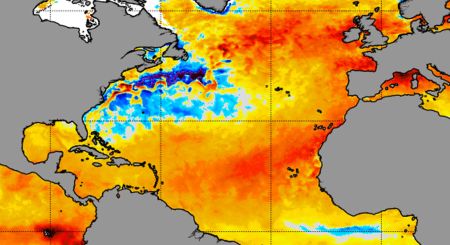
Heat waves: With ocean temperatures exceeding 100 degrees Fahrenheit off the Florida coast, water temps off Long Island are rising fast.
Performance-based land-use laws that reimagine mixed-use communities to co-locate jobs, housing and transportation will also lower emissions. So will laws requiring “smart” building technologies and laws encouraging things like battery-storage facilities and microgrids (or “environmental villages”), which can serve smaller geographic areas.
Other laws could require carbon removal from existing uses when new buildings are proposed, provide tax incentives for carbon-recapture facilities or mandate new types of reflective building materials, designed to lessen cooling and heating demands. And local governments could streamline approvals based on net-zero compliance.
Any new laws should be easy to understand and financially beneficial to implement. But essentially, climate impacts should be a factor in all land-use decisions.
A comprehensive Long Island environmental plan – a consensus-based strategy for the implementation of carbon-neutral strategies, created in collaboration with think-tank educational institutions, endorsed by regional planners – will increase buy-in across all jurisdictions.
We can generate many more climate change-focused ideas, policies and laws if we all come together. Is that pie-in-the-sky? Maybe. But if Long Island can figure out how to sustain its future, it will absolutely become a model for the nation and the world.
Michael H. Sahn, Esq., is the managing member of Uniondale law firm Sahn Ward Braff Koblenz PLLC, where he concentrates on zoning and land-use planning, real estate law and transactions, and corporate, municipal and environmental law. He also represents the firm’s clients in civil litigation and appeals.