By FRANK PICCININNI //
When I bought my house, the property was basically one big lawn. So, we started planting.
 We planted lots of trees, along with milkweed, cardinal flower, native honeysuckle and other plants that evolved here. Now, late Summer evenings are filled with insect choruses. Hummingbirds show up. Deer wander through. Neighbors who have lived on the block for 40 years tell me they’d never seen hummingbirds here before.
We didn’t build a wildlife preserve. We planted a yard. But nature responded.
That’s something I think about a lot in the work we do at Spadefoot. You don’t always have to do something dramatic to change an ecosystem. Sometimes you just have to push it in the right direction and give nature something to work with.
The reverse is true, too.
This season, we’ve heard a lot about Lyme disease, ticks and other diseases people pick up when spending time outdoors. That’s a good reason to pay attention to what’s happening in our yards and natural areas – but I think there’s a bigger ecological story underneath it.
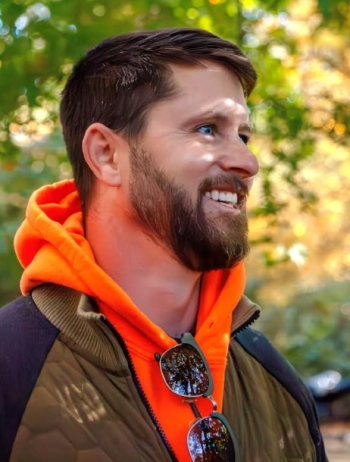
Frank Piccininni: Power planting.
Nobody plants an invasive species because they want to damage an ecosystem. They plant burning bush because they like the Fall color. They plant English ivy because they want something green to cover the ground.
These plants are not native but they are sold throughout Long Island. And once they get established, they don’t necessarily stay in place.
Take English ivy. Ivy creates a dense layer of vegetation that provides excellent cover for white-footed mice, the primary natural reservoir for the bacteria that causes Lyme disease. Predators have a harder time hunting in that dense cover, while the mice have food and shelter. Ticks, meanwhile, feed on the mice, pick up the bacteria and transmit it to other hosts.
People often blame deer, but deer don’t infect ticks with the bacteria. They provide adult ticks with a place to feed and mate and help move them around the landscape.
The mice infect the ticks. The deer move them around. And vegetation such as ivy provides the mice with habitat. That is a ripple effect.
It doesn’t mean that pulling ivy out of your yard is going to eliminate Lyme disease. It means that the condition of the habitat around your house can influence the animals that live there, and those animals are part of a much larger ecological system.
And Lyme disease isn’t the only reason to think about what’s happening around us. Tularemia, sometimes called rabbit fever, is another rare but serious disease that can be transmitted by ticks and through contact with infected wildlife.
The point isn’t that invasive plants cause tularemia – the point is that our health and the health of the ecosystems around us are not as separate as we sometimes pretend.
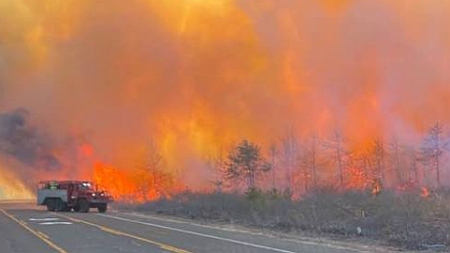
Hot topic: The 2025 wildfires across easter Suffolk County were one end of the invasive-species ripple effect.
You can see the same ripple effect in the Pine Barrens. The southern pine beetle arrived in Suffolk County in 2014 after moving north along the Atlantic coast. Cold Winters historically helped limit how far north the beetle could establish, but as Winters have warmed, that barrier has weakened.
The beetles are tiny – about the size of a grain of rice – but they can kill enormous numbers of pitch pines. They get underneath the bark and disrupt the tree’s vascular system. A healthy pine can defend itself against a few beetles with resin, but thousands of beetles can overwhelm that defense.
And then the structure of the forest matters.
Large portions of the Pine Barrens contain even-aged stands, where many trees are roughly the same age and competing for the same resources. When beetles move through those stands, mortality can be extensive, leaving acre after acre of dead trees.
We saw the consequences in 2025, when wildfires moved rapidly through parts of Moriches, East Moriches and Westhampton Beach. Beetle-killed pines provided plenty of fuel.
The state is doing important work with thinning, brush reduction and prescribed fire at places like Hither Hills and Napeague. That work matters. But the long-term answer isn’t just managing individual problems as they appear.
We need healthy ecosystems. A healthy forest is more than a collection of trees: It’s different species, different ages and different layers of vegetation, wildlife, fungi and microorganisms, all interacting with each other.
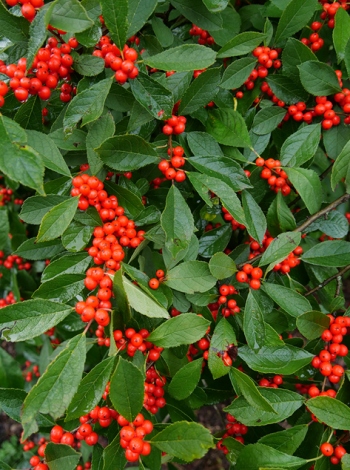
Have a holly jolly ecosystem: On Long Island, winterberry holly is an environmentally preferable alternative to invasive burning bush.
When we replace that complexity with invasive plants or simplified landscapes, we shouldn’t be surprised when the system becomes less resilient.
Long Island has no shortage of invasive species to worry about: porcelain berry, bamboo, Chinese wisteria, phragmites, Japanese knotweed, tree of heaven, mugwort, oriental bittersweet, Japanese barberry, multiflora rose and more.
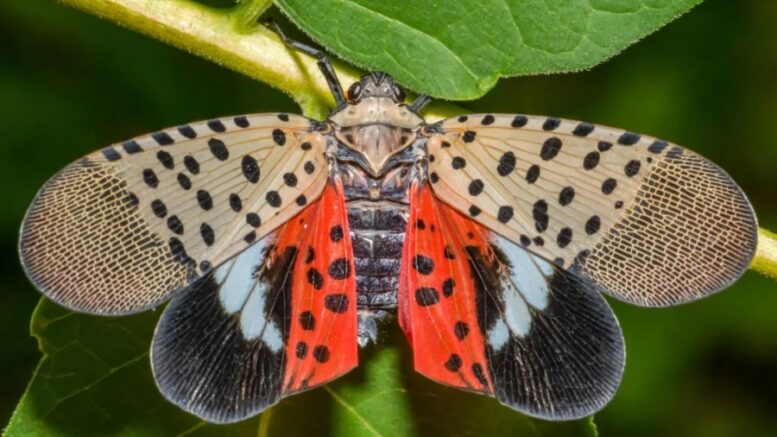
Tree of heaven deserves particular attention right now because it illustrates the ripple effect especially well. It grows almost anywhere – vacant lots, roadsides and other disturbed areas – and it is the preferred host of the spotted lanternfly, which is now widespread on Long Island.
Lanternflies feed on dozens of plant species, including grapes, maples and fruit trees. They stress the plants they feed on and produce honeydew that coats everything underneath them and promotes sooty mold.
Researchers have found that reducing tree of heaven can help reduce lanternfly populations. One invasive plant can help create the conditions for another invasive species – again, the ripple effect.
We need to change the way we think about our own properties. You don’t have to own 100 acres to do something about it. Even cutting ivy at the base of a tree can make a difference.
Plant winterberry instead of burning bush. Plant milkweed, rose mallow and cardinal flower. Plant trees that belong here.
For too long, we’ve treated nature as the green space between the places where we actually live – the preserve we visit on a weekend, the forest we drive through, the park down the road.
But nature is all around us. It’s in the trees behind your house. It’s in the insects you hear at night. It’s in the birds that show up because you planted something they need.
One yard isn’t going to change the world. But when thousands of people make small changes to their properties, those changes start connecting – and eventually, the ripple effect starts working in nature’s favor.
Environmental attorney Frank Piccininni is the co-founder and vice president of the Long Island Conservancy and the cofounder and president of Spadefoot Ecosystems Solutions.