

By MICHAEL H. SAHN //
The Even Year Election Law that the New York State Legislature enacted in 2023 – coupled with the nationwide “blue tsunami” backlash against the Trump Administration –has flipped Long Island.
 Elected offices across the Island have changed hands from Republicans to Democrats, while the unstoppable national wave also affected New York’s gubernatorial and congressional elections.
As I wrote in March, the EYEL moved the timing of elections for many local offices outside of New York City from odd- to even-numbered years. This change consolidated elections for local offices with statewide and federal elections, such as this year’s midterm congressional election, forcing some local officials who successfully ran for office in 2025 – including Long island town supervisors and Nassau County legislators – to run again.
The theory behind the EYEL, and indeed the expectation of proponents like Jay Jacobs, chairman of both the New York State Democratic Committee and the Nassau County Democratic Committee, was that more voters – especially Democrats – turn out to vote in the even years, especially when there’s a Presidential election.
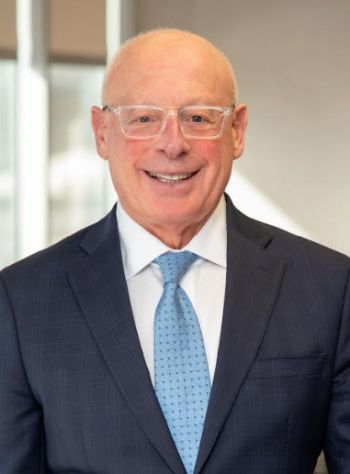
Michael Sahn: Big changes, big turnout.
That theory became reality on Nov. 3. In the important election for Hempstead Town Supervisor, Democrat Joe Schianablo, who lost to Republican Supervisor John Ferretti Jr. in 2025, defeated Ferretti in this year’s rematch. In Hempstead, Republican Town Clerk Kate Murray, who was elected in 2025, lost this year to Democrat Joylette Williams.
In another notable race, Nassau County Legislator Scott Strauss (R-Mineola), who won election in 2025, appears to have lost to Democrat Juleigh Chin, albeit by a handful of votes (final recount pending as of press deadline). The flip of this seat to a Democrat would narrow Republicans’ County Legislature majority to 10-9.
Suffolk County did not have repeat elections under the EYEL, since Suffolk legislators and town officials hold four-year terms (as opposed to two in Nassau). But the voter turnout, which roughly doubled in both counties, also impacted the New York gubernatorial race.
In 2025, roughly 31 percent of registered Nassau County voters turned out to vote, compared to about 52 percent of Nassau voters who cast ballots in this year’s governor’s race. In Suffolk, just 21 percent of registered voters cast ballots in 2025, compared to 50 percent this year.
Overall, 1.07 million Long Islanders, give or take, voted in the 2026 gubernatorial race, with Gov. Kathy Hochul carrying Long Island by about 5,200 votes – an improvement over the 2022 gubernatorial race, when Hochul lost Long Island by roughly 14 points.
The higher number of voters also affected the re-elections of U.S. Reps. Nick LaLota (R-NY 1) and Andrew Garbarino (R-NY 2). Despite the stronger Democratic turnout, both won re-election – though both won by substantially smaller margins than they did in 2024.
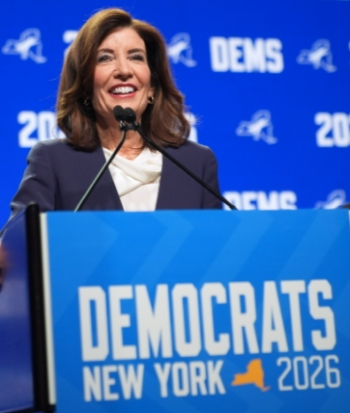
Am I blue: With the Even Year Election Law in effect, Hochul won Long Island for the first time.
Clearly, even-year elections bring out more voters, so this unique election year will likely become the norm. Long Island can expect record numbers of voters in the 2028Presidential election, which will continue to impact local and statewide races.
Interestingly, not all laws enacted across the country in advance of the 2026 election had the anticipated effect of changing election results. Many states redrew Congressional district lines to promote the election of Democrats or Republicans; for instance, California redrew district lines benefitting Democrats, while Texas redrew for Republicans. Democrats won in California, but only one Republican won in Texas.
Nonetheless, we should expect the trend of enacting laws to alter elections to continue. Hochul and Democratic House Leader Hakeem Jeffries (D-NY 8) are already talking about drawing new district lines in New York, even before the ink dries on this year’s results.
The lesson, though, is that elections are unpredictable. Election laws can and do impact results, but ultimately, the performance of elected officials and their policies matter most to voters – and drive the results. That’s a fact that politicians and political strategists should consider in the years ahead.
Michael H. Sahn, Esq., is the managing member of Uniondale law firm Sahn Ward Braff Coschignano PLLC, where he concentrates on zoning and land-use planning, real estate law and transactions, and corporate, municipal and environmental law. He also represents the firm’s clients in civil litigation and appeals.




Be the first to comment on "Midterm lesson: Policies, not politics, decide elections"