By TOM MARINER //
Rarely does technology development come full-circle like this.
 Its recent acquisition of Toronto-based Spindle BioTech has not only allowed Stony Brook’s Applied DNA Sciences to combine two next-generation applications – it’s a case of “technology returning to its birthplace,” according to Applied DNA President and CEO James Hayward.
The acquisition, announced in July, combines Applied DNA’s unparalleled talent for chemical modification of DNA templates with the high-binding affinity of Spindle’s RNA proprietary polymerase, addressing several limitations slowing the conventional production of messenger RNA, a single-strand ribonucleic acid that’s critical to many research efforts.
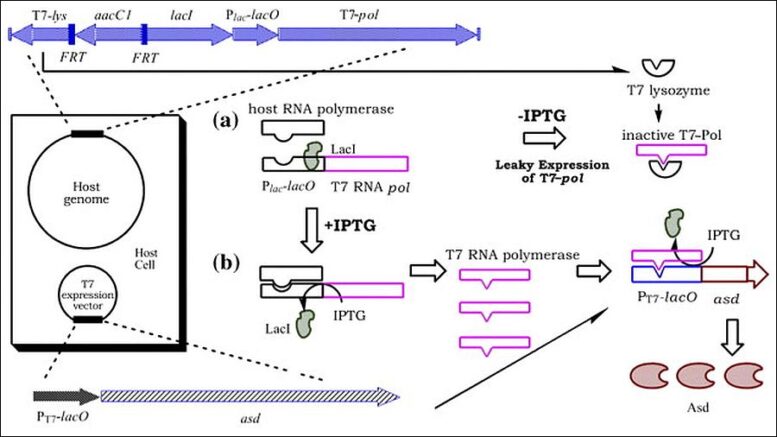
The “birth” of Spindle’s brightest technology was 40 years ago, when Brookhaven National Laboratory geneticist F. William Studier invented what may be BNL’s most successful technology to date: the T7 Protein Expression System.
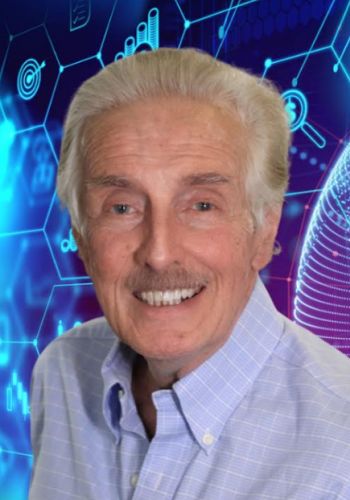
Tom Mariner: Inner circle.
At the time, it was all about understanding bacteriophage T7, a virus that takes over E. coli bacterial cells to produce new viruses. In the course of their work, Studier and his team found a way to direct T7’s prolific copying capabilities to make more than just new T7s.
Specifically, they cloned the T7 RNA polymerase – the enzyme that transcribes DNA genes into messenger RNA – to produce large amounts of mRNA from almost any gene.
Quick science lesson: DNA provides the code for a cell’s activities, while RNA converts that code into proteins to carry out cellular functions. This new ability to turn DNA into mRNA – essentially, to make virtually unlimited copies of any desired protein – was a true biotech-industry revolution.
It resulted in the T7 Expression System, which later helped with the rapid development and production of COVID-19 vaccines by Pfizer and Moderna. The mRNA in the vaccines prompts our own cells to manufacture a “spike” protein, which in turn sends our immune systems into action to fight the invading COVID virus.
So, our body makes the protein for us – and then we earn immunity from a protein we made ourselves (instead of the traditional method of injecting a weakened virus to trigger an immune response).
 How did this 40-year-old discovery stay relevant in our rapidly evolving biotech fields? Well, Studier kept researching and refining the technology.
His work has been cited thousands of times and approximately 800 companies have licensed the T7 system through the years, earning BNL about $72 million in royalties and licensing fees.
When the original patents expired, one of the companies that got in on the BNL-originated technology was Spindle Biotech. And that, as of last month, brings the story back to Long Island.
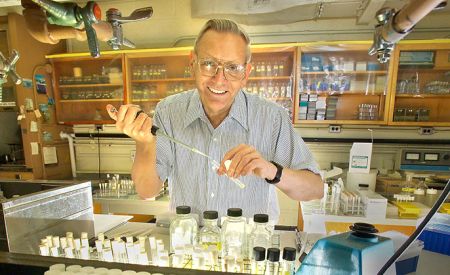
Welcome back: Technology originally developed four decades ago by BNL geneticist F. William Studier has returned to Long Island via a corporate acquisition.
The T7 Expression System was not Studier’s only contribution to biotechnology. He also developed a vertical slab-gel electrophoresis apparatus (a very effective means of separating and visualizing proteins, DNA and RNA) and today nearly every biotechnology-focused laboratory has a commercial system based on this design.
But his Expression System is his magnum opus – and bringing it home to Long Island is not only a victory from the past, it’s a score for the future, according to Hayward, who’s guiding his cutting-edge biotech toward an anchor residency (with expanded facilities) at the ambitious, in-development Midway Crossing project.
“[The technology] is back on Long Island,” Hayward says. “With this acquisition, we have moved into a unique leadership position based on our combined offering.”
Tom Mariner is the executive director of Bayport-based Long Island Bio.