

By DAVID A. CHAUVIN //
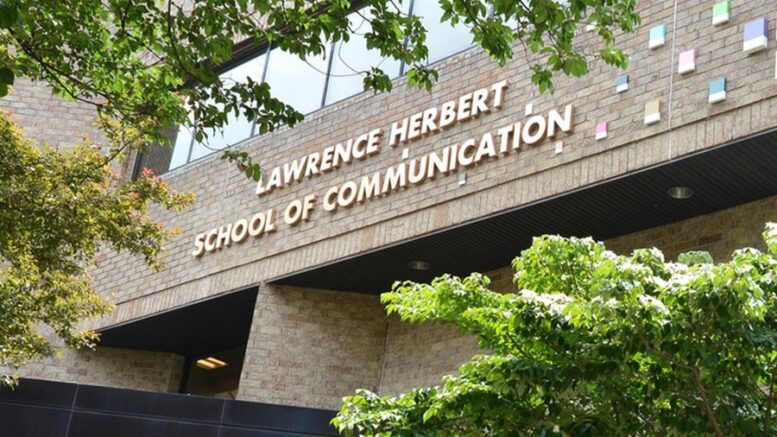
Next month, Hofstra University’s Public Relations Student Society of America chapter will host a regional conference organized largely by the students themselves.
 They’re lining up speakers, working with sponsors, managing logistics and bringing communications professionals from across the region to Long Island. As the chapter’s faculty adviser, I see how much effort goes into something like this – and how valuable it is for students preparing to enter a profession that looks nothing like it did when many of us started.
When I began my career in public relations, I didn’t even have Internet access. If we wanted to alert reporters to an upcoming event, we used a fax machine. If we had photos to share, we mailed prints to local newspapers, along with typed-out captions. At the Nassau County Supreme Court building in Mineola, there was a busy press room where reporters gathered throughout the day, and if you needed to talk to someone you could stop by – as long as it wasn’t close to their print deadline.
The tools were slower, but in some ways the path into the profession was more straightforward. You learned how to write. Learned how to build relationships with reporters. Gained experience one assignment at a time.
Today’s students are entering a very different environment. Young professionals in public relations, marketing and media are expected to understand social media strategy, digital content, analytics, video protocols, crisis communications and increasingly artificial intelligence, often before they’ve had their first full-time job.
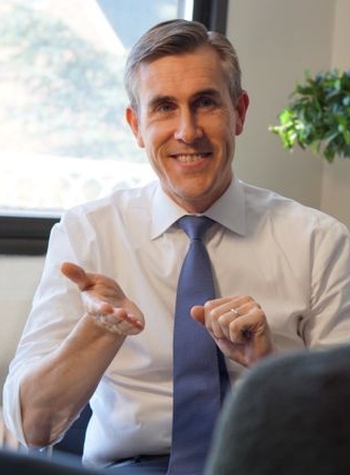
David Chauvin: Visibly excited.
Newsrooms are smaller, agencies run leaner and in-house communications teams are asked to do more with fewer people.
The fundamentals of the profession still matter, but the pace and complexity have changed dramatically. That’s why real-world experience – while still in school – has become more important than ever.
Programs like PRSSA and similar partnerships between universities and local industry give students things they can’t get from a textbook: access to professionals, exposure to real projects, a chance to understand how careers actually develop.
Just as importantly, they help students see that meaningful opportunities exist here on Long Island.
For years, business leaders have talked about the region’s struggle to retain young talent. Housing costs, salaries and lifestyle all play a role, but in the communications field there is another factor: visibility.
Students don’t always realize how many career paths are available close to home, or how many successful professionals are building their own careers right here.
Long Island has a strong and diverse communications community, from agencies and media organizations to indigenous teams inside healthcare systems, universities, real estate firms, nonprofits and companies in growing industries like technology, energy and research. But if students don’t see those opportunities while they’re still in school, it’s easy to assume they’ll need to go somewhere else to find them.
 That’s why conferences like the upcoming PRSSA regional event matter. They bring students face-to-face with professionals, give them leadership experience and allow them to build relationships that can shape the direction of their future careers.
In many cases, those experiences make the difference between leaving Long Island after graduation and deciding to stay.
Long Island’s colleges and universities are doing more than most people realize to prepare students for the workforce and connect them with local industry. In a time when so many young professionals feel pressure to leave, those connections are huge.
When I started in public relations, the tools were different, the pace was slower and the career path felt more predictable. Today’s students are entering a profession that demands more skills, more flexibility and more initiative.
The upcoming PRSSA conference and similar events give students a chance to lead, to meet the people already working locally in the field and to see that a successful career doesn’t have to begin somewhere else. Long Island has no shortage of talent coming out of its colleges and universities – the challenge, and the opportunity, is giving them good reasons to stay.
David A. Chauvin is executive vice president of ZE Creative Communications.





Be the first to comment on "In Hofstra’s PRSSA, a map for future LI communicators"