By BRAD CARLSON //
If the history of product development has one universal truth, it’s this: It’s never easy.
 The most successful products, of course, follow a simple return-on-investment formula: Development costs are low and revenues are high. But this is a double-edged sword, because investment – sometimes significant investment – is always required to deliver a quality product to the market in a timely fashion and drive customer adoption.
Adding to the challenge, you’re probably dealing with a C-suite that wants to know what it’s spending all this money on and wants results immediately, if not sooner.
There are things you can do to make life easier, such as building a strong understanding of your market and user needs. It’s critical to understand these issues up front – the best way to architect a solution that solves development problems with the least investment.
I was working on 2D barcode scanning at Zebra Technologies 20 years ago (it was Symbol Technologies at the time) and there was a market segment we didn’t play in, called direct part marking. This is where barcodes are stamped or etched directly on parts such as turbine blades for jet engines.

Brad Carlson: Big production.
Our competitor sold a custom product to read these codes. It was an expensive product to develop and costly to manufacture. We set out to compete in 80 percent of the market with new software on our standard device.
At the end of the day, we went to market at one-third the price and one-tenth the cost, with a very low development effort. And we achieved far superior ROI by better understanding the market and user needs and developing an imperfect – but good enough – solution.
Takeaway: Do not let perfect get in the way of good. Your executive team will always love it if you can deliver this kind of ROI.
On the flip side, I’ve worked on products that called out market or user needs that added no value, or very little, for the customer – features that add complexity and risk and can potentially destroy ROI.
Additional features always increase development time, test time, manufacturing steps, etc., but they cannot always increase revenue or expand market share, decreasing your ROI. And if something goes wrong with them late in development (or worse, after product launch), they can be very costly – and ultimately decimate your ROI.
I worked once on a medical product that faced a potential U.S. Food and Drud Administration recall due to the failure of a feature that had no documented complaints from our customers. They rarely used the feature, but we had it in the product anyway – and we discovered after shipping out units that the feature had a bug.
If not for some quick innovation – we found ways to safely update the product in the field – it would have cost us millions.
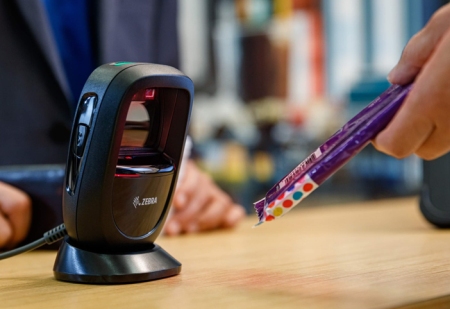
Passing the bar(code): There are 2D barcode scanners, and there are 2D barcode scanners done right.
Focusing on the technical foundation and risks early in development will pay off in the long run and usually lead to a solid product. Create the vision and roadmap for development and execute it one step at a time. Getting ahead of oneself is a surefire way to get into trouble and force a costly correction.
During the early days of camera-based 2D barcode reader design at Zebra, we invested heavily in image sensor testing and characterization. At a time when image sensor technology was changing rapidly, our goal was to find the least expensive solution that would deliver adequate performance.
Investing in efforts to decrease the risk of camera performance paid dividends by enabling us to deliver the highest possible ROI and take the market share lead in 2D scanning. We laid a solid foundation that enabled us to accelerate market gains.
Of course, there are many opportunities for things to go wrong in development and delay the program, leading to lost revenue opportunities. I led one product-development program from the definition phase – a very large project with significant investment, with huge revenue potential and a design that had a real chance to expand the market for this product category.
And if we were first to market, we’d have a significant advantage in market share for this expanded segment.
Three years later, the development team was far off the scheduled launch plan, due to poor understanding of technical risks and shifting requirements.
If the team had taken more time up front to understand user needs and mitigate the technical risk, the schedule would have reflected the real development timeline and could have been shortened. Instead, the project was chaos – and the executive team nearly canceled it altogether.
The project was replanned and launched three years later (six years total development time), and it turned out to be one of the most successful products in the organization’s history – in fact, it’s still in production today, with more than 20,000 units produced and total revenues in the billions.
A success story? Yes. But launching this product just one year earlier would have led to hundreds of millions in additional revenue.
Product development will always be hard. But working with a team that understands how to address the risks early will usually lead to outstanding products – and higher ROI.
Brad Carlson is vice president of technology and business development at Hauppauge-based Intelligent Product Solutions.