By GREGORY ZELLER //
The Feinstein Institutes for Medical Research has announced an exclusive licensing agreement with a medical-device startup harnessing the power of neurostimulation.
 Based on research conducted at the Feinstein Institutes, Northwell Health’s Manhasset-based R&D mecca has granted licenses for certain patents and patent applications to Neuvotion, which has its eyes on the busy – and lucrative – physical rehabilitation and therapy markets.
This essentially gives Neuvotion the exclusive right to develop the technologies, plan clinical trials and seek FDA approvals, according to the Feinstein Institutes.
The startup, which also announced the successful completion of a $1 million seed-funding round, will combine targeted-neurostimulation technologies and artificial intelligence to create next-generation therapeutics for patients with movement disorders or impairments resulting from stroke or injury.
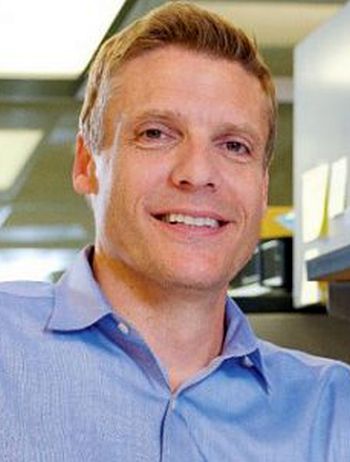
Chad Bouton: Connecting mind and body.
Company founder and CEO Chad Bouton developed the technology in the Feinstein Institutes’ Institute of Bioelectronic Medicine, where he is a professor.
“With this license to Neuvotion, we hope to see our breakthroughs in the lab translated into approved, widely available medical devices that can be used for both rehabilitative and assistive purposes,” noted Bouton, also Northwell Health’s vice president of advanced engineering and a professor of molecular medicine at the Donald and Barbara Zucker School of Medicine at Hofstra/Northwell.
With the licensing deal complete, Neuvotion is already arranging a multisite clinical study and seeking U.S. Food and Drug Administration approvals for its first product, a non-invasive, over-the-skin stimulation device.
And with a $30 billion national outpatient rehabilitation/physical therapy market looming, the company is knee-deep in planning a range of next-gen devices that will leverage state-of-the-art neurostimulation technologies and allow healthcare providers to monitor patient progress in-person and remotely.
Such tech is familiar ground at the Feinstein Institutes, which is recognized as the global scientific home of bioelectronic medicine. Feinstein Institutes President and CEO Kevin Tracey is a pioneer of the nerve-stimulation field, which aims to treat disease and injury – including arthritis, pulmonary hypertension and various conditions causing paralysis – through the electrical stimulation of the vagus nerve and other critical points along the human nervous system, without the use of pharmaceuticals.
 Working under Tracey and Bouton – a brainwaves expert who joined the Feinstein Institutes in 2015 after a long and successful stint at Battelle, the Ohio-based scientific-research hub – Feinstein scientists have already developed an impressive list of nerve-stimulation technologies, including a “neural bypass” device that decodes muscle-stimulating neural signals from the brain.
“At the Feinstein Institutes, we strive to understand the science behind the brain and body connection and how it impacts people living with motor impairment,” Bouton said.