By GREGORY ZELLER //
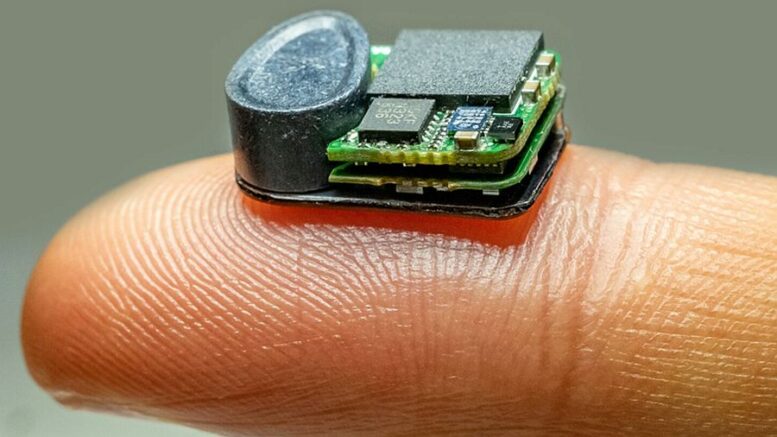
In another shocking development at the Feinstein Institutes for Medical Research, scientists have developed a wireless implant that stimulates nerves in mice – a tiny breakthrough that could become a giant leap for bioelectronic neuromodulation.
 Wireless implants that shock the vagus nerve – a key cranial nerve that interfaces with the heart, lungs, digestive tract and more – already exist for human patients. But back in the lab, where scientists create and study mouse models of human diseases, researchers have always relied on tethered implants, with what basically amounts to an antenna sticking through the mouse’s skin to conduct the nerve-zapping.
This has dramatically limited research opportunities, especially regarding neurostimulation’s potential long-term benefits. But the new, itty-bitty wireless implant runs on a rechargeable battery that runs for up to three weeks, according to the Feinstein Institutes – opening the door to a wide range of new nerve-stimulation experimentation.

Timir Datta: Tipping the scales.
Details abound in a paper published in December in the peer-reviewed scientific journal Biosensors and Bioelectronics. Senior author Timir Datta, an assistant professor in Feinstein’s Institute of Bioelectronic Medicine, said the new nerve stimulator – an innovative combination of 3D printing and off-the-shelf components – will enable new preclinical studies and clinical trials and “could lead to potentially revolutionary bioelectronic therapies.”
“Neuromodulation and bioelectronic medicine hold the potential to treat a variety of diseases without the use of traditional pharmaceuticals and their potential side effects,” Datta added. “However, scaling devices to the size needed for studies in mice has been very challenging.”
Enter the new device, which is built to deliver electric nerve stimulation and to measure physiological and neural signals, all while an untethered mouse moves freely through its environment. While the implant is compatible with various electrodes and sensors, Datta and friends designed it to be easy for other researchers to replicate, helping a wider range of scientists study the long-term effects of device-based nerve stimulation.
The implant advances previous work Northwell Health’s Manhasset-based Feinstein Institutes, where President and CEO Kevin Tracey – a much-honored neurostimulation pioneer – spearheads the global home of bioelectronic medicine. Bioelectronics has shown promise for the treatment of various injuries and has already led to alternative therapies for Crohn’s, rheumatoid arthritis and other chronic diseases.
And that’s with the previous limitations of tethered neurostimulation devices at the basic lab-science level. With the mouse-sized wireless implants ready to roll, bioelectronics comes off the chain, according to Tracey.
“Basic science in mice is foundational to developing new devices and effective treatments for patients,” the scientist said in a statement. “By offering new methods for other labs to use in their neuromodulation work, Dr. Datta and his team are leading the way to new discoveries in neuroimmunology and bioelectronic medicine research.”