By GREGORY ZELLER //
From the Look Better Than You Feel File comes the latest Marcum-Hofstra CEO Survey, which details increasing satisfaction with evolving hybrid-work models – and skyrocketing pessimism about the national economic outlook.
 The survey, the latest in a series produced by master accountants Marcum LLP and Hofstra University’s Frank G. Zarb School of Business, quizzed 254 mid-market CEOs ($5 million to $1 billion-plus in annual revenues) in mid-June – and calculated big declines in CEO optimism in the two months since the last Marcum-Hofstra survey.
Among the downers: The percentage of CEOs rating their business outlook at “8” or higher (on a scale of 10) declined 10 points between the mid-April and mid-June surveys (to 34 percent) while those rating their outlook at “5” or higher dropped nine points (to 74 percent).
While CEO optimism took hits across the board – chief executives in the healthcare, construction and professional-services sectors all sounded alarms – the falloff in the financial services industry was especially stark. Just 11 percent of mid-market financial-services CEOs rated their overall economic confidence at “8” or higher, down from roughly 50 percent two months ago.
 A large majority of CEOs (86 percent) confirmed inflated fuel prices were disrupting operations (both increasing corporate costs and dissuading post-pandemic employees from returning to the office), while individual comments lamented clients’ continuing reluctance for in-person meetings and other lingering COVID concerns, such as swinging infection rates – all bad for the bottom line.
Marcum Chairman and CEO Jeffrey Weiner said mid-market CEOs face “an extremely challenging environment in which to plan.”
“It will require resilience and flexibility in order to determine how to deploy both human and financial resources most effectively,” Weiner added.
There was some good news in the third Marcum-Hofstra CEO Survey of 2022, which found that 77 percent of mid-market firms currently offer employees remote- or hybrid-work options – with two-thirds saying they expect that trend to continue for the foreseeable future.
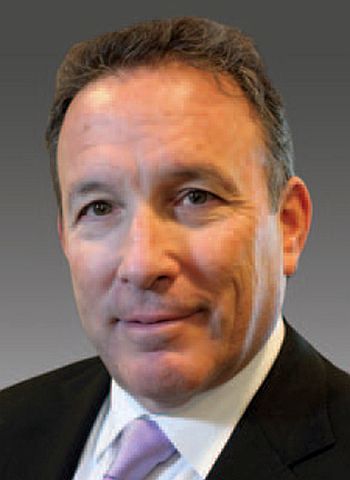
Jeffrey Weiner: Let’s get flexible.
A majority of respondents also applauded the evolution and shape of the new corporate workplace, which they believe increases productivity and promotes better work-life balances.
“Whether it is COVID concerns or the impact of inflation and gas prices, it seems clear that remote work, and a hybrid schedule in particular, is the sweet spot for many CEOs and businesses,” noted Zarb School of Business Interim Dean K.G. Viswanathan. “I believe this reflects a fundamental change in how Americans view work in the broader context of their lives.”
Despite improving opinions on hybrid-work environments, the survey mostly lands with a depressing thud – and CEOs have a lot of work to do to navigate these choppy economic times, according to Weiner.
“It is clear that the full-time, office-based work model has become a thing of the past and that CEOs as a whole are reimagining how their workforces should be structured,” the Marcum chief exec said. “At the same time, they are having to adjust their business-planning strategies in order to accommodate an increasingly dire economic outlook.”