By GREGORY ZELLER //
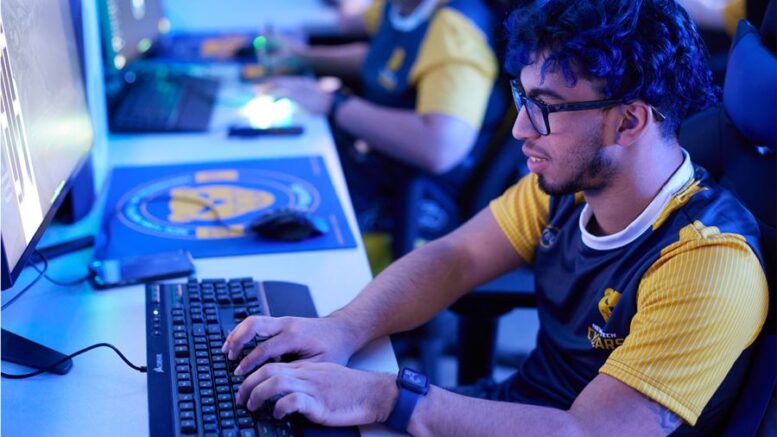
As more and more competitors take a seat, Long Island scientists are establishing the first set of body-composition benchmarks aiming to protect Esports athletes from injury.
 Don’t laugh – familiar professional-sports injuries like concussions and torn ACLs may be rare, but in an arena where participants play up to 10 hours per day and perform some 600 repetitive “action moves” per minute, overuse damage to the thumbs, wrists and forearms is common, and can be serious.
To that end, New York Institute of Technology’s Center for Esports Medicine – part of the institute’s Old Westbury-based College of Osteopathic Medicine – has announced a new research collaboration with Chicago-based GE Healthcare designed to analyze competitive Esports athletes’ lean body mass and establish a set of body-composition benchmarks.
The need is real: Due largely to repetitive-use injuries, the professional career of the average Esports gamer is shorter than the average National Football League career. And the establishment of physical benchmarks, while commonplace in traditional athletics, is a groundbreaking Esports first.

Joanne Donoghue: Let’s get physiological.
The GE Healthcare collaboration and the coming-soon benchmarks are new, but New York Tech’s Esports experience dates back to 2017. And the Center for Esports Medicine – focused on maximizing player performance, treating minor injuries and preventing worse ones – has a running start on Esports-related damage.
Associate Professor Joanne Donoghue, the College of Osteopathic Medicine’s clinical research director and an expert exercise-physiologist and nutritionist, noted previous findings showing that gamers who game daily for four hours or longer routinely possess lower lean body mass and higher body-fat percentages than non-gamers of similar age and size.
“We aim to analyze a region prone to overuse gaming injuries and propose benchmarks and interventions that could enable players to avoid or at least delay the development of chronic injuries that could shorten their careers,” Donoghue said.
Specifically, the two-player team-up with GE Healthcare aims to prevent serious musculoskeletal damage by performing a total body analysis of gamers’ fat, muscle and bone. “Regions of interest” such as the forearm – where cubital tunnel syndrome often afflicts gamers – will earn special attention.
Study participants include 30 college-aged competitive gamers and a control group of 30 non-gamers. Researchers will use the collected data – gathered with GE Healthcare’s Lunar iDXA device – to establish composition benchmarks and injury-prevention guidelines.
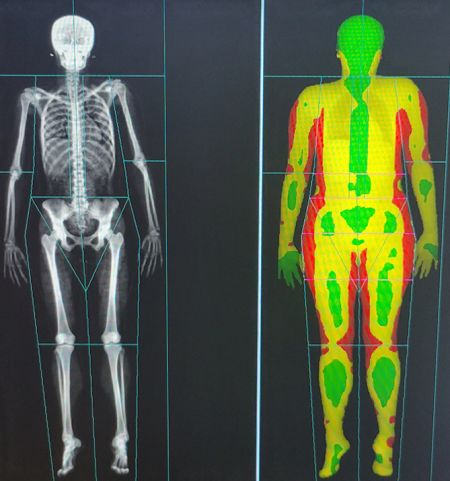
Inside information: GE Healthcare will provide the scans, New York Tech will crunch the data.
The outcomes could have broader applications than helping competitive Esports gamers perform better and longer. Donoghue and her team – including New York Tech Medical Director Hallie Zwibel, College of Osteopathic Medicine Associate Dean of Research Kurt Amsler and others – could potentially establish benchmarks and guidelines for occupations presenting similar physiological hazards, such as computer programmer and commercial drone operator.
GE Healthcare Global General Manager Claudio Mejia, who heads the General Electric subsidiary’s Bone and Metabolic Health segment, trumpeted a collaboration that would create “a better understanding of body composition of the Esport athlete.”
“Our DXA devices are used by sports teams worldwide for analyzing lean and fat mass,” Mejia said in a statement. “We anticipate this research will provide valuable insights for Esport athletes as they continue to establish standards for this new and evolving sport, while also helping their athletes avoid injury.”