By GREGORY ZELLER //
A $4 million NYSERDA investment will connect Long Island communities to cutting-edge clean-energy resources, with Cornell University’s statewide knowledge network leading the way.
 Cornell Cooperative Extension of Nassau County will head up the Island’s new Regional Clean Energy Hub, one of a dozen locally managed hubs established by the New York State Energy Research and Development Authority to help plug local communities into the clean-energy future.
The LI hub – combining contributions from CCE of Suffolk County and a deep bench of regional universities and nonprofit social organizations – will unify regional clean-energy programs and services, leveraging the NYSERDA funding and the partnership’s extensive expertise and experience.
United Way of Long Island – where both sustainability and housing play large – and Renewable Energy Long Island are in the fold, along with Hofstra University, Molloy University and Farmingdale State College.
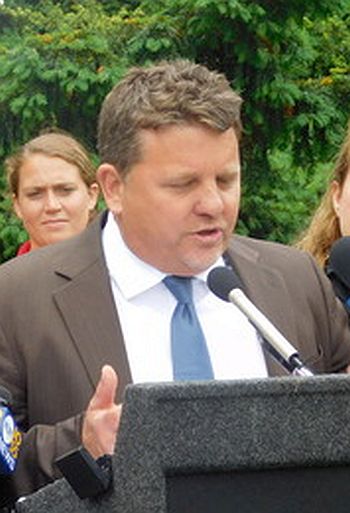
Gregory Sandor: Go team.
It’s a well-educated, well-connected group, bringing loads to the clean-energy table – and CCE Nassau is “honored to have been selected by NYSERDA to serve as the lead agency for this important initiative,” according to CCE Nassau County Executive Director Gregory Sandor.
“We believe our coalition of proven renewable-energy and community-engagement leaders makes up a superb team,” Sandor said. “Our Long Island Clean Energy Hub is committed to providing solutions that will make a tangible difference in or communities and provide measurable results.”
Each of the participating schools is knee-deep in community connections, clean-energy efforts or both. Farmingdale State has jockeyed into a leadership position in Long Island’s rapidly expanding offshore-wind industry; The Sustainability Institute at Molloy University is all about transformative environmental education, both on- and off-campus; and Hofstra’s National Center for Suburban Studies has uncovered key data essential to an environmentally just future, according to center Executive Director Lawrence Levy.
“What we’ve learned over the years is that just waiting for equity and fairness doesn’t work,” Levy said in a statement. “It takes intentionality.
“This hub offers a great chance to break down the racial and class barriers that historically have held back people and places of color.”

Gordian Raacke: The green economy must be colorblind.
Ensuring that clean-energy opportunities spread equally through all socioeconomic areas is a major mission component for the 12 regional hubs established by NYSERDA, which oversaw a competitive pitch process before selecting lead and partner organizations.
Regional hubs focused specifically on the Mohawk Valley, the Southern Tier and other statewide regions are also forming. Brooklyn and the Bronx will share a hub, as will Queens and Staten Island; Manhattan gets its own.
In addition to promoting social justice, each hub will include a unique mix of community recruitment, stakeholder and trade-union engagement, funding pursuits, diversity training, local-project support and other efforts focused on boosting clean-energy technologies, ensuring equal availability and spreading the word.
Long Island lawmakers hailed the regional hub’s rise and the selection of CCE Nassau as hub head. Nassau County Legislator Tom McKevitt trumpeted CCE Nassau’s “experience and knowledge” as “crucial in assisting our residents in preparing for a clean-energy future,” while Suffolk County Executive Steve Bellone said the LI hub’s powerful partnerships highlight “the commitment of our region to renewable energy and its benefits.”
Renewable Energy Long Island Executive Director Gordian Raacke said his 501(c)3 nonprofit was “honored to be part of this community-based initiative” and predicted critical climate-justice advances.
“As we accelerate the transition to renewable energy and a climate-friendly economy, we must make sure that every Long Island community can participate in, and benefit from, the new green economy,” Raacke added.