By GREGORY ZELLER //
Maybe governors feel inflation’s pinch, too.
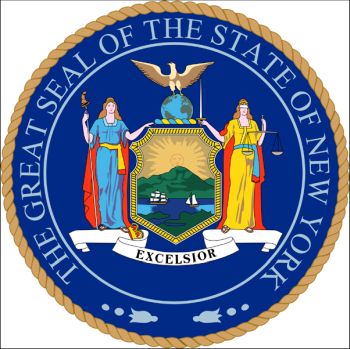 While still proposing an impressive array of housing, energy, healthcare and public safety initiatives, Gov. Kathy Hochul absolutely dialed it back a bit in her 2023 State of the State Address, delivered Tuesday in the New York State Assembly Chamber.
Dropping one year after her uber-ambitious 2022 State of the State (subtitled “New Era for New York,” a double entendre referencing Hochul’s hopes for the future and her rushed ascension from lieutenant governor), the freshly elected chief executive’s 2023 spending plan (“Achieving the New York Dream”) significantly throttles back the number of action plans on Albany’s annual drawing board.
And with state coffers still funding 2022’s bold slate, the 2023 plan also commits less money to this year’s new initiatives. Specifically, the 2023 plan includes one-third fewer individual initiatives – 147 total, down from 228 last year – and makes way fewer references to big-ticket spending.
The 2023 plan does include some chunky proposals – an additional $2.7 billion for school district Foundation Aid, a billion each for statewide mental-health initiatives and electric-vehicle infrastructure, a $250 million New York City housing infrastructure fund – but nothing like the numbers Hochul threw around last year, including $25 billion (over five years) for affordable-housing development, a $7 billion state investment in childcare, $500 million for offshore-wind initiatives and lots more.
Whether or not this indicates a tightening of Albany’s belt, Achieving the New York Dream still dreams big, with comprehensive strategies targeting the state housing crisis, major public-safety initiatives and climate change, among other frontline issues.
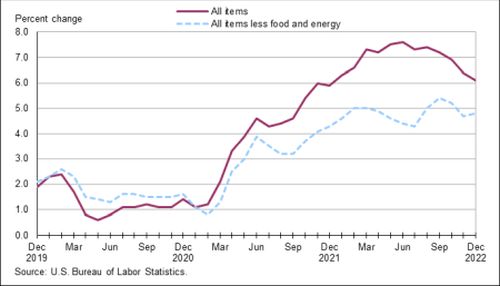
Inflation relation: The Northeast Region’s Consumer Price Index for Wage Earners may be the best way to determine New York State minimum-wage increases.
The rub, this year, is that some of the largest initiatives don’t necessarily involve new or egregious state spending. Right at the top: Hochul’s plan to tie annual minimum-wage increases to the U.S. Bureau of Labor Statistics’ Consumer Price Index for Wage Earners for the Northeast Region, considered a top barometer of regional inflation.
“If we really want to tackle the affordability crisis head-on, we must recognize that low-wage workers in New York have been hit hardest by the increases in costs of living,” Hochul said Tuesday. “Our commonsense plan to peg the minimum wage to inflation will not only put more money into the pockets of hundreds of thousands of hardworking New Yorkers, it will also provide predictability for employers and spur more spending in local economies and businesses.”
Also in the Tastes Great/Less Expensive category is the governor’s strategy to implement a sustainability-focused cap-and-invest program, which will establish a gradually declining cap on greenhouse-gas emissions and require emitters to purchase (via competitive auction) state “emission allowances” – with revenues funneled into sustainability projects in vulnerable communities.
Hochul also committed to finding a “comprehensive set of solutions” to the financial crisis engulfing the Metropolitan Transportation Authority, though what those solutions might look like – or how much they’ll cost – remains unclear.
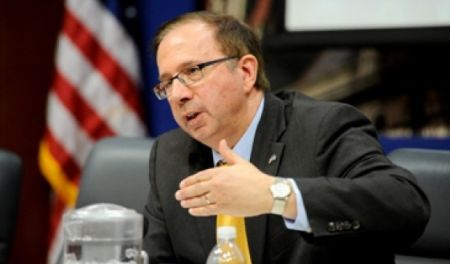
True intentions: Republican State Sen. Joseph Griffo wants more details on Hochul’s ambitious plans.
The 2023 spending plan did not meet with universal approval. Some statewide lawmakers questioned whether Hochul had actual detailed plans – or even honest intentions – to follow through on the ambitious agenda.
State Sen. Joseph Griffo (R-Rome) wondered Tuesday if the governor “will actually push for rather than merely propose the common-sense changes that need to be made to address the issues affecting our state.”
Meanwhile, the SUNY Student Assembly – which represents the State University system’s 1.2 million students – lamented Hochul’s plans for proposed SUNY and CUNY tuition hikes.
“The Student Assembly and I stand in solidarity against tuition increases of any sorts,” SUNY Student Assembly President Alexandria Chun said in a statement. “In economic crises like today, it is especially important that public higher education remains accessible and affordable for all New Yorkers.”
But Hochul was undaunted in her delivery Tuesday, insisting that under her plan, New York “will continue to be nation-leading in every way.”
“We will do the hard things, the necessary things, to lift up and support New Yorkers and clear a path for them to realize the New York Dream,” the governor added. “That is my promise to the people of New York, and I will work with the members of the legislature to keep that promise.”