By MICHAEL H. SAHN //
In her 2023 State of the State message, Gov. Kathy Hochul rekindled the debate on accessory dwelling units and affordable housing, which she sparked last year.
 In 2022, the governor proposed overriding single-family zoning laws to promote affordable housing and permit accessory dwelling units in single-family dwellings, or in separate buildings on the same lot as single-family homes, to end what the governor called “restrictive” zoning laws perpetuating segregated communities and blocking new construction needed to address statewide housing shortages.
The governor is now proposing to build 800,000 new homes in the next 10 years, part of a statewide strategy she calls “The New York Housing Compact.” This would double the number of units built in the last decade.
The governor is once again blaming the housing shortage on restrictive zoning laws and a convoluted permitting process. To that end, she proposes “housing targets” for all downstate municipalities, requiring 3 percent growth in housing every three years – fueled by mandated approvals in municipalities that don’t independently meet targets, fast-track approvals, swifter rezoning decisions and relief from environmental reviews for transit-oriented developments.
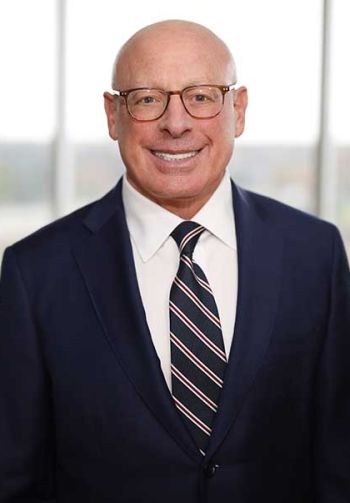
Michael Sahn: Achievable goals.
The governor also wants to require the rezoning of areas near rail stations to accommodate mixed-use and transit-oriented development. And to enforce all this, she proposes a new State Housing Planning Office.
Local officials strongly objected to ideas like this last year, arguing the proposals would lead to increased population density that existing infrastructure cannot support and irrevocably destroy Long Island’s suburban character.
They succeeded. The governor backed down and withdrew her proposals.
Hochul is adamant that she won’t give up this time. She promised a “bold and audacious” housing agenda to the New York Housing Conference. She promised her administration would target statewide communities and zoning laws – even in New York City – that block new affordable-housing opportunities and perpetuate segregation.
The governor has allies in the State Legislature, where legislators introduced bills last year to promote ADUs, require municipalities to approve multifamily and affordable-housing projects, limit single-family zoning lot sizes, mandate the adoption of as-of-right mixed-use zoning districts and support transit-oriented developments. Undoubtedly, new bills will be proposed to implement the new Housing Compact.
Planning studies document the need for significantly more housing stock and opportunities. The Regional Plan Association published a December report finding that New York State needs 817,600 new housing units by 2032 to meet projected demand. RPA’s analysis detailed the current shortfall, showing that Nassau and Suffolk counties only permitted seven new residential units for every 1,000 residents over the last decade.
The report recommends programs to meet the housing shortage, including several similar to governor’s proposals.
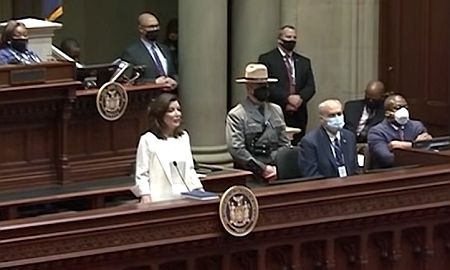
Home team: The governor is recruiting legislators and local leaders to her state housing plan.
The Long Island Community Foundation and other housing-advocacy groups also support proposals like the governor’s – and blame local zoning for the shortage – while thinktanks like the Brookings Institution have issued reports advocating land-use and zoning reforms to avert New York’s housing crisis.
Meanwhile, further housing challenges are forecasted for Long Island in 2023, with high mortgage interest rates, overvalued homes, high construction costs and a short supply of affordable rental units limiting housing choices for buyers and renters.
How should Long Island’s leaders react? How should they solve these problems? Simple opposition won’t work anymore, with so many pressing realities demanding new action.
The answer lies in well-reasoned and achievable policies to build more properly cited housing of various types, while preserving Long Island’s suburban character.
These goals are not incompatible. We can have communities with both single-family zoning and multifamily zoning without compromising core planning values. Housing is part of our infrastructure, and ultimately it must be provided at a pace matching demand – the same as water, roads and parks.
Zoning for transit-oriented development, streamlining environmental and permit reviews, creating special overlay zones for housing, new-construction incentives – all are useful tools. The key is to have proposals already on the table, ready to respond to the governor’s plans.
In the end, we must confront the issues, not simply hide from them – and the sooner we act, the better solutions we’ll create to protect communities and serve future needs.
Michael H. Sahn, Esq., is the managing member of Uniondale law firm Sahn Ward Braff Koblenz PLLC, where he concentrates on zoning and land-use planning, real estate law and transactions, and corporate, municipal and environmental law. He also represents the firm’s clients in civil litigation and appeals.