
By GREGORY ZELLER //
Decrying “a significant threat to manufacturers and small businesses,” an alliance of regional manufacturers is urging Albany to slam the brakes on a seemingly predestined statewide minimum-wage increase.
 The New York State Assembly is considering a bill that could raise the state minimum wage – a flat $15 per hour since 2019 – to $20 per hour in most statewide corners (and as high as $21.25 across Long Island and New York City), via annual increases through 2027.
Governor Kathy Hochul, meanwhile, wants to increase the statewide minimum wage to about $16.39 between now and 2026 – and index increases from that point forward to the rate of inflation (or 3 percent, whichever is less).
Both options spin out positive headlines about “living wages” and “economic disparities,” but in socioeconomic reality represent a mere Band-Aid on a much larger wound. And they may cut even deeper than that.
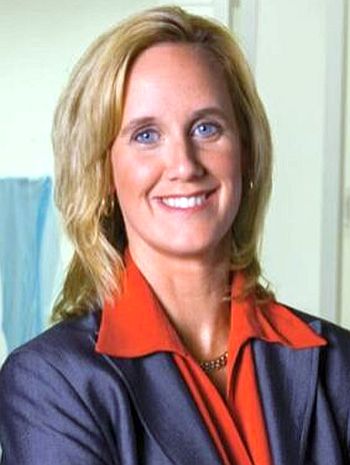
Anne Shybunko-Moore: Manufacturing challenges.
The proposed minimum-wage increases are an economic knife in mom and pop’s back, according to Ignite LI: The Manufacturing Consortium of Long Island, which is counterattacking what it considers “New York’s harsh business climate” with strikes on the potential hikes.
The consortium brings an arsenal of damning statistics to the fight. Exhibit A: roughly 128,000 statewide jobs eliminated directly by the minimum-wage increase, according to a study released in February by the National Federation of Independent Business, a nonprofit advocate of small and independent businesses in all 50 states.
About 65 percent of those losses (almost 83,000 jobs) would come from small businesses, gutting staffs at companies with 20 or fewer employees. And by 2033, cumulative economic losses attributed to the wage hikes will exceed $19 billion – with 60 percent of those losses suffered by New York small businesses, the study concludes.
As national minimum-wage hikes parallel increases in automation, the challenges to the working class and those who employ them are piling up fast – and with pandemic recoveries sputtering and global economic downturns looming, now is not the time to place additional burdens on small-business owners and other entrepreneurial job-creators, according to IgniteLI President Anne Shybunko-Moore.
“Long Island’s manufacturing sector is already challenged by the war on talent, a housing crisis, supply-chain strains, inflation and ongoing compliance requirements,” Shybunko-Moore said Thursday. “Our operational costs far exceed our national competitors in [the manufacturing] sector, causing us to be priced out of growth and business development.

Jeffrey Reingold: Unintended consequences.
“Another wage increase … will continue to erode our regional industrial base at a time when we should be supported,” she added.
Among those looking to avoid erosion is Contract Pharmacal Corp., a Hauppauge-based pharmaceuticals manufacturer that – despite a half-century of success and a major-league roster of international clients – absolutely feels the pinch of every minimum-wage increase, according to Chief Operating Officer Jeffrey Reingold.
“Minimum wage is a problem for CPC and other businesses, as it increases their labor costs and reduces their profitability,” Reingold said in a statement. “This can result in businesses cutting back on hiring, reducing hours for existing employees or even closing down altogether.
“Some argue that raising the minimum wage can lead to inflation, as businesses raise their prices to cover the higher labor costs,” the COO added. “This can ultimately hurt the very workers that minimum-wage laws are designed to protect, as the increased cost of living offsets the wage gains they receive.”
With upstate agricultural interests and other sectors also rallying against the proposed minimum-wage increases, IgniteLI is hoping lawmakers will see the light on a misguided solution that looks and feels good politically – but ultimately does more harm than good.
Especially with the Long Island economy “still recovering from the pandemic, the sudden increase in interest rates and a looming economic downturn on the horizon,” Shybunko-Moore noted.
“IgniteLI urges our state representatives to vote ‘no’ on job-killing legislation like the minimum-wage increase, (and) to keep businesses, jobs and families here on Long Island,” the consortium president added.