By GREGORY ZELLER //
Lose the lassos and cancel the clowns – the rodeo came to town last weekend, and no bull, you had to look up to see it.
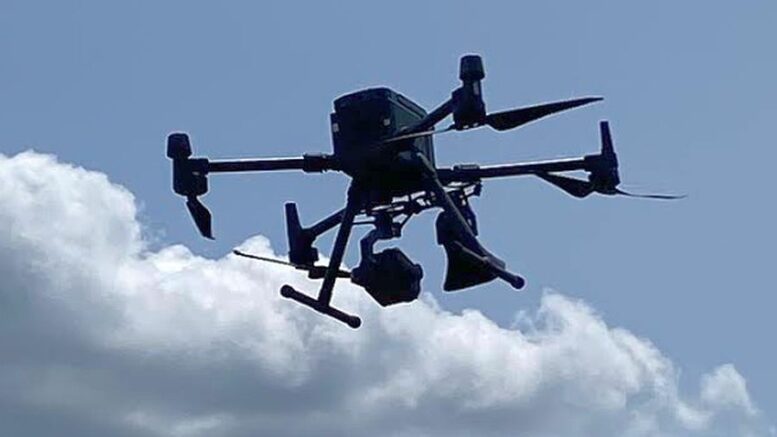
 Suffolk County Fire, Rescue & Emergency Services hosted a unique Drone Rodeo Saturday at the Suffolk County Fire Academy in Yaphank, attracting soaring automatons (and their operators) from multiple regional agencies.
With drones ascending (ahem) as a public-safety resource, the rodeo was designed to spread innovative best practices among agencies, showcase the latest in drone technologies and educate the public about aerial surveillance-related issues, including the latest in safety and privacy protocols.
Joining Suffolk County FRES for Saturday’s airshow were drone teams from the New York City Fire Department and representatives of FirstNet, a Virginia-based satellite network for nationwide first responders built collaboratively with telecom giant AT&T.
The FDNY’s drones get lots of airtime, both in high-profile demonstrations like Saturday’s rodeo and in action.
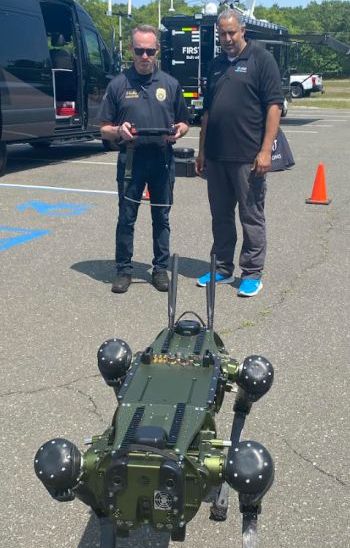
Head wrangler: Commissioner Beckley (left) prepares for liftoff at Saturday’s rodeo.
At FirstNet, drones fly in a comprehensive nationwide-connectivity formation that also deploys state-of-the-art smartphones and smartwatches, mobile satellite cells, advanced signal routers and other keep-the-lines-open technologies critical to emergency situations.
Having both partners participate in the Drone Rodeo was essential, according to Suffolk County FRES Commissioner Patrick Beckley, who emphasized better response times and real-time decision-making afforded by remote aerial systems – and said the proliferation of drone technologies necessities more events like Saturday’s high-flying demonstration.
“More and more organizations are putting drone teams together,” the commissioner noted. “Events like our Drone Rodeo allow us to come together and share best practices and lessons learned.
“It provides us with the ability to better coordinate our operational protocols during actual emergencies, such as industrial or brush fires.”