By GREGORY ZELLER //
A modest meet-the-candidates breakfast in suburban Long Island has set national politics on its ear. At least, it should.
 Belying an era when presidential impeachments are playthings and qualified leaders have been replaced by serial fabulists, manipulation masters and standard-issue reprobates, two county-level contenders shared a stage in front of about 100 constituents Wednesday morning, expressing their ideas on economics, the environment and other socioeconomic cornerstones.
The kicker: They did it without hurling insults, invoking whataboutisms, creating alternative facts or otherwise slaughtering basic decency.
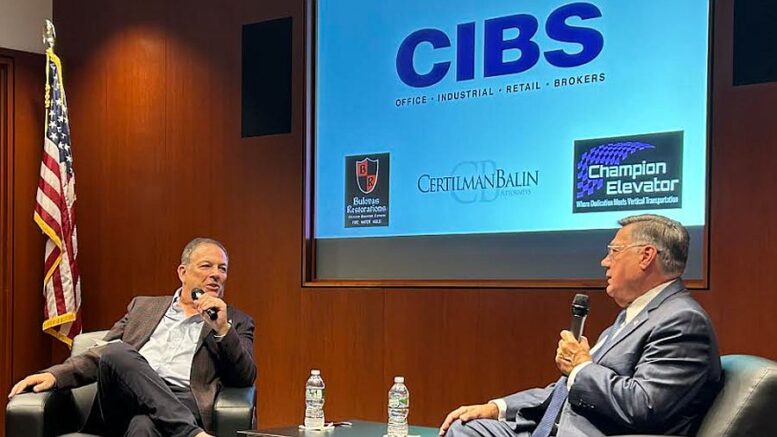
Welcome to the Meet the Candidates Breakfast hosted by the Commercial and Industrial Brokers Society of Long Island, featuring two candidates for Suffolk County executive and a time-trip to a kindler, gentler era of American politics.
Less a debate than an A-list networker with bagels, the event gave CIBS members and other Long Island businesspeople a chance to hear straight from candidates David Calone and Ed Romaine, who took turns sharing their platforms in one-on-one discussions with CIBS Co-President David Pennetta.
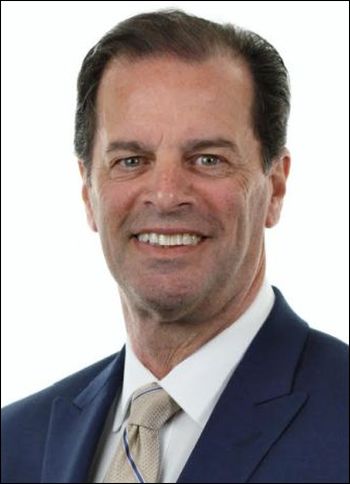
Ralph Benzakein: Relevant information.
“This forum allowed us to delve deep into critical topics from economic development to environmental sustainability, shaping the future of the region,” Pennetta, also executive managing director of Cushman & Wakefield’s Long Island office, noted Thursday, while also furthering the brokers society’s “commitment to enhancing Long Island’s commercial and industrial landscape.”
It’s a sad irony that intelligent, respectful discourse from two experienced, honest people – each with his own political philosophy, both with constructive ideas to share – should be newsworthy, but here we are.
It was a breath of fresh governance that Democrat Calone and Republican Romaine stayed on-point and kept it clean, according to CIBS Vice President Ralph Benzakein, who said muckraking over the likes of crooked Congressman George Santos (R-NY 3) or troubled First Son Hunter Biden was the last thing on organizers’ minds.
“This discussion steered clear of partisan politics, which have no relevance to the business community of Long Island,” Benzakein, also senior vice president-Long Island for multinational commercial real estate kingpin Cresa, told Innovate Long Island.
While the non-debate did little to differentiate the two candidates’ goals – they were largely aligned on business-critical issues like workforce development and the need for streamlined planning/zoning approvals – it did spotlight their main divergence: Calone approaches issues with the innovative mindset of a longtime businessman, Romaine with the savvy knowledge of a longtime public servant.
Calone, who’s lost previous campaigns for the U.S. House of Representatives and the New York State Supreme Court, is a former federal prosecutor and New York State attorney with a history of battling fraud. Since hanging up his prosecutorial gloves 16 years ago, he’s focused largely on entrepreneurism, co-founding various companies and supporting other startups, including a founding role in the Long Island Emerging Technologies Fund.
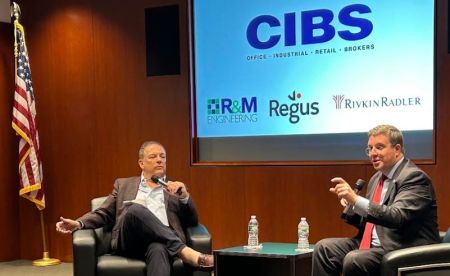
All business: Calone (right) brings the innovation.
Romaine, a former history teacher in the Hauppauge Union Free School District, boasts a political résumé dating back to 1980, when he became the Town of Brookhaven’s first commissioner of housing and community development. He’s also served as Brookhaven’s economic development director, a Suffolk County legislator and the Suffolk County clerk, and since 2012 has occupied the Brookhaven town supervisor’s office.
Although both have dabbled in the other’s realm – Romaine as a teacher, Calone as two-time chairman of the Suffolk County Planning Commission, among other government-appointed positions – each has his own history and distinct plans for moving government forward.
And they expressed those strategies Wednesday in the best ways possible, according to Benzakein.
“The candidates did an excellent job of expressing their opinions and ideas without sinking into divisive rhetoric,” the CIBS vice president added. “It was important that this event focus on the issue at hand: the economic future of our region.”