By GREGORY ZELLER //
With another contentious U.S. Presidential election on tap and the fate of both the House of Representatives and the U.S. Senate at stake, political uncertainty weighs heavily on the minds of regional corporate executives.
 So say the results of the latest Marcum-Hofstra CEO Survey, released this month by accounting giant Marcum LLP and Hofstra University’s Frank G. Zarb School of Business.
The first Marcum-Hofstra survey of 2024 – and latest in a long-running series dating back to 2019 – labels political unrest as the leading worry among Long Island chief executives, with 45.3 percent of survey respondents calling it a “top-three concern.”
But not their only angst: Unstable interest rates and the high cost of acquiring capital were cited by 44.6 percent of respondents, while 44.1 percent of CEOs lamented the lingering threat of a nationwide economic slowdown.
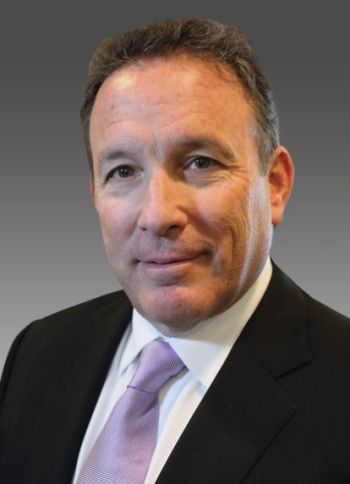
Jeffrey Weiner: Adaptability.
Labor shortages, rising energy rates, supply-chain concerns, global military conflicts and the federal debt also weigh heavily.
Of course, even with all that anxiety afoot, respondents – 256 mid-market CEOs (revenues between $5 million and $1 billion) contacted by the Zarb School in late February – are keeping their eyes on the prize, with a wide range of forward-pushing priorities for the coming year.
Better than one in five CEOs (21 percent) listed “attracting and retaining talent” as their highest priority, while containing costs/increasing efficiency, responding to “changing customer expectations,” developing new business opportunities and managing the evolution of artificial intelligence and other new technologies all ranking high.
Regional executives’ “ability to adapt and remain agile in the face of political and economic headwinds” is no surprise, according to Marcum Chairman and CEO Jeffrey Weiner.
“[It’s] what defines successful leadership today,” Weiner noted. “Our survey highlights the importance of these attributes as we continue to guide our clients through these complex times.”

Janet Lenaghan: Resiliency.
Complex, yes, but not necessarily negative: In fact, overall optimism among Greater New York CEOs remained steady from the last survey of 2023, with 88.3 percent of respondents holding at least a moderately positive outlook about the year ahead – and optimism spiking notably across the construction, healthcare, retail and technology sectors.
However, pessimism prevailed among respondents in the financial services and manufacturing industries – a mixed message that provides a worthy lesson to the Hofstra students who prepare and conduct the survey, according to Frank G. Zarb School of Business Dean Janet Lenaghan.
“We teach our students that obstacles are inevitable and present an opportunity to cultivate resilience in leadership and workplace culture,” Lenaghan said. “It is a process for change that leads to creative problem-solving, teamwork and the strategic courage needed to stay ahead of the curve.”
Despite the divergent opinions, the survey did include largely positive predictions on the jobs front, with 80.1 percent of respondents noting plans to sustain or increase employment levels and another 8.6 percent adopting a wait-and-see approach.
That’s a relatively happy takeaway, according to Andrew Forman, the Zarb School associate professor of international business and marketing who oversaw the preparation and execution of the 22nd overall Marcum-Hofstra CEO Survey.
“This survey serves as a potent reminder that, amidst uncertainty, opportunity arises for the sharp CEO,” Forman said. “The results underscore the significance of foresight and flexibility as leaders strive to remain competitive and innovative.”