By GREGORY ZELLER //
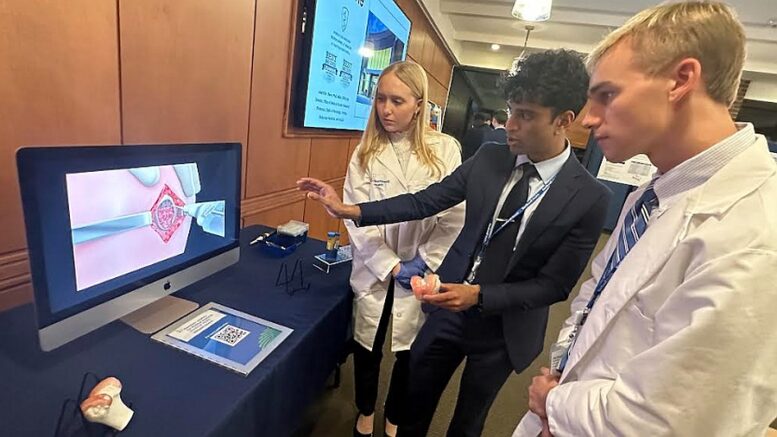
Nearly 100 students from one of Long Island’s most prestigious medical schools have showcased research projects that go straight to the cutting edge – and well beyond.
 The Donald and Barbara Zucker School of Medicine at Hofstra/Northwell hosted its 13th annual Medical Student Research Week Nov. 4 to 8, shining a bright spotlight on 90-plus students and dozens of intensive projects leveraging neurology, oncology, public health and more.
Facilitated by the Hempstead-based medical school’s Office of Medical Student Research and Advisory Committee for Student Research, the weeklong event kicked off Nov. 4 with students sharing the fruits of their months-long investigations, which began over summer 2024 break. The summit continued through the week with panel discussions – focused on research planning, diversity in medicine and other critical topics – and awards presentations.
Honors were bestowed on numerous young researchers and several “project investigators” – mentors representing Cold Spring Harbor Laboratory, several Northwell Health hospitals and Northwell’s Feinstein Institutes for Medical Research. More than 100 PIs helped guide the future doctors through their investigations, according to the Zucker School.
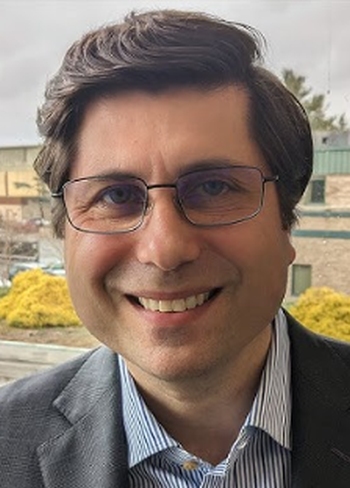
Joel Stern: Research responsibility.
The five-day dive into the limitless possibilities of next-level medical investigation “underscores our medical school’s commitment to supporting students in their research endeavors,” according to Office of Medical Student Research Director Joel Stern.
Those highly advanced endeavors led to several potentially profound implications. Among the research projects presented was second-year medical student Alix Rosenberg’s comparison of blood-based and tissue-based biopsies for detecting genetic mutations in patients with advanced non-small cell lung cancer – a possible path to earlier and more effective NSCLC treatments.
While both biopsy types have their pros and cons, Rosenberg’s research “shows that blood-based biopsies can be a useful tool for detecting mutations and starting treatment faster,” according to the second-year scientist.
“And combining both blood- and tissue-based biopsies could provide a more comprehensive approach to genetic testing in NSCLC patients,” Rosenberg added.
Other highlighted projects include medical student Jeffrey Zhang-Sun’s evaluation of the long-term outcomes of post-catheter ablation for atrial fibrillation in patients with chronic kidney disease, supported by researchers from Manhattan’s Lenox Hill Hospital; student Greer Williams’ study of structural differences in brain connectivity among Alzheimer’s disease patients, guided by Feinstein Institutes mentors; and student Marianna Tu’s exploration of Northwell Health’s forthcoming merger with Connecticut-based Nuvance Health, conducted with the assistance of Northwell’s Center for Global Health.
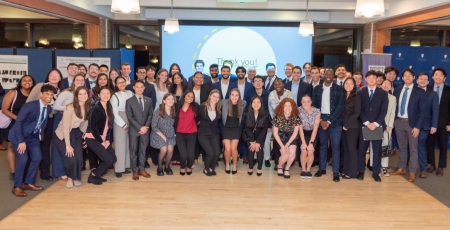
The gang’s all here: More than 90 Zucker School of Medicine learners participated in the 13th annual Medical Student Research Week.
“My research was nontraditional, and I’m a nontraditional student,” Tu noted. “So, it feels great to know that people found it interesting.”
Five Zucker School physician-mentors – Associate Professor of Obstetrics and Gynecology Marina Frimer, Clinical Professor of Medicine Anthony Szema, Assistant Professor of Otolaryngology Charles Tong, Associate Professor of Urology Manish Vira and Associate Professor of Cardiovascular and Thoracic Surgery Pey-Jen Yu – were honored with Scientific Excellence in Mentorship Awards, along with Feinstein Institutes pancreatic cancer researcher Daniel King.
Eight other professional researchers – representing Hofstra University, the Feinstein Institutes and the Zucker School – were honored with Office of Medical Student Research Mission Ambassador Awards for “significant contributions to OMSR’s mission by supporting students in various impactful ways, including fostering collaboration and advocacy,” the Zucker School said in a statement.
While acknowledging the efforts of project investigators and other mentors is important, Medical Student Research Week is primarily about spotlighting the incredible work of the young researchers, according to Stern, also a Zucker School professor of neurology, molecular medicine, urology and science education.
“Nearly 100 percent of Zucker School of Medicine students conduct research between their first and second year of medical school,” the professor added. “We are proud to support them and provide an opportunity to showcase their hard work and dedication to scientific discovery and improving care and treatment for patients.”