
By JEFFREY L. REYNOLDS //
People in acute pain might be relieved to know that the U.S. Food and Drug Administration recently approved Journavx, a novel painkiller that aspires to be a safer yet powerful alternative to potentially addictive opioids, which have contributed to more than 1 million American overdose deaths since 1999.
 Opioids like oxycodone (stage name: OxyContin) and hydrocodone (Vicodin) block pain signals by stimulating opioid receptors in the brain. But this first-in-class painkiller stops nerve pulses from even getting to the brain by blocking a sodium channel near the pain site, called NaV1.8.
The new drug – known generically as suzetrigine – targets moderate-to-severe short-term pain, the type usually associated with an accident, injury or surgery. It steps in when over-the-counter pain relievers like ibuprofen or acetaminophen aren’t enough, but it’s not designed for chronic pain that lasts longer than three months.
Prescribed to be taken twice daily, Journavx will cost $15.50 per pill when it hits the market – far more than generic opioids that run about a few bucks each.
It’s unclear whether insurance companies will cover this more expensive option. That likelihood, however, will probably increase if their beancounters do the math.
Boston-based drugmaker Vertex Pharmaceuticals points out that more than 80 million Americans are treated for acute pain each year, and – despite well-known warnings about addiction – about half of those people are prescribed an opioid. Without other good pain-management options, nearly 10 percent continue to use opioids for longer than three months, and about 85,000 patients per year develop an opioid-use disorder.
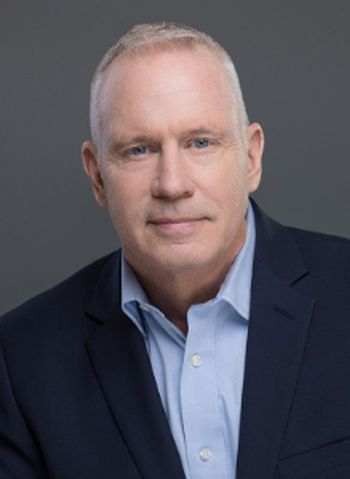
Jeffrey Reynolds: Cautious optimism.
For those who need help getting off opioids, the tab for outpatient drug treatment is generally upwards of $8,000, while inpatient rehab stays average more than $50,000 nationwide. Addiction can be a chronic recurring disease, so it’s not uncommon to require more than one round of treatment.
Opioid prescriptions have steadily dropped since 2010, yet the National Institutes of Health says that more than 9 million Americans over the age of 12 misused opioids in the past year, and more than 5.5 million live with an OUD.
Despite a recent decline in fatalities, 100,000 Americans die annually from drug overdoses or poisonings, and 75 percent of those deaths involve opioids – mostly synthetic opioids like fentanyl obtained on the street or online.
People are still hurting.
Journavx and emergent drugs in this new class will give acute-pain patients another treatment option and potentially mitigate opioid risks. But they won’t help the 50 million U.S. adults who live with longer-term chronic pain, half of whom struggle with severe pain every day. Nearly 20 million Americans suffer from pain that interferes with their daily lives, putting them at risk for depression, suicide and substance use.
Bruce Silber, a chiropractor at Massapequa Pain Management & Rehabilitation and past president of the New York State Chiropractic Association, is hopeful that Journavx will give prescribers and patients another tool.
But the doctor recalls the hype when OxyContin came to market in the 1990s – and urges a back-to-basics approach.
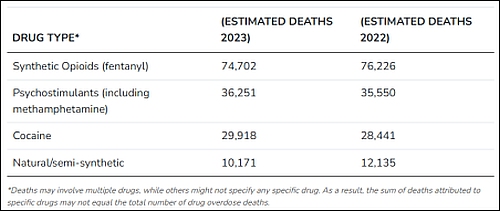
Crisis point: By far, synthetic opioids like fentanyl are still public enemy No. 1 when it comes to drug-related U.S. deaths. (Source: U.S. Centers for Disease Control and Prevention)
“Pain is one of the most common reasons for a visit to the doctor’s office,” he says, but it’s also a normal phenomenon that “alerts the body that something is wrong.”
So pain needs to be thoroughly investigated, and “when it cannot be controlled by nonpharmacological means, such as chiropractic treatment, physical therapy modalities, massage, acupuncture, etc., then an effective pharmacological approach should be considered.”
As $50 billion in opioid-lawsuit settlement payments are being deployed to clean up the mess nationwide, addiction treatment expert Claudia Ragni, who founded and runs the Long Island-based Kenneth Peters Center for Recovery, is also taking a wait-and-see attitude, especially for folks in recovery who can’t take opioids.
“Doctors need to prescribe carefully and thoughtfully,” she cautions. “We, as addiction professionals, should not automatically recommend this drug until we have more experience and information.”
Bottom line, according to Ragni: “Comprehensive treatment of chronic pain involves a physical, emotional and spiritual approach … there will never be a magic bullet for pain elimination.”
Jeffrey Reynolds is the president and CEO of the Garden City-based Family and Children’s Association.