By MICHAEL H. SAHN //
A turning point, or a punctuation mark, in the long-running story of the Rule of Law?
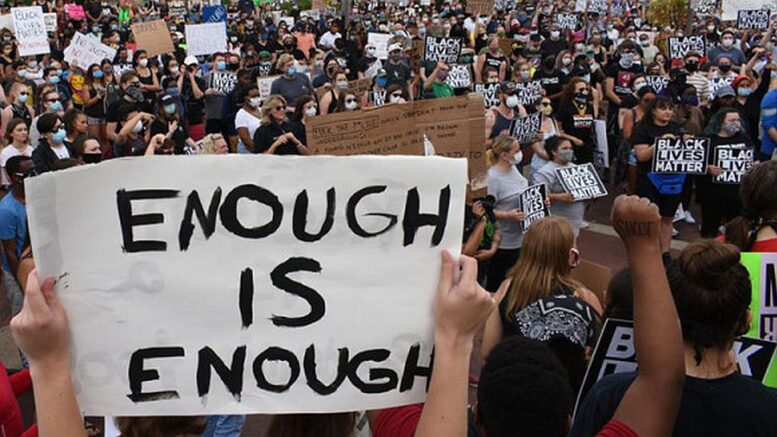
 The Chauvin verdict is neither a beginning nor an end. But it has focused the nation, for this moment at least, on social and economic justice, criminal justice reform, even issues of public health and the environment.
Mostly, the verdict asks us to consider a huge question: Where do we go from here?
The answer needs some historical perspective.
John Adams’ “a government of laws, and not of men” articulates the fundamental principle that all persons and institutions are accountable to the same laws. To ensure a just society and prevent arbitrary exercise of power, all must be treated the same.
On Long Island, we rely on more than 50 law-enforcement agencies – federal, state and local – to preserve the Rule of Law. These agencies and the people who staff them are essential to our community infrastructure, no less than roads, parks and bridges.
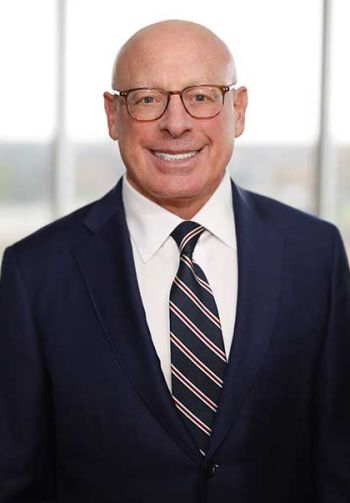
Michael Sahn: Familiar themes, fresh focus.
Following the racial tensions and civil unrest of the 1960s, the 1968 Kerner Commission Report – focused on the broad implications of socioeconomic conditions and race relations – stated that the Rule of Law must prevail, or “society will lack not only order but also the environment essential to social and economic progress.”
“The police need guidance, as well as support, from mayors and other public officials,” added the commission, which also recommended policing reforms that closely mirror many being implemented today regarding training, the use of force and improved community relations.
In its 1989 Graham v. Connor ruling, the U.S. Supreme Court said police actions should be judged by the standard of what a “reasonable” officer would do in a given set of circumstances – taking into account that officers must often make split-second decisions in tense, uncertain and rapidly evolving situations.
Many commentators have suggested this ruling has justified the use of lethal force in a long list of cases where it wasn’t warranted. Now here come Derek Chauvin and George Floyd, and again, initiatives for comprehensive law-enforcement reforms are being proposed across federal and state levels.
At the federal level, Congress is considering the George Floyd Justice in Policing Act, which addresses policing practices and accountability. One component would lower the standards federal prosecutors use to determine whether law-enforcement officers employed “excessive force”; prosecutors must currently establish an officers’ conduct as “willful,” but that would change to “knowing” or “reckless,” lower legal standards.
The act includes several other provisions – new U.S. Department of Justice subpoena powers, limited defense options for officers in civil actions – and would create a National Police Misconduct Registry, with new reporting requirements on officer misconduct and the use of force.
In New York, legislators have enacted the Say Their Name reform agenda, which among other things prohibits the use of chokeholds by police officers, permits the public disclosure of law-enforcement disciplinary records and appoints an independent prosecutor to investigate all police-involved deaths.
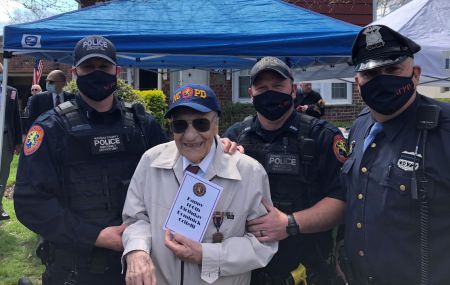
People persons: More and better community policing is in the mix for Nassau and Suffolk officers.
Meanwhile, a 2020 executive order by Gov. Andrew Cuomo has compelled local governments with their own police departments to complete comprehensive departmental reviews – and, where necessary, create plans to improve practices and policies in the name of fairness, particularly regarding issues of racial bias.
The chief executives of local governments were required to meet with the heads of their police departments and community stakeholders as part of the reform-plan development. District attorneys, public defenders, local government officials and all types of community members were mandated to be involved, with an April 1, 2021, deadline for local legislators to ratify the plan – and both federal and state funding at stake.
Reform plans for the Nassau County Police Department and the Suffolk County Police Department were submitted to the state on time, and have been accepted.
The Nassau plan incorporates body-worn cameras and a biannual public report on the department’s use of force. Officers must also attend annual “implicit bias” training, with new community-oriented policing initiatives – officers reading to children at libraries, enhanced collaboration with the Nassau County Mobile Crisis Team – also in the mix.
The Suffolk plan includes additional funding for mental-health crisis response, a new task force to reevaluate police in schools and more public data about traffic and pedestrian stops. The plan also enhances civilian oversight of the SCPD through the county’s Human Rights Commission, which would receive all police-misconduct complaints and review them along with the department’s Internal Affairs Bureau, including use of a shared data portal.
Do these legislative and executive actions mean the Chauvin verdict is a turning point, or a punctuation mark? Will even more decisive federal, state and local actions follow?
It’s too soon to know whether the verdict will speed up pending reform proposals or even create new ones. But for now, the public spotlight remains on policing, socioeconomic justice and the Rule of Law.
This much we can be sure of: These longstanding issues have defied lasting solutions – and without collaboration, compromise, investment and a common sense of purpose, that cycle will continue.
Michael H. Sahn, Esq., is the managing member of Uniondale law firm Sahn Ward PLLC, where he concentrates on zoning and land-use planning, real estate law and transactions, and corporate, municipal and environmental law. He also represents the firm’s clients in civil litigation and appeals.