By TARA TERRANOVA //
Ramuel “Ram” Maramara is no stranger to high ambition. And his latest project – helping to power a cleaner future with gravity-based energy storage – is no exception.
 While solar panels and wind turbines have established themselves as economically competitive and environmentally preferable to fossil fuels, the renewable energy debate rages on. Arguments often center around production – what about cloudy days? What if there’s no wind?
Maramara and his latest venture, Stony Brook-based Cold Volt, aim to answer those questions by developing the next generation of energy-storage technology – revolutionizing how excess energy generated on sunny, windy days is stored and “revitalized” when needed.
The Cold Volt team is working to patent an alternative to two established energy-storage technologies: lithium-ion batteries and pumped hydro mechanisms.
Lithium is a finite material (not to mention a volatile element prone to spontaneous combustion), while “water batteries” – a cleaner and more cost-effective storage option – are constrained by specific geographic requirements (massive tracts of mountainous land with two separate water reservoirs at varying heights).
These “efficiency penalties” severely hinder pumped hydro’s potential, according to Maramara. Enter Cold Volt and its deceivingly simple solution: Instead of moving water between reservoirs, move multiple 3,000-ton weights up and down a structure taller than the Empire State Building.
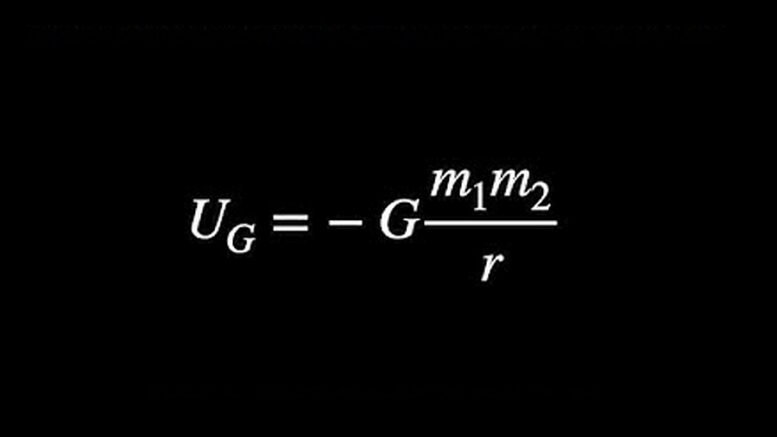
The system relies on industrial-grade screws and hydrostatic bearings built to withstand extraordinary forces with minimal degradation over time. By lifting heavy masses to a higher elevation when excess energy is available and then controlling their descent through generators, the system recaptures “gravitational energy” and converts it back into usable electricity when power is needed.

Ramuel Maramara: I’m defying gravity.
“The world is looking for a better solution,” Maramara noted. “And we believe that a better solution is a dedicated building for moving blocks up and down.”
The gravitational-energy technology has already been proven. Cold Volt competitors already move weights for this purpose – but those weights range between 25 and 50 tons, requiring more frequent up-and-down movements.
Setting apart Maramara’s 2022 startup is its proprietary technology, which is designed to really do the heavy lifting.
“It is beyond current crane technology to lift 3,000-ton weights,” the entrepreneur noted. “(But) we have designed cranes from the ground up … not based on ropes and pulleys.”
Maramara welcomes such technological challenges. His entrepreneurial journey began in his home country of the Philippines more than 20 years ago, when he founded East Asia Mechatronics, a 15-person engineering firm serving the Asian automotive industry.
The big thinker relocated to the United States in 2005 and worked for years as an engineer at a Connecticut-based industrial technology company. In 2010 he struck out on his own again, launching Ronkonkoma-based machine-maker Brimes Industrial, then in 2013 refined that into Brimes Energy, a clean-energy upstart focused on renewable ocean-wave power systems, using a patented “artificial jellyfish” technology. Before it deadpooled, Brimes Energy would also dabble in ocean desalinization and energy storage.
Such efforts are critical to closing America’s energy storage gap. The United States currently has just 26 gigawatts of installed battery capacity, while the U.S. Department of Energy projects the nation will need 930 gigawatts to achieve net-zero energy by 2050.
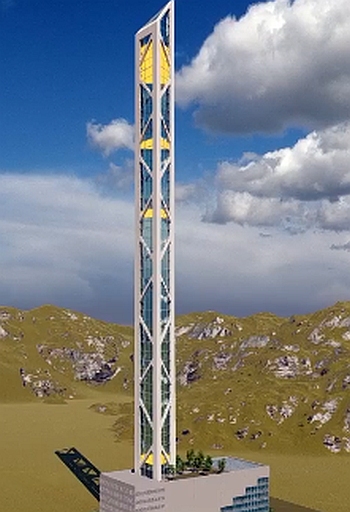
Towering achievement: One Cold Volt tower could provide 1,000 megawatt-hours of electricity — 6,000 of them could solve the nation’s energy-storage dilemma.
“To jump from 24 to 930 gigawatts, you need very, very large batteries,” Maramara noted.
As planned, one Cold Volt tower would store 1,000 megawatt-hours of energy. Meeting the DOE’s 2050 target would require roughly 6,000 such facilities nationwide – a massive undertaking, Maramara acknowledges, but still more realistic than the alternatives.
“If you build a 1,000-megawatt-hour lithium battery, that will occupy a lot of land and use lithium resources we don’t have,” he said. “If we can build buildings like this near wind farms or solar farms, that can practically solve our battery problem.”
The patent-pending technology also offers multiple revenue-generating possibilities: buying cheap electricity when solar production peaks (around midday) and reselling it during expensive evening hours (when demand surges), and providing services that keep grids stable (like frequency regulation), things that utilities already pay for.
While massive in scale, the basic engineering is fairly straightforward – pick things up, put them down. More complicated, according to Maramara, is the money.
With Cold Volt’s proposals undergoing a federal patent review, the CEO said his next priority is securing more funds. While global investors are all-in on clean energy, Maramara noted declining interest in clean energy among U.S. investors, forcing his latest startup to pursue federal and private grants instead – these days, another slippery slope.
But not insurmountable, according to the clean-energy guru.
“Something this ambitious requires a lot of work on the business side,” Maramara said. “So, we can fund our way from being where we are right now to somebody up there.”