By GREGORY ZELLER //
Expanded rail freight service is critical to Long Island socioeconomics.
 That was the takeaway from a recent summit meeting uniting regional government, waste-management and transportation officials, including a review of significant rail-infrastructure investments already made – and a rundown of those yet to come, if Long Island is to fully realize rail freight’s economic and environmental benefits.
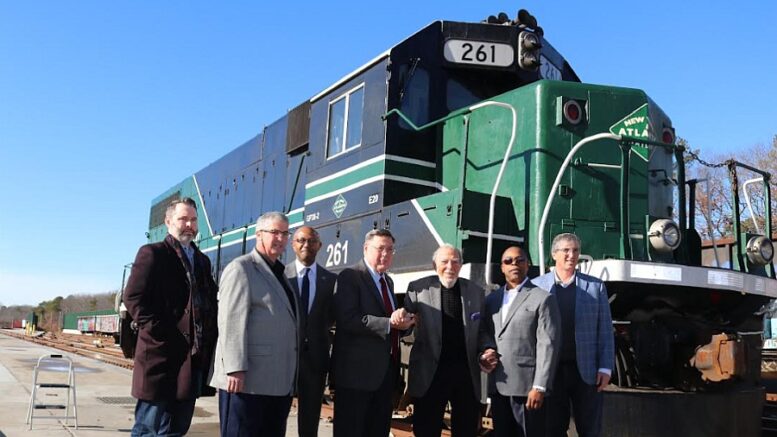
The late-December meeting, held at Gershow Recycling’s highly mechanized Medford mecca, brought together Gershow Recycling President Kevin Gershowitz, Suffolk County Executive Edward Romaine and Marlon Taylor, president of New York & Atlantic Railway, a short-line hauler that moves tons of freight – building materials, food and more – on tracks owned by the Long Island Rail Road.
The get-together included a comprehensive tour of the Gershow facility, including a checklist of recent modernization efforts the 60-year-old recycling kingpin has made to expand its rail-freight infrastructure.
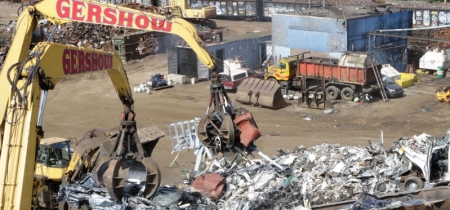
Metal winner: Gershow Recycling operates some of the most technologically advanced metal-processing recycling facilities in the nation.
With those upgrades in place, Gershow is ready to increase its “environmentally and economically friendly” rail-freight workload, according to Gershowitz.
“We have made significant investments in our rail infrastructure providing an efficient means of transportation for the recycled products that Gershow manufactures,” Gershowitz noted. “This investment provides access to manufacturing markets across the United States, in a transportation mode that … reduc(es) impacts on surrounding communities and Long Island’s greatly overburdened roadways.”
That’s a winning one-two punch, agreed Romaine, the Suffolk County executive who served 12 years as supervisor of Brookhaven Town – which contains the Hamlet of Medford and has maintained a long relationship, including municipal licensing and event sponsorships, with Gershow.
While the powerful combo is scoring points across the nation, however, it’s underutilized on Long Island, according to the county executive.
 “Across most of the country, about 20 percent of goods are moved by rail,” Romaine said. “On Long Island, that number is closer to 2 percent, and that clearly shows there is a significant opportunity to do more.”
The percentage of U.S. freight actually moved by rail is debatable; among other factors, higher percentages are moved by rail across longer distances, while trucks handle most shorter-distance transportation – and shorter-distance transportation represents the lion’s share of domestic freight hauling.
But there’s no denying that rail freight removes millions of truckloads from national roadways annually – or that Long Island’s percentage is too low, according to Romaine, who insists that “expanding rail freight will take trucks off our roads, protect our infrastructure, improve safety, reduce congestion and improve regional air quality.”
“We need to move more freight by rail,” Romaine added.
Such talk naturally invokes New York & Atlantic Railway, a subsidiary of Illinois-based Anacostia Rail Holdings Co. that coordinates carefully with the LIRR to improve Long Island supply-chair and environmental efficiencies without disrupting carefully balanced passenger schedules.
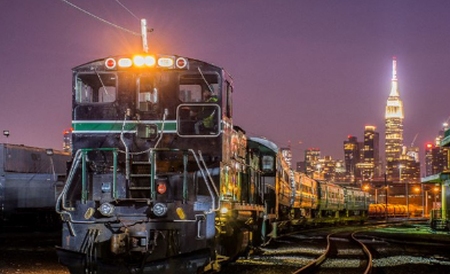
Bright future: Government and transportation experts believe Long Island’s best socioeconomic destiny rides largely on rails.
Utilizing 270 miles of LIRR-owned tracks, the New York & Atlantic boasts 14 engines, an annual rate of 30,000-plus carloads and connections to a national network of rail-freight lines. The railroad is “highly adept at moving freight efficiently and effectively” and stands ready to play a bigger role in regional transportation, according to Taylor, who trumpeted similar rail-freight benefits in a 2025 discussion with the Long Island Association.
“We have the capacity to increase freight movement by rail on Long Island and are ready to support that growth,” Taylor noted. “Expanding rail freight strengthens the regional economy, reduces truck traffic and provides numerous benefits to communities across the Island.”
He’ll get no argument from Gershowitz, who called rail freight “essential,” or Romaine, who framed expanded rail hauling as a critical infrastructure priority with direct corporate, residential and ecological benefits.
“Companies like Gershow Recycling and New York & Atlantic Railway are investing in rail infrastructure,” the county executive added. “And this is the future for Long Island.”