
By MICHAEL H. SAHN //
The law is racing to keep up with the explosive rise of artificial intelligence and the massive data centers AI needs to power its growth.
 The more AI grows, the more it needs “hyperscale” data center infrastructure, which covers large land areas with the machines and computer equipment that keep AI running while consuming enormous amounts of electricity, water and other resources.
There are few, if any, laws in place to control and manage this growth. Zoning, land-use and environmental laws never anticipated such rapid expansion of large-scale data centers – “one of the largest infrastructure buildouts in history,” according to Robert Wachen, cofounder of the California-based technology company Etched.
The biggest AI developers – Amazon, Microsoft, Meta, Google, Equinix, Oracle – are leading the charge for new data centers. New York State and Long Island, meanwhile, are at the vanguard in the fight to regulate this growth.

Michael Sahn: Opposition research.
Governor Kathy Hochul issued an executive order July 14 imposing a one-year moratorium on the construction of hyperscale data centers, which use 50 megawatts or more of electricity, while Albany develops a regulations framework to manage construction and mitigate impacts. The order requires the New York State Department of Public Service to study the environmental effects of data centers, including impacts on water usage, the creation of wastewater, potential drains on the electric grid, the spreading of costs among other electric ratepayers, aesthetic impacts and possible noise pollution.
New York is the first state to impose a statewide ban on new data centers, and it’s happening on multiple levels.
On July 16, the Town of Brookhaven adopted an 18-month moratorium on the construction of data centers in the town, also looking to consider laws and regulations mitigating their impacts. On Aug. 11, the Town of Islip did the same, adopting a similar moratorium that extends through the end of February 2028, so the town can study new, comprehensive zoning legislation governing data centers.
Brookhaven’s moratorium and the governor’s order have stopped, for now, a $1 billion proposal by a subsidiary of New York City-based developer Wildflower to build a 549,000-square-foot, 176-megawatt data center near Yaphank, on 79 acres off the Long Island Expressway’s north service road. The site is approximately 1,000 feet from a residential neighborhood.
Worth noting is that the Brookhaven and Islip moratoriums apply to all data centers, not just those over 50 megawatts. For perspective, there are now 12 smaller-scale data centers on Long Island and approximately 135 data centers across New York State, four of which qualify as hyperscale facilities.
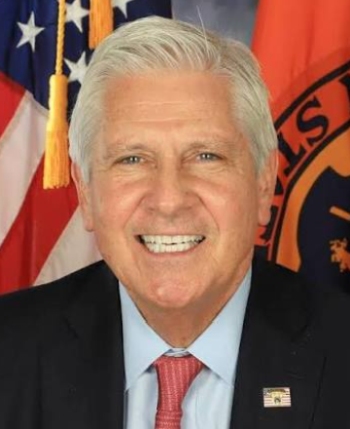
Bruce Blakeman: What’s to think about?
The power needs of data centers present significant challenges to the regional electric grid’s capacity. A single data center can consume as much power as a city of 50,000 people – and the cost of generating all that electricity can shift to residential users.
Projections also show that the largest data centers could consume up to 720 billion gallons of water annually. Given Long Island’s reliance on aquifers for potable water – and its dependence on power from upstate and elsewhere – these are big challenges.
There are advocates with meritorious arguments on both sides of the issue. Proponents for moving ahead with the data centers include Nassau County Executive and gubernatorial candidate Bruce Blakeman, who argues that the state’s moratorium will cost New York jobs and data centers can actually lower energy costs.
Long Island Association Acting President and CEO Stacey Sikes argues that with proper guardrails, data centers can generate jobs, tax revenue and investments – all threatened by the moratoriums.
Supporters of the local and statewide moratoriums cite the unknown impacts and the potential for the AI data centers to change the character of local communities. Vision Long Island Director Eric Alexander said the Brookhaven moratorium, giving lawmakers an opportunity to analyze both drawbacks and benefits, “makes sense.”
Public opinion polls on Long Island and around the country show that people are pushing back against both AI and data centers. To the public, at least, AI and data centers are linked together – and a threat to the character of local communities and quality of life.
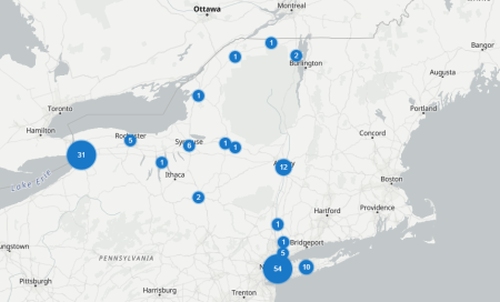
Center most: There are already 130-plus data centers spread across New York State. (Source: DataCenterMap.org)
Instead of moratoriums, thinktank commentators urge regulations and managed growth with stringent oversight – but wherever you land on the data center issue, we have clearly entered a new era with a powerful technology that seemingly has no bounds in how it will affect our daily lives, while presenting significant environmental and aesthetic impacts.
Without collaborative study and thought, AI will overpower future generations, in more ways than one. Before that happens, the law needs to catch up.
Michael H. Sahn, Esq., is the managing member of Uniondale law firm Sahn Ward Braff Coschignano PLLC, where he concentrates on zoning and land-use planning, real estate law and transactions, and corporate, municipal and environmental law. He also represents the firm’s clients in civil litigation and appeals.