
By MICHAEL H. SAHN //
Not surprisingly, legal writing and commentary is often dry and stiff.
 Litigation is serious business. Legal principles can be complex. And the meaning of laws and statutes often depends on a single word, even a choice of punctuation.
Which is not to say literary references, cultural touchstones and linguistic lightheartedness don’t abound in judicial decisions and judge’s comments, because they absolutely do. And they don’t only give the law a sense of levity – they often explain complicated legalese in ways laymen can appreciate.
Exhibit A: comments Sol Wachtler, then chief judge of the New York State Court of Appeals, made in a 1985 interview, imploring prosecutors to take more responsibility and to reform the grand jury system.
Wachtler famously observed that prosecutors had so much influence they could get a grand jury to “indict a ham sandwich.” And while the judge’s legacy is complicated, his turn of phrase became part of the popular lexicon – it was even adapted by Tom Wolfe for his novel “The Bonfire of the Vanities.”
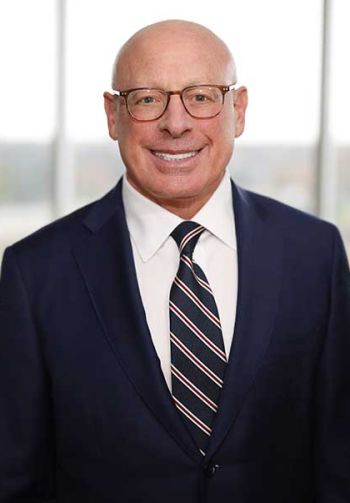
Michael Sahn: Courtroom comedy.
Then there was Queens Criminal Court Justice Phyllis Flug, who presided over one of history’s most infamous criminal trespassing cases: During Game Six of the 1986 World Series, parachutist Michael Sergio glided to a landing on the Shea Stadium infield, a bright “Let’s Go Mets!” banner flapping in his wake.
Sergio was promptly arrested and pled guilty to criminal trespassing, the lesser of two charges he faced (prosecutors dropped reckless endangerment charges in exchange for the plea). A few days before Christmas, Flug sentenced the skydiver to a small fine and 100 hours of community service, while revisiting “A Visit From St. Nicholas”:
“’Twas game six of the Series, when out of the sky
flew Sergio’s parachute, a Met banner held high…”
It went on like that, tracking the famous poem and ending with “Community service, and a fine you will pay.”
Perhaps inspired by Flug’s spin on Clement Clarke Moore, Macomb County (Mich.) Circuit Court Judge Deborah Servitto dropped the mic during a 2003 decision to dismiss a defamation suit brought against rap artist Eminem.
The suit claimed the lyrics in the song “Brain Damage,” about an eighth-grader named DeAngelo Bailey, damaged the plaintiff – DeAngelo Bailey, a former classmate who bullied the now-famous rapper back in the day. Servitto found a reasonable person would understand the song was rhetorical language and conveyed this opinion by spitting some dope bars:

Beating the rap: Eminem, exonerated.
“Mr. Bailey complains that his rep is trash
So he’s seeking compensation in the form of cash
Bailey thinks he’s entitled to some monetary gain
Because Eminem used his name in vain…”
The court’s “ultimate position,” of course, was “summary disposition.”
Judges often inject common culture to break the boredom of trial testimony – and sometimes, to get to the bottom of a case.
I remember one of my cases where a computer-science expert was testifying about a digital model used to determine where to build sound-barrier walls along the Long Island Expressway. The witness claimed the model was so reliable, it didn’t require actual verification, and went on about it.
Justice Thomas Adams, now the Nassau County administrative judge, became frustrated with the technical talk and interrupted the testimony, asking the witness to answer “the $64,000 question.” The common reference to the old television gameshow did the trick – when the witness answered a direct question, the case was all but over.
Whether they’re historical references, song parodies or quick comical notes, the courts – often so dry and formulaic – occasionally do entertain, most often to convey a serious legal concept. If you litigate long enough, you learn that legal writings take many surprising forms.
Michael H. Sahn, Esq., is the managing member of Uniondale law firm Sahn Ward Braff Koblenz PLLC, where he concentrates on zoning and land-use planning, real estate law and transactions, and corporate, municipal and environmental law. He also represents the firm’s clients in civil litigation and appeals.