
By MICHAEL H. SAHN //
Single-family homes are the neglected stepchild in the affordable-housing debate.
 The lack of affordable housing cannot be solved by focusing solely on multifamily housing. Instead, housing advocates must find ways to make single-family homes affordable.
Americans agree that the country is suffering a housing-affordability crisis, and nowhere is this more evident than Long Island. There are more than 817,000 single-family detached dwellings on the Island, comprising 79.1 percent of the regional housing stock, while apartments make up just 8.3 percent of housing units in Nassau County and 4.2 percent in Suffolk County.
No amount of multifamily housing can be built, with or without IDA financing, to make a dent in the affordable-housing deficit, especially given the ever-rising price of single-family homes and mortgage rates.

Michael Sahn: Singular purpose.
The median prices for closed home sales in Nassau and Suffolk were at all-time highs in May 2024, at a median price of $790,000 in Nassau (a 13 percent increase from May 2023) and $651,000 in Suffolk (up 14.2 percent over May 2023). The problem is exacerbated by the aging housing stock and the fact that homes built in the 1950s don’t meet the needs of today’s buyers.
Long Island’s “brain drain” – notoriously sending young professionals to more affordable markets – is well-documented. Local businesses are grappling with labor shortages, with nearly a third of Island business owners identifying hiring and compensation as top concerns; housing affordability and Long Island’s high cost of living are partly to blame.
There are some good ideas on the horizon, such as incentive programs tailored to single-family homebuyers – including down-payment assistance, low-interest loans or grants to help low-income residents overcome financial barriers to homeownership.
The Town of East Hampton has established the Affordable Home Ownership Program – funded by a 0.5 percent tax on real estate transactions – to make homes more affordable. Under the program, the town constructs new residences on town-owned land and offers them for purchase at an affordable price. The town owns the land, but the buyer is responsible for all homeowner costs, and when the buyer is ready to sell, the town will buy back the homes and keep them in its affordable-homes portfolio.
The Long Island Housing Partnership operates a similar program, offering single-family homes to households making 80 percent or less than the area median income on a lottery basis.
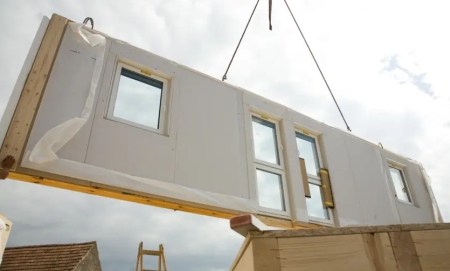
Piece of the action: Modular construction is a potential path to Long Island housing affordability.
East Hampton also implemented a pilot First-Time Homebuyer Down Payment Assistance Program this year, offering interest-free loans up to $30,000. The loans are secured through a lien and repayable in full upon a future sale of the property.
Nassau County established a similar program in December 2023, offering grants up to $50,000 funded by the U.S. Department of Housing and Urban Development. To qualify, the home cannot cost more than $594,000, lower than the county’s median home price.
In some Suffolk County communities, Accessory Dwelling Units are used to increase housing stock, despite concerns over maintaining community character. Given these community concerns, ADUs are only a solution in certain areas.
Tax-abatement programs, similar to PILOT programs offered to multifamily housing developments, should also be considered. Tax abatements can provide relief to homeowners and new buyers burdened by high property taxes, allowing homeowners to allocate more income toward mortgage payments and other essential expenses.
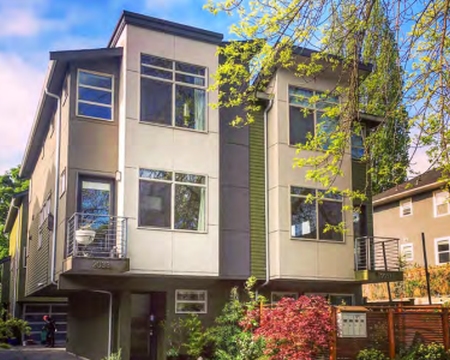
By design: Dozens of pre-approved designs are speeding up construction permitting in Fayateville, Ark.
Modular homes can also increase affordable-housing stocks. Modular building entails constructing a home, or portions thereof, at an off-site facility and transferring it to the construction site, reducing construction costs and completing construction in a faster timeframe – although this can be difficult considering the differing building codes throughout Long Island’s numerous towns and villages.
Another idea is municipal pre-approval of home designs for new homes or alterations, streamlining the permitting process and cutting construction costs. The City of Fayetteville, Ark., recently enacted a “Permit-Ready Building Design Program” with 30 pre-approved home designs to choose from.
Creating special districts within Long Island’s towns and villages for affordable housing on government-owned land, or specifying districts for modular-home construction, may be effective methods of increasing housing stocks – and acceptable to Island residents.
Either way, we must rise to the challenge of making single-family homes part of the affordability solution. While there may not be a one-size-fits-all solution, single-family homes must be at the forefront of the regional housing conversation.
Michael H. Sahn, Esq., is the managing member of Uniondale law firm Sahn Ward Braff Koblenz Coschignano PLLC, where he concentrates on zoning and land-use planning, real estate law and transactions, and corporate, municipal and environmental law. He also represents the firm’s clients in civil litigation and appeals.