By GREGORY ZELLER //
New York has enacted a first-in-the-nation law governing the use of artificial intelligence in advertising.
 Passed by the State Legislature last year and signed into law by Gov. Kathy Hochul in December, the new statutes – which took effect Tuesday – require the producers of advertisements and other marketing materials to identify whether their production incorporates AI-generated synthetic performers.
New York is the first state in the nation to place such requirements on advertisers – one of several AI-transparency rules Albany has rolled out in recent months.
Bottom line, according to the governor: New York is “setting the rules of the road, instead of letting AI run the show.”
“Requiring simple, honest disclosure when an ad uses synthetic performers protects consumers, respects our creative workforce and keeps New York at the forefront of responsible innovation,” Hochul said Tuesday.
The state defines “AI-generated synthetic performers” as “digitally created media that appear as a real person.” Such animated performers are routinely used in movies, television shows and mainstream advertising, and as technologies (and access to them) improve, they are proliferating rapidly – along with consumers’ ability to accurately distill fact from fiction.
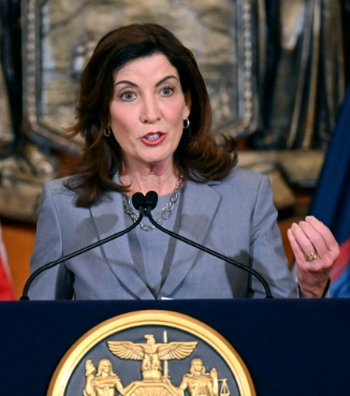
Kathy Hochul: As real as it gets.
To that end, New York lawmakers now require producers who use synthetic performers to inform their audiences that what they’re seeing is not real.
This is a touchy subject in a state like New York, where film and TV production – and top-level advertising – are integral parts of the local economy. While Albany has no interest in interfering with producers’ ability to crank out topnotch work, lawmakers must “continue to lead in protecting the workers who power [these industries],” noted State Sen. Michael Gianaris (D-Long Island City), who sponsored the successful State Senate bill.
“As this legislation goes into effect, New York’s performers will be better protected from their likenesses being deceptively replaced by artificial intelligence,” Gianaris said Tuesday. “And we can hold accountable those who would take advantage of these tools to profit improperly at the expense of the real talent.”
The new law is one of several legislative efforts aiming to monitor AI use in New York State – and prevent misuse. In 2024, Hochul signed the SAFE for Kids Act, which restricts addictive feeds for kids, and the Child Data Protection Act, which prevents online operators from collecting and monetizing children’s data without informed consent.
In 2025, Albany approved “AI Companion” legislation establishing first-in-the-nation safeguards that divert user conversations about self-harm from AI counselors to live mental-health resources.
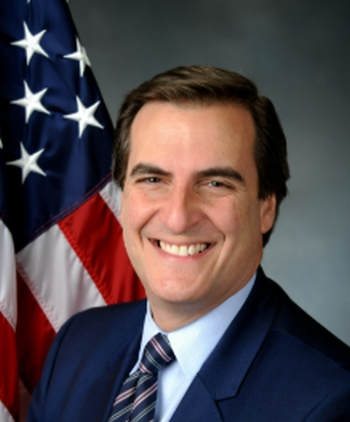
Michael Gianaris: America’s got real talent.
And this week, legislators green-stamped the New York Fundamental Artificial Intelligence Requirements in News Act, which mandates that news organizations operating in New York include clear disclaimers on published content that is substantially or wholly generated by AI. After passing through the State Senate and State Assembly, that bill is currently awaiting Hochul’s signature.
Meanwhile, the governor’s office is busily outlining a first-of-its kind Office of Digital Innovation, Governance, Integrity and Trust, which is being designed as a central authoritative body for digital safety and technological governance – including evolving regulations monitoring the AI frontier.
Rebecca Damon, chief labor policy officer and New York local executive director for the Screen Actors Guild-American Federation of Television and Radio Artists, applauded New York legislators for “developing smart guardrails around the use of generative AI.”
“This synthetic advertisement-disclosure law protects consumers and workers from the risks posed by rapidly developing AI technologies,” Damon said in a statement. “The law’s enforceable protections mitigate performance replacement, prevent consumer deception and affirm the continued value of human performance.
“As artificial intelligence technology evolves, we look forward to continuing to work with Gov. Hochul on further AI guardrails.”