By MICHAEL H. SAHN //
The public-hearing process in zoning and other land-use decisions is broken and needs to be fixed.
 From many important perspectives, these hearings have become significant barriers to regulatory change, stymieing new housing options, climate-change protocols, desperately needed infrastructure improvements and other innovative solutions to important zoning and land-use challenges.
But, if the current hearing process is detrimental to important planning goals, what process can we turn to?
New York State delegates authority to local governments to enact zoning and land-use plans. Through the zoning process, governments decide the fate of new development proposals, and the state enabling acts require public hearings as part of the process, giving citizens the opportunity to be heard on proposed zoning changes and other land-use applications.
In theory, public hearings provide transparency, disseminate information, encourage public engagement and educate the masses on the positives and negatives of each proposal. Hearings, therefore, should result in more informed decision-making.

Michael Sahn: If it’s broke, fix it.
But experience shows that more often, public hearings create long, uncertain processes that make change problematic and expensive. They often fall short of the rational, problem-solving dialogue envisioned in the statutory authority given to local governments.
Take, for example, the decades-long battles over the development of the former Cerro Wire Factory property in Syosset. Cerro stopped manufacturing in 1986. Thirty-six property tax-slumping years later, Amazon is just now finishing construction of a 200,000-square-foot warehouse on the property.
Put aside the merits of Taubman Centers’ circa-1990s proposal to build a 1-million-square-foot mall at this 39-acre brownfield site, or the various, doomed proposals for smaller retail malls and mixed-use residential/commercial developments that followed – can anyone seriously argue that the public-hearings process served the public here?
Meanwhile, consider how school board meetings and other public government hearings where land-use issues are on the agenda have become forums for contempt and insults.
A solution could include changing the focus of public participation. For instance, planning pundits have proposed new policies that would make most zoning as-of-right, meaning that if a proposal fits predetermined parameters in local zoning laws, it can be built without discretionary approvals.
In this scenario, public participation would occur in the land-use planning process, instead of on a project-by-project basis. The argument is that planning based on empirical data results in better visions for community change and development, compared to freezing existing conditions with outdated zoning and a cases-by-case discretionary process for each new development.
Basically, if a wider range of uses was permitted by zoning laws, then individual development proposals would be more likely to happen – and more thought could be given to broader, long-term land-use planning objectives.
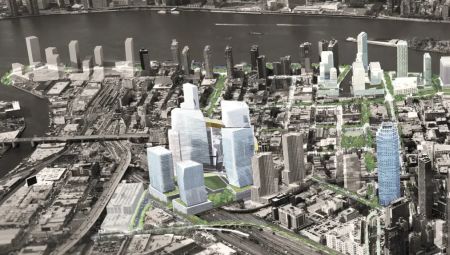
Nope: Amazon’s proposed HQ2 in Long Island City was undone by a broken public-participation system, according to Sahn.
Variances would still exist, as required by law, as would special permits, but they would be more limited and fewer in number. And in this model, judicial review of approvals becomes more limited – also leading to more certainty and shorter, less-costly approval processes.
New York City employs an as-of-right zoning model, with zoning laws that are very specific on allowed uses, size and specific characteristics. Rezonings, special permits and variances exist in the city, but the majority of new development is approved as-of-right by the NYC Department of Buildings.
That is not to say the city doesn’t have its own issues with public participation – the 2019 scuttling of Amazon’s proposed Queens headquarters was a direct result of the public-participation process. Perhaps the Big Apple strikes a better balance of determining when and where public participation is appropriate.
There are many criticisms of the as-of-right model. Some say it allows administrative staff to ignore public input and gives developers too much influence over the law, compared to citizen review and input. Others believe as-of-right zoning is better suited to large cities, to prevent development from coming to a standstill.
But this is not the case in, say, a Long Island village, where there’s likely more capacity to review projects on a discretionary basis. Discretionary site-plan approval also makes less sense in built-out Manhattan and more sense in rural areas with, arguably, more land, traffic and parking issues.
There’s plenty to debate, lots of pros and cons, in all of these models. But we should all agree that the current public-hearing process is broken – and we need better solutions to address the needs coming in the years ahead.
Michael H. Sahn, Esq., is the managing member of Uniondale law firm Sahn Ward Braff Koblenz PLLC, where he concentrates on zoning and land-use planning, real estate law and transactions, and corporate, municipal and environmental law. He also represents the firm’s clients in civil litigation and appeals.