
By JEFFREY REYNOLDS //
At least 233 people were killed, and another 618 injured, by gun violence in more than 500 nationwide shootings, all while we celebrated America’s independence during the extended Fourth of July weekend.
 That’s according to data compiled by the nonprofit Gun Violence Archive, which so far in 2021 has tallied more than 10,500 firearms-related homicides. At this rate, 2021 will blow away 2020, which – under the weight of a pandemic, social-justice protests and divisive politics – finished as the deadliest year of gun violence in decades.
The big cities – New York, Chicago, Los Angeles, Miami and Washington – have all seen shootings climb by at least 20 percent this year, but the bloodshed isn’t limited to urban areas. A triple shooting (with one fatality) at a July 4 block party in Roosevelt made headlines; so did a deadly shooting at a West Hempstead Stop & Shop in April.
Scores of other Nassau and Suffolk county shootings this year never made the news, but have left more and more moms, dads and other family members sobbing in our streets, amidst shell casings and makeshift memorials.
The skyrocketing fatalities have caught the attention of Gov. Andrew Cuomo, who recently declared a gun violence disaster emergency and committed $139 million in expedited state aid for community programs. In his declaration, the governor detailed a wide-ranging seven-point strategy – and noted that 51 people were shot across New York State during the Independence Day weekend, compared to 13 who died from COVID.
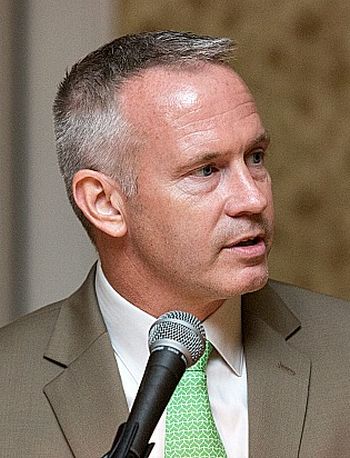
Jeffrey Reynolds: Cease fire.
The comparison is apt, given the state’s continued shift toward a public-health approach to gun violence. The strategy maintains traditional interdiction and law-enforcement efforts, but also elevates youth services, social services, community-mediation efforts and job creation to the gun-violence front lines.
Though community advocates have tried to reframe the entire gun debate by using terms like “gun safety” instead of “gun control,” the mere mention of seemingly simple solutions – safe storage, background checks, limits on high-capacity magazines – invariably turns into a heated Second Amendment debate, paralyzing lawmakers and stalling policy.
Along the same lines, high-tech solutions – such as biometrics that allow a gun to be fired only by an identified user, RFID tagging and GPS tracking to limit illegal trade and other so-called “smart gun” technologies – are often dismissed as being restrictive and prone to malfunction.
Meanwhile, the bodies keep piling up. And while many have grown accustomed to the “thoughts and prayers” that follow mass shootings, others are freaked out by the meteoric rise in crime, especially when it spills into the suburbs.
That’s why the governor and President Biden are touting grittier public-health solutions to violence, ideas that aspire to bring both order and opportunities to communities destabilized by chronic poverty, unemployment and the other dynamics that fuel frustration, anger, despair and hopelessness.
Biden shouted out the California-based Advance Peace program in a national address last month, praising the nonprofit’s success in providing transformational opportunities to young men involved in lethal firearm offenses and placing them in a high-touch, personalized fellowships, complete with intensive mentoring, counseling and social services.
It’s akin to the better known Cure Violence model, launched 20 years ago in Chicago. Cure Violence interrupts community conflicts and dispatches credible messengers to work with those at highest risk for perpetrating violence. These “credible messengers” aren’t cops; they’re often folks who’ve had their own run-ins with the law or been gang members.
Closer to home, Albany funds and supports the SNUG Neighborhood Violence Prevention Program, which operates in 12 communities with high rates of gun violence, including Wyandanch and Hempstead here on Long Island. (Full disclosure, the Family and Children’s Association runs this program in Hempstead).
SNUG’s street-outreach workers detect, interrupt and intervene in high-risk disputes to prevent retaliation through mediation, mentoring and access to resources and services, including education assistance, drug and alcohol counseling, and job-readiness training.
Social workers and case managers at SNUG sites work to address the trauma individuals face due to long-term exposure to gun violence, and provide help and support to improve lives and strengthen neighborhoods impacted by crime. The staffers provide mental-health counseling and other services to individuals and families, while social workers visit hospital rooms and homes to support victims and families in the immediate aftermath of violence.
These programs operate quietly and discretely, away from the noise of messy public debates – but very much in the crosshairs, as trained community insiders talk their peers out of retaliation and convince kids there really is a different pathway to survival and success.
Progress can be slow, because violence is virulent. The work is intense and the conversations are often one-on-one. But it’s a start. And perhaps, efforts like this are our very best hope for freeing our communities from the tyranny of gun violence.
Jeffrey Reynolds is the president and CEO of the Garden City-based Family and Children’s Association.