By MICHAEL H. SAHN //
Long Island has an affordable-housing challenge – and a unique opportunity to do something about it, before off-Island powers take control.
 Why is there so little affordable housing on Long Island? Regional affordable-housing advocates will tell you it’s the Island’s focus on single-family zoning laws, and they’re not alone.
Planners across the country have long advocated measures to increase the supply of affordable housing for young individuals entering the workforce, seniors and individuals who can’t afford the high cost of traditional, market-priced housing. Now they have some clear talking points: Traditional single-family zoning limits the supply of housing, they say, while driving up costs and perpetuating exclusionary housing patterns.
To that end, a host of new laws are targeting single-family zoning nationwide, and aiming to eliminate local zoning powers.
The recently adopted California Housing Opportunity and More Efficiency Act allows the construction of duplex units on most properties with one home and curtails local, single-family zoning powers. It also makes it easier to divide existing, single-family lots into two, potentially allowing four units on an existing single-family zoned lot.

Michael Sahn: Can’t afford not to act.
Other new California laws seek to streamline and accelerate the approval process for new housing units and to hold local officials accountable for their decisions on new housing projects. Similar laws have been enacted, or are under consideration, in Oregon, Maryland, Minnesota and Connecticut.
A new Connecticut law adopted in June – despite controversy and heavy opposition – forces towns to loosen local zoning laws. Towns can opt out of the law, but it’s a difficult process. The law requires towns to allow single-family homeowners in Connecticut – where single-family homes are allowed as-of-right across approximately 90 percent of the state – to convert parts of their dwellings or detached garages into accessory units, without the need for a special permit.
Perhaps more importantly, the law removes the term “community character” as a consideration in development-application approvals. In other words, a new housing application cannot be denied because it would change “community character” – a big change that foreshadows other changes.
The federal Build Back Better Act, passed by the U.S. House of Representatives and pending in the U.S. Senate, takes all this a huge step further. The Act provides $1.75 billion for grants to study eliminating state and local zoning measures that restrict lower- and moderate-income housing (the White House had sought $5 billion).
The grant program earmarks money for streamlining regulatory requirements, shortening affordable-housing approval processes, reforming zoning codes and “other initiatives that reduce barriers to housing supply elasticity and affordability.” Grants would also become available to support the evaluation and development of local and regional plans for community-development strategies related to sustainability, fair housing and “location efficiency.”
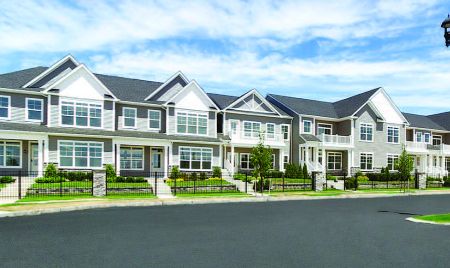
Exhibit A: Affordable units in Yaphank’s Country Pointe Meadows development are a prime example of locally mandated affordable-housing solutions.
This is a far-reaching effort that has not received a lot of press, despite its potential impacts on local zoning powers. Local Long Island jurisdictions must take note – change is coming from above, with respect to local zoning powers, and it’s better to be proactive than reactive when it comes to federal directives affecting local control.
Under the Long Island Workforce Housing Act enacted in 2010, whenever a local government approves certain new housing projects (such as a subdivision or mixed-use development with five or more units), 10 percent of the units must be set aside for affordable workforce housing – or the developer must pay to cover such housing in other developments.
Another section of New York law authorizes Suffolk County to transfer parcels of land to participating municipalities for the construction or reconstruction of affordable housing, per the Suffolk County Administrative Code, including affordable workforce housing for individuals meeting the right HUD income guidelines. Meanwhile, the Nassau County Industrial Development Agency and the Nassau County Planning Commission sometimes require, sometimes recommend affordable housing provisions when granting land-use or IDA approvals.
The bottom line is that local Long Island governments already have the tools to provide new affordable housing opportunities. And they must have the foresight to take innovative action now, before they are mandated from above.
There are many creative ways to reconsider existing zoning and provide affordable housing opportunities while still preserving the uniqueness of local communities – considerations that don’t factor into some of those coming changes.
These are harmonious goals. Instead of being on the defensive from federal and state impositions, good local practices and policies can deliver positive actions that benefit all – without Long Island being told what to do.
Michael H. Sahn, Esq., is the managing member of Uniondale law firm Sahn Ward Braff Koblenz PLLC, where he concentrates on zoning and land-use planning, real estate law and transactions, and corporate, municipal and environmental law. He also represents the firm’s clients in civil litigation and appeals.